
Home » Green Hydrogen Project Finance in Southeast Asia: What Lenders Need to See
Green Hydrogen Project Finance in Southeast Asia:
What Lenders Need to See
15 min read · Feb 16, 2026 · By Alex
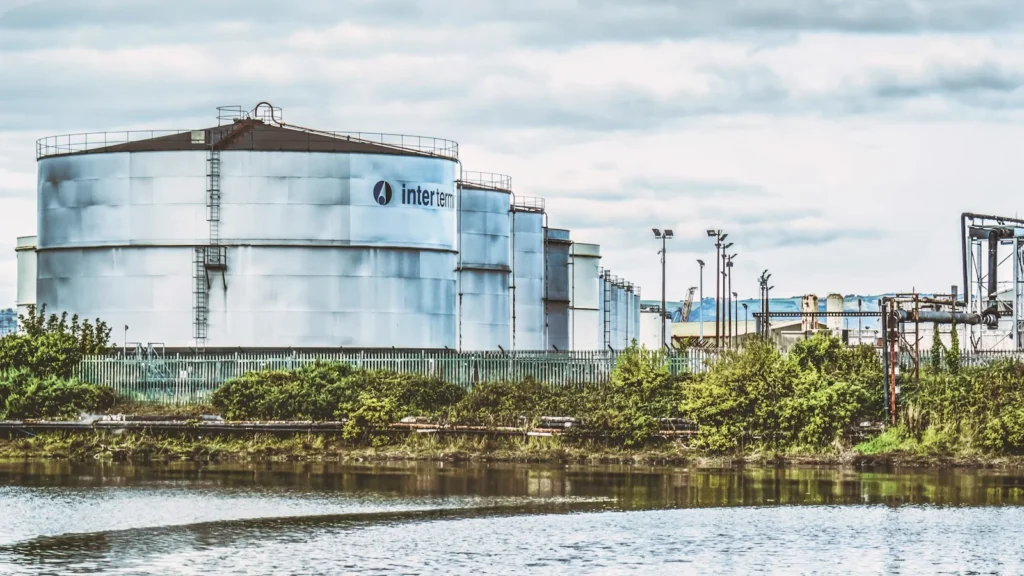
Indonesia’s Ministry of Investment put a number on its green hydrogen ambition in 2024: USD 25.2 billion in private investment needed between 2031 and 2060. Pertamina alone has committed USD 11 billion to green energy that includes hydrogen. A 600 MW electrolysis project near Batam, 40 kilometres from Singapore, is targeting a final investment decision in 2026. The ambition in Southeast Asia is real. The financed capacity is still close to zero. So the missing piece is not interest. It is green hydrogen project finance structured the way a credit committee reads it.
I work with green hydrogen developers across Indonesia, Malaysia, Vietnam and the Philippines, and I see the same gap everywhere. Electrolyser suppliers have proven their technology, the renewable power is available or plannable, and the government talks about hydrogen in its energy transition roadmap. Then the project tries to raise debt or bring in an equity partner, and the file is missing the one thing lenders actually underwrite: a buyer who will pay a defined price for a defined volume over a defined period. As a result, the file stops moving.
So this guide is for the developer, not the policy audience. It covers what a bankable green hydrogen structure looks like, why Southeast Asia makes this harder than Europe, and what to fix before you sit in front of a credit committee or an equity investor.
In short
- Worldwide, only a small share of announced clean hydrogen capacity has a buyer attached to it. Southeast Asia is not an exception to that pattern, it is a sharper version of it.
- In particular, a bankable hydrogen purchase agreement needs a clear model (tolling or sale and purchase), a 10 to 15 year horizon, a take-or-pay mechanism, and a price formula that survives a change in subsidies or carbon rules.
- In other words, Southeast Asia has no binding hydrogen mandate comparable to the EU’s. Your revenue case has to be built buyer by buyer, not assumed from a government target.
- For any green hydrogen project finance plan, the power purchase agreement and the hydrogen purchase agreement have to be negotiated as one package. A gap between the two is where most Southeast Asian projects actually break.
- In green hydrogen project finance, projects that reach financial close usually have one serious counterparty absorbing offtake and construction risk, not a portfolio of letters of intent.
In this article
Why green hydrogen project finance in Southeast Asia stalls before FID
Across nearly 80 green hydrogen projects tracked worldwide by industry press, only three had signed an offtake agreement and only one had reached financial close as of early 2025. That one, Neom’s USD 8.4 billion hydrogen plant in Saudi Arabia, closed financing almost two years after it was announced, and it closed largely because Air Products, one of the three co-developers, took on the full offtake and construction risk itself. Most projects do not have a partner willing to absorb that much risk, which is exactly why the financing stays stuck.
Southeast Asia adds a layer on top of the global pattern. The EU can lean on renewable energy directives and emerging mandates to give lenders a revenue floor. Nothing comparable exists yet across Indonesia, Malaysia, Vietnam or the Philippines. National energy transition roadmaps mention hydrogen, but they do not force an industrial buyer to sign a contract. Pertamina’s USD 11 billion commitment and the Sarulla project backed by GGGI, Samsung and Hyundai for USD 1.2 billion show that serious capital is moving toward Indonesian hydrogen. Neither project’s offtake structure is public, which tells you something: even well-capitalised sponsors are still working through the same commercial question you are.
What this means in practice for green hydrogen project finance
- You cannot borrow the EU’s demand story. Your buyer has to be identified, approached and contracted directly, whether that is a refinery, an ammonia plant, a steel producer or an export counterparty.
- If your plan includes export, certification and carbon intensity rules at the destination market shape your contract from day one. This connects to the EU compliance and carbon intensity work when Europe is the target buyer.
- So a green hydrogen project in this region meets the same fundamentals as anywhere else: technology maturity, feedstock and power security, and a counterparty who actually pays. Southeast Asia does not get a discount on any of the three.
So if you are still mapping where your project sits against these fundamentals, the Roadmap to Bankability lays out the sequence.
What a bankable green hydrogen project finance structure actually contains
In practice, a lender or an equity investor is reading your hydrogen purchase agreement (HPA) for five things. Miss one and the file stops moving.
The right model for your market power
Hydrogen offtake is structured one of two ways. In a sale and purchase model, you supply the water and electricity and sell the hydrogen outright. In a tolling model, your customer supplies the electricity, sometimes the water too, and pays you a fee for running the electrolysis. So which one fits depends on who has the stronger credit rating and who can actually secure a power purchase agreement (PPA) on acceptable terms. A developer with weaker standalone credit in Vietnam or the Philippines often does better under tolling, because the customer’s balance sheet carries more of the deal.
A tenor long enough to carry the debt
Financiers want a long-term offtake commitment, typically 10 to 15 years. In other words, a buyer offering three years with a renewal option is not bankable, whatever the headline volume looks like. Instead, pair the HPA tenor with your senior debt tenor before you negotiate anything else, because a mismatch here caps your leverage no matter how strong the rest of the contract is.
Take-or-pay, not an option to walk away
Take-or-pay means your buyer pays for the contracted volume whether or not it takes delivery, with a defined penalty if it does not. On-demand offtake rarely works for hydrogen, because your PPA will likely require constant electricity draw regardless of buyer demand. If your buyer only wants flexible or spot purchases, your revenue line is not something a bank can size debt against.
A price formula that survives a policy change
Green hydrogen still costs more to produce than grey hydrogen in most of this region, and subsidies, carbon pricing or a contract for difference usually bridge that gap, not the market price alone. In practice, early-stage pricing typically uses a fixed-plus-variable formula that reflects whatever support mechanism applies. Build in a genuine change-in-law clause that lets a subsidy shift trigger a price review, because Southeast Asian hydrogen incentive frameworks are still being written, not settled.
Risk allocation that matches reality on the ground
Set a firm delivery start date, with damages and termination rights if it slips because the electrolyser or the renewable plant is delayed. Align the HPA, the PPA and the water supply agreement so the three contracts move together rather than exposing you to a gap between electricity availability and hydrogen delivery obligations. Write a force majeure clause that actually limits your liability instead of a boilerplate paragraph nobody has tested against a regional grid outage or a port disruption.
What a lender checks, at a glance
| What the lender checks | What weak looks like | What bankable looks like |
|---|---|---|
| Commitment | Letter of intent, no exit penalty | Binding HPA, take-or-pay |
| Tenor | 1 to 3 years, renewal optional | 10 to 15 years, matched to debt |
| Price | Spot only, no floor | Fixed-plus-variable, change-in-law clause |
| Counterparty | Unrated buyer, no guarantee | Creditworthy buyer, parent guarantee, or co-developer absorbing offtake risk |
| Contract alignment | HPA and PPA negotiated separately | HPA, PPA and water supply aligned on timing and risk |
| Greenness proof | No certification path defined | Renewable sourcing, additionality and traceability documented for the target market |
Where green hydrogen project finance breaks in practice, in Southeast Asia
Where a complete green hydrogen project finance term sheet still fails
In practice, a term sheet can look complete and still fail once you check it against the region’s physical and regulatory constraints.
- Grid access and curtailment. If your electrolyser draws from the grid rather than a dedicated renewable plant, you need to prove renewable sourcing, additionality and, increasingly, time matching. Grid codes and renewable certificate systems are uneven across Indonesia, Malaysia and Vietnam, and an unresolved certification path stalls due diligence fast.
- Export logistics. If your buyer is in Japan, Korea or Europe, hydrogen or its derivatives (ammonia, methanol) have to move through a port and a shipping chain that can handle the product safely and at the volumes you have promised. Today, few Southeast Asian ports can handle this, and a lender will ask who confirmed the logistics work before anyone signed the contract.
- Domestic demand that is not yet contracted. Refineries, fertiliser plants and steel producers in the region are candidate buyers, but most are still evaluating rather than signing. Otherwise, treat early conversations as pipeline, not as offtake, until a term sheet exists.
- Currency and subsidy risk. If your revenue is in US dollars and your costs are in rupiah, ringgit or dong, or if your margin depends on a subsidy that has not been legislated yet, your financial model needs to show the downside case, not just the base case.
None of this is a reason to wait. However, it is a reason to solve these questions before a lender’s technical advisor finds them for you. The independent technical review that checks grid connection, logistics and certification against what the plant can actually deliver is part of the technical review work I coordinate for developers at this stage.
A method to move your green hydrogen project finance toward FID
Step 1: Diagnose what you actually hold
First of all, list every buyer conversation, letter of intent, PPA discussion and subsidy assumption in your financial model. Separate what is contracted from what is hoped for. Most developers do not expect how little of their revenue case is locked in once they run this honestly.
Step 2: Structure the HPA and PPA as one package
So decide your model (tolling or sale and purchase), your target tenor, and how the hydrogen contract and the power contract will move together. This is where the commercial logic gets set before anyone drafts a clause.
Step 3: Build the Southeast Asia-specific case
Document grid or renewable power sourcing, logistics for your actual buyer location, and the subsidy or carbon pricing mechanism you are relying on, with its current legislative status. This is the section that global HPA templates do not write for you.
Step 4: Package it for lenders and equity partners
Translate your green hydrogen project finance structure into a narrative a credit committee or an investment committee can act on, with the downside case shown, not hidden. Support the questions that follow rather than treating submission as the finish line.
Finally, this sequence is the same logic behind the Project Finance and Investor Introductions conversations I have with developers, adapted to whichever stage your project is actually at.
Common green hydrogen project finance mistakes I see
In practice, these are the mistakes I see most often.
- Counting a government hydrogen roadmap as demand. In practice, a roadmap is a signal, not a contract.
- Negotiating the HPA and the PPA separately. A gap between the two is where the financing case usually fails first.
- Assuming export demand without checking the logistics. A signed letter of intent from a Japanese or Korean buyer means little if the port and shipping chain are not confirmed.
- Pricing without a change-in-law clause. Subsidy frameworks in this region are still being drafted. Lock in today’s number and you are exposed tomorrow.
- Underestimating how much risk a co-developer needs to absorb. The projects that reach financial close usually have one serious party carrying offtake and construction risk together.
A green hydrogen project finance readiness checklist before you approach lenders
Before you approach anyone, run this checklist once.
- You choose an HPA model (tolling or sale and purchase) and match it to your counterparty’s credit strength.
- You define tenor and take-or-pay terms and match them to your target debt structure.
- Your price formula includes a change-in-law clause tied to the specific subsidy or carbon mechanism you rely on.
- You document grid sourcing, additionality and certification against your target market’s rules.
- Someone who understands the chain has checked logistics from plant to buyer, including export routes if relevant.
- Above all, your financial model shows a downside case where the subsidy is delayed or reduced.
If fewer than four of these are true in your green hydrogen project finance case, the early screening and concept or feasibility and financial model work is the right starting point, because lenders will ask the same questions in the same order.
Sources
- GH2, Offtake agreements and pricing
- Freshfields, Four things to consider in a green hydrogen purchase agreement
- MEED, Bankability remains hydrogen’s unbreakable challenge, 6 February 2025
- The Investor, Indonesia needs USD 25 billion for green hydrogen development, 17 August 2024
- Biofuels Digest, Aslan Energy Capital targets 2026 for major hydrogen investment in Indonesia
Frequently asked questions
Why are so few green hydrogen projects reaching financial close?
Worldwide, only a small fraction of announced projects have a signed offtake agreement, and fewer still have reached financial close. The pattern holds in Southeast Asia: technology and power plans move faster than binding buyer commitments.
Is there a hydrogen mandate in Southeast Asia like the EU's?
No. National roadmaps mention hydrogen targets, but nothing forces an industrial buyer to sign a contract the way EU directives are starting to. Your offtake has to be built buyer by buyer.
Should I choose tolling or a sale and purchase model?
It depends on which party has the stronger credit and can more easily secure the power purchase agreement. Weaker standalone credit usually favours tolling, where the customer carries more of the deal.
How long does a hydrogen offtake agreement need to run?
Financiers typically want 10 to 15 years, matched to your senior debt tenor. Shorter contracts with renewal options rarely satisfy a credit committee.
What should I do if my buyer only wants spot purchases?
Treat that as a secondary revenue stream, not your core contract. A bank cannot size debt against volumes with no commitment behind them.
Is export to Japan or Korea realistic for a Southeast Asian project?
It can be, but only once the logistics chain, product form (hydrogen, ammonia or methanol) and certification path are confirmed with the buyer’s market. Treat an export letter of intent as a starting point, not a financeable commitment.
Your offtake is still mostly conversations?
So if you are developing a green hydrogen project in Indonesia, Malaysia, Vietnam or the Philippines, I can help you see where your green hydrogen project finance structure stands against what lenders and equity investors will ask for.

Alex, Founder of WeConnect Asia
I help low-carbon fuel and carbon removal project developers in Southeast Asia secure the commercial and financial partners needed to reach FID.
Related articles

Biomethane: What It Is, How It Is Made and Who Buys It
Biomethane is biogas cleaned to pipeline quality. I explain how it is made, how it differs from biogas and who buys it in Southeast Asia.

Southeast Asia SAF: Policies, Demand and Project Status
Southeast Asia SAF policy is moving country by country. Here is where demand is forming, who the buyers are and what a developer can rely on today.

e-SAF Project Finance: Why the Sub-Mandate Is Not Enough
The synthetic fuel sub-mandate creates demand for e-SAF, but not a bankable project. Here is what e-SAF project finance still needs in Southeast Asia.

SAF Mandates by Country: A Developer’s Comparison
SAF mandates differ by country in scope, target and penalty. Here is a side-by-side comparison and what each one means for project revenue.