
Home » How to Secure Offtake Agreements for a Low-Carbon Fuel Project
How to Secure Offtake Agreements for a Low-Carbon Fuel Project
9 min read · Apr 6, 2026 · By Alex
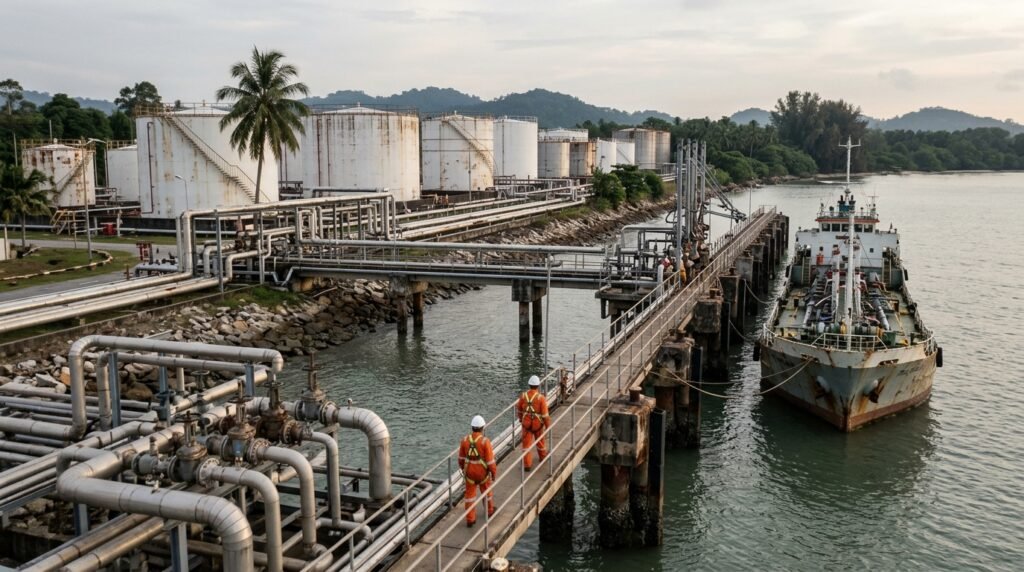
To secure offtake agreements that lenders accept, you start with the buyer, not the contract. Who actually buys your product, with what budget, and what do they need to sign? Many developers hold an MOU and call it demand. However, an MOU is a statement of interest. A lender wants volume, term, price and a buyer who can pay for years.
In short
- To secure offtake agreements, map the real buyers first and approach them with a defined product.
- A bankable contract has four things: volume, term, price mechanism and a creditworthy buyer.
- MOUs stall because nobody owns the step from interest to contract.
- The sequence matters. Each stage unlocks the next.
- Regional mandates and signed contracts already show where the buyers sit.
In this article
How to secure offtake agreements: the buyer comes first
Offtake is the revenue side of the project. If the plant cannot sell its output under a contract, lenders have nothing to lend against. So the first step to secure offtake agreements is to understand who buys and why.
In practice, buyers fall into a few groups. Airlines and fuel traders buy sustainable aviation fuel. Shipping companies and charterers buy methanol and ammonia. Refiners, chemical producers and fertiliser makers buy hydrogen and its derivatives. Utilities and industrial users buy power and biomethane. For SAF, IATA runs a SAF Matchmaker that connects airlines with producers for early-stage transactions (IATA).
Also, each group has its own buying logic. For instance, an airline buys to meet a mandate or a corporate target. A shipping company buys to be able to run a new vessel. In other words, the buyer has a reason, and your pitch has to match it. I look at the SAF version of this in how to secure SAF offtake agreements, and at the waste side in what a WtE or biogas project needs.
Map the real buyers before you try to secure offtake agreements
In fact, mapping means more than a list of names. It means finding the person who can sign, the budget they buy from and the conditions they need.
First, identify the buyers who have a real need now, such as a mandate, a fleet or a plant that has to switch. Second, find out who decides. In large companies, the procurement team, the sustainability team and the treasury often have different views. Third, learn what the buyer cannot accept, such as a delivery location, a certification or a price index.
In practice, this takes conversations, not desk research. Then you match the product to the need. For example, a developer who pitches “green fuel” gets polite interest. A developer who offers a defined volume at a defined specification, delivered to a defined port, gets a real discussion.
Finally, I write the map down as a working table: company, signer, budget owner, product, delivery point, status. The table takes an afternoon, and it decides which conversation happens first. If you need help opening those conversations, the offtake service is what I do.
The regional buyer map to secure offtake agreements
Buyers in this region cluster around a few countries, and the mandates show where signed demand will appear. Singapore has set a 1% SAF uplift target for 2027, rising to 3 to 5% by 2030, and a mandatory SAF levy applies to flights departing Singapore from 1 January 2027 (Ministry of Transport). Indonesia requires a 1% SAF blend on international flights from 2027, rising to 50% by 2060, and Thailand requires at least 1% from 2026 (Norton Rose Fulbright).
Signed contracts already give a template. Bangchak in Thailand secured a USD 190 million loan from UOB and signed a SAF purchase and offtake agreement with Shell International Eastern Trading in Singapore, alongside a 10-year supply agreement with Cosmo Oil (Norton Rose Fulbright). On the methanol side, the Maritime and Port Authority of Singapore received over 50 proposals under its Expression of Interest, and licences to supply methanol as a marine fuel run from 1 January 2026 to 31 December 2030 (MPA).
So the delivery point matters as much as the buyer. Deliveries into the Port of Singapore, into Johor or into Laem Chabang imply a different logistics chain, a different certification path and a different conversation with the counterparty. That is why I map the buyer and the port together, before any term sheet.
Term, volume and price: what makes offtake agreements bankable
Lenders read the same four elements in every offtake contract.
- Volume. Is it firm, or a range? Is there a take-or-pay element?
- Term. Does it run as long as the debt? A short contract leaves the end of the loan uncovered.
- Price. Is it fixed, indexed or a formula? Does it include the green premium?
- Counterparty. Can the buyer pay for the full term?
Price is where most efforts to secure offtake agreements get stuck. First, a buyer wants a price that tracks the market. Second, a lender wants a price that covers the debt. So the formula has to protect the project in a downside, with a floor, a cost pass-through or a premium that is fixed.
I read a guide that the Green Hydrogen Organisation wrote with a group of law firms, and it sets out a real mechanism. Under the UK Low Carbon Hydrogen Agreement, the producer receives a premium equal to the difference between a strike price and a reference price for each unit sold, and the reference price cannot fall below a floor set at the lower of the gas price and the strike price (GH2). I also read that a fixed price fits a government-backed pilot or an offtake built beside a long-term power contract, and that a partially fixed price, adjusted for power prices, inflation or exchange rates, usually works better (OIES).
Moreover, the contract has to be consistent with the rest of the project. If feedstock prices can rise, the offtake price must follow. I explain how feedstock and price interact in the SAF feedstock article.
Credit quality: which offtake agreements lenders discount
Also, lenders ask whether the buyer can pay. In fact, a contract with a weak counterparty is worth less than its face value. Some lenders will discount it, some will ask for a guarantee and some will refuse.
For example, an airline with a strong balance sheet is a good counterparty. A small trader without assets is not, unless a parent or a bank stands behind the contract. Therefore, I check the credit of every buyer early, before spending months on a contract that cannot be financed.
However, a strong credit can also come from structure. Parent guarantees, letters of credit and escrow arrangements can improve a weaker buyer’s position. Still, each comes at a cost, and each needs negotiating.
In practice, I ask for three things before the drafting starts: audited accounts or a parent guarantee, a bank reference, and evidence that the buyer’s own board approved the purchase programme. A buyer that cannot produce the third item usually needs several more months, whatever the term sheet says.
Why MOUs stall before a contract is signed
MOUs are easy to sign and hard to convert. Here is why they stall:
- No owner. Nobody on the buyer’s side is responsible for turning the MOU into a contract.
- Unclear product. The specification, the volume or the delivery point is still open.
- Price gap. The buyer wants a formula the lender will not accept.
- Credit gap. The buyer cannot meet the lender’s requirements.
- Timing. The buyer needs the fuel sooner than the plant can deliver.
- Plant risk. The buyer worries that the plant will not be built.
Because several of these depend on the plant’s progress, the buyer and the developer wait for each other. As a result, the MOU sits. I wrote about how this plays out for methanol in the MOU-to-FID article and for ammonia in the offtake bottleneck article.
The sequence I use to secure offtake agreements after an MOU
To secure offtake agreements after an MOU, you need a plan. This is the order I follow:
- Confirm the specification and the delivery point. Remove ambiguity first.
- Agree the commercial headline. Volume, term and a price principle in a term sheet.
- Test the credit. Check whether the buyer meets lender requirements, and fix any gap.
- Align with the lenders. Share the term sheet with the lenders’ adviser early, so the final contract does not need rewriting.
- Negotiate the contract. Only now draft the full agreement, with clear conditions.
- Link to the milestones. Tie delivery dates to construction milestones, so both sides share the risk.
Above all, the most useful step is number four. Otherwise, a contract that the buyer likes but the lender rejects has to be reopened, and that costs months. So I want the lenders’ view before the buyer signs. For the lender view of these contracts across the project, read the bankability roadmap and the project finance service.
Checklist
- You know the buyer groups for your fuel and have mapped named companies.
- You have found the person who can sign.
- The product specification and the delivery point are fixed.
- The term sheet covers volume, term, price and counterparty.
- The buyer’s credit meets lender requirements, or a support is arranged.
- The lenders’ adviser has seen the term sheet.
- Delivery dates link to construction milestones.
Next step
If you want to secure offtake agreements for your project and have an MOU that is not moving, book a 30-minute call or send me your project brief. I tell you early if the conversation is not ready to become a contract.
Sources
FAQ
What is an offtake agreement?
It is a contract in which a buyer commits to buy a plant’s output, with volume, term and price. Lenders rely on it as the project’s revenue.
How do you secure offtake agreements for a new fuel?
Map the real buyers, define the product, agree a term sheet that includes price and credit, and align with lenders before signing.
Is an MOU enough for lenders?
No. An MOU states interest. Lenders need a binding contract with volume, term and price.
Which buyers in Southeast Asia sign long-term contracts?
Airlines under SAF mandates, shipping companies and charterers, refiners and industrial users. Singapore alone set a 1% SAF uplift target for 2027 with a levy from 1 January 2027, and Indonesia requires 1% from 2027, so airline and trader procurement is where I start.
Why do offtake negotiations take so long?
Because price, credit and plant risk all have to be agreed, and the buyer and the lenders have different priorities.
When should lenders see the contract?
Before it is signed, at the term-sheet stage, so the final text does not need to be reopened.
Not sure your project would survive a credit conversation?
A short call is usually enough to see where your project stands against what a lender or an equity investor will ask for. Tell me where your project is today, and I will tell you what the next conversation needs to look like.

Alex, Founder of WeConnect Asia
I help low-carbon fuel and carbon removal project developers in Southeast Asia secure the commercial and financial partners needed to reach FID.
Related articles

Biomethane: What It Is, How It Is Made and Who Buys It
Biomethane is biogas cleaned to pipeline quality. I explain how it is made, how it differs from biogas and who buys it in Southeast Asia.

Southeast Asia SAF: Policies, Demand and Project Status
Southeast Asia SAF policy is moving country by country. Here is where demand is forming, who the buyers are and what a developer can rely on today.

e-SAF Project Finance: Why the Sub-Mandate Is Not Enough
The synthetic fuel sub-mandate creates demand for e-SAF, but not a bankable project. Here is what e-SAF project finance still needs in Southeast Asia.

SAF Mandates by Country: A Developer’s Comparison
SAF mandates differ by country in scope, target and penalty. Here is a side-by-side comparison and what each one means for project revenue.