


We Connect Asia

SAF

Sustainable Aviation Fuel Price:
What Sets It

8 min read  ·  Oct 19, 2026  ·  By Alex

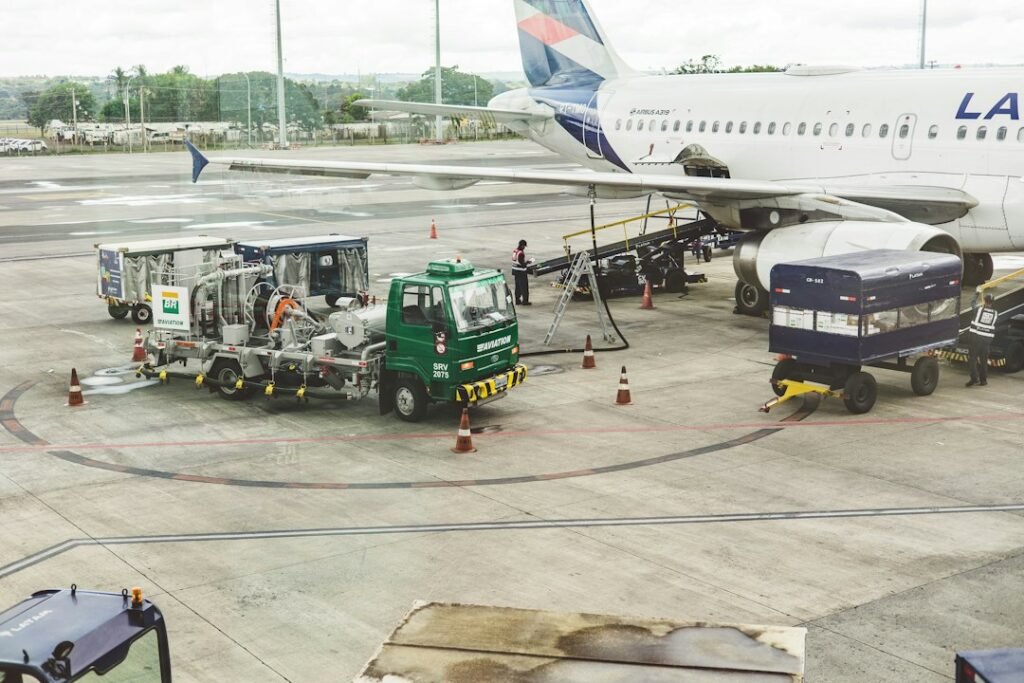
Airplane being refueled on the tarmac at an airport

The sustainable aviation fuel price for HEFA-SPK FOB Straits was 2,540 dollars a metric tonne. That is Platts’s CORSIA-certified assessment out of Singapore, on 9 September 2026. It was a premium of 1,247.50 dollars over the conventional jet fuel forward curve. In Northwest Europe, BNEF put SAF prices at roughly 2,830 dollars a tonne for the second quarter of 2026. That was up 31 percent since the Strait of Hormuz disruption began. Meanwhile, the jet fuel average over the same period was 1,404 dollars. Two markets, two numbers, the same underlying pattern. SAF trades at close to double the price of the fuel it replaces. That premium also moves more than the conventional price does.

In short: the sustainable aviation fuel price is not one number. It is a premium over jet fuel that swings with feedstock costs, regional supply, and policy design. It is also more volatile than the conventional fuel price itself. This article sets out what actually moves the sustainable aviation fuel price. It also looks at how Singapore’s new levy-based buying model is trying to control that volatility. And it covers what that means for a developer or investor pricing a project around a target.

Facebook
Twitter
LinkedIn

In this article

The sustainable aviation fuel price premium is what moves

Officials tracking Asian SAF markets describe the premium over jet fuel as more volatile than the jet fuel price itself. Even so, on-paper capacity across China, Singapore and Malaysia continues to build out ([S&P Global, September 2026](https://www.spglobal.com/energy/en/news-research/latest-news/crude-oil/090926-appec-singapore-sees-centralized-saf-buying-sharpening-asian-price-signals)). More capacity on paper does not remove price risk. Because the premium reflects how tight the market for actual, certified, deliverable cargoes is right now. That is not the same as how much capacity is theoretically planned for later.

In the United States, finalised biomass-based diesel blending mandates have raised SAF production costs. That put US costs about 1,000 dollars a tonne above Asia Pacific and European levels as of May 2026. See [BNEF, July 2026](https://about.bnef.com/insights/clean-energy/sustainable-aviation-fuel-price-outlook-leveling-off/). That gap exists because US feedstock demand now competes directly with road transport biofuel mandates. They need the same waste oils and residues as SAF plants. That raises the input cost before a single SAF cargo is produced. A European or Asian buyer is not pricing against a single global SAF cost curve. So each region has its own feedstock competition and its own price floor.

Singapore's levy model, and why it changes the aviation fuel price

Singapore is taking a different approach from a blending mandate. Its SAF levy applies to passenger tickets and general and business aviation from 1 October 2026. Departures from 1 January 2027 are covered, with air cargo deferred a year behind. SAFCo, a nonprofit owned by the Civil Aviation Authority of Singapore, collects the levy. It then aggregates demand across the market and buys SAF within that fixed budget. CAAS describes this as a “buy what you can afford” model rather than a “buy at all costs” mandate. When prices rise, SAFCo’s purchase volume falls. So SAFCo does not pass the full cost straight through to travellers ([S&P Global, September 2026](https://www.spglobal.com/energy/en/news-research/latest-news/crude-oil/090926-appec-singapore-sees-centralized-saf-buying-sharpening-asian-price-signals)).

SAFCo’s CEO argues that centralising demand should support better price discovery and more transparent signals across the value chain. Asian SAF deals have historically referenced overseas pricing rather than reflecting the region’s own supply, demand, feedstock and logistics dynamics. SAFCo ran a voluntary procurement trial with nine partners in August 2026. It plans its first levy-funded RFP by the end of the year. For a developer, this is worth tracking closely. It is one of the first attempts to build a buyer with enough aggregated demand to move the price signal. Rather than having every airline negotiate bilaterally against a thin, opaque market.

What the sustainable aviation fuel price means for a project or an offtake

Driver What it does to the price
Feedstock competition (road transport biofuel mandates) Raises input costs and pushes regional SAF prices apart, as seen in the US premium over Asia Pacific and Europe
Market tightness versus paper capacity Keeps the premium volatile even as announced capacity grows, because deliverable certified cargoes remain scarce
Levy-based demand aggregation (Singapore model) Caps how much a buyer pays by capping volume instead, which should dampen pass-through volatility over time
Bilateral, opaque offtake markets Limits public price data, which is itself a reason regional price benchmarks remain unstable
Macro fuel market shocks (Strait of Hormuz, Iran war) Move the underlying jet fuel price, and the SAF premium on top of it, in the same direction at once

Where aviation fuel price forecasts break in practice

Most often I see a developer or investor anchoring a financial model to a single SAF price figure. Instead, it is usually pulled from a European or US benchmark. They rarely adjust for the fact that Asian SAF pricing has its own feedstock, logistics and now policy dynamics. The Platts Straits benchmark and the BNEF Northwest Europe figure are both real numbers. So neither should be used interchangeably with the other for a Southeast Asian project’s economics.

The second mistake is assuming growing announced production capacity will compress the premium on a predictable timeline. Capacity announcements across China, Singapore and Malaysia have not prevented the premium from staying volatile. Because what actually moves the price is deliverable, certified supply against real demand at a given moment. It is not a pipeline of projects still years from operation.

A four-step method for pricing SAF into a project or offtake

  1. Use a regional benchmark that matches your buyer, not the nearest headline figure. A Singapore-based offtaker prices against the Platts Straits benchmark; a European buyer against Northwest Europe figures. Mixing them understates or overstates your project’s real revenue.
  2. Model the premium separately from the jet fuel price. Since the premium moves independently and more sharply, stress-test it separately. A model that only flexes the absolute SAF price will understate downside risk.
  3. Track feedstock competition in your target market, not just SAF-specific news. Road transport biofuel mandates, as seen in the US, can quietly raise your feedstock costs. They do so before any SAF-specific policy shift makes headlines.
  4. Watch demand-aggregation models like Singapore’s levy as they develop. A buyer structure designed to dampen price pass-through changes what a stable long-term offtake price looks like in that market. It is worth factoring into negotiations with any Singapore-linked buyer.

Common aviation fuel price mistakes

  • Using a single global SAF price assumption instead of a region-matched benchmark.
  • Treating growing announced capacity as a reason to expect the premium to fall on a predictable schedule.
  • Ignoring feedstock competition from adjacent biofuel mandates when forecasting regional SAF costs.
  • Modelling the SAF price as a single number rather than jet fuel plus a separately volatile premium.

Checklist: aviation fuel price assumptions for a financial model

  • Have you matched your price benchmark to your buyer’s actual region?
  • Have you modelled the jet fuel price and the SAF premium as separate, independently volatile variables?
  • Have you checked for feedstock competition from road transport or other biofuel mandates in your target market?
  • Have you accounted for how a demand-aggregation buyer, like Singapore’s SAFCo, might structure price and volume differently? That can differ from a bilateral airline offtake.
  • Does your offtake contract specify which published benchmark and premium mechanism the price is tied to?

Sources

FAQ

if you are structuring a SAF offtake or financial model, that is the conversation I have. I check the pricing assumptions against the right regional benchmark. Book a 30-minute call or see how I work on offtake agreements and SAF.

Not sure your project would survive a credit conversation?

A short call is usually enough to see where your project stands against what a lender or an equity investor will ask for. Tell me where your project is today, and I will tell you what the next conversation needs to look like.

Alex, Founder of WeConnect Asia

I do not provide investment advice or arrange investments. I act as a strategic advisor and facilitator.

Facebook
Twitter
LinkedIn

Related articles




