
Home » ReFuelEU Offtake: Who Actually Buys Your SAF?
ReFuelEU Offtake: Who Actually Buys Your SAF?
10 min read · Oct 19, 2026 · By Alex
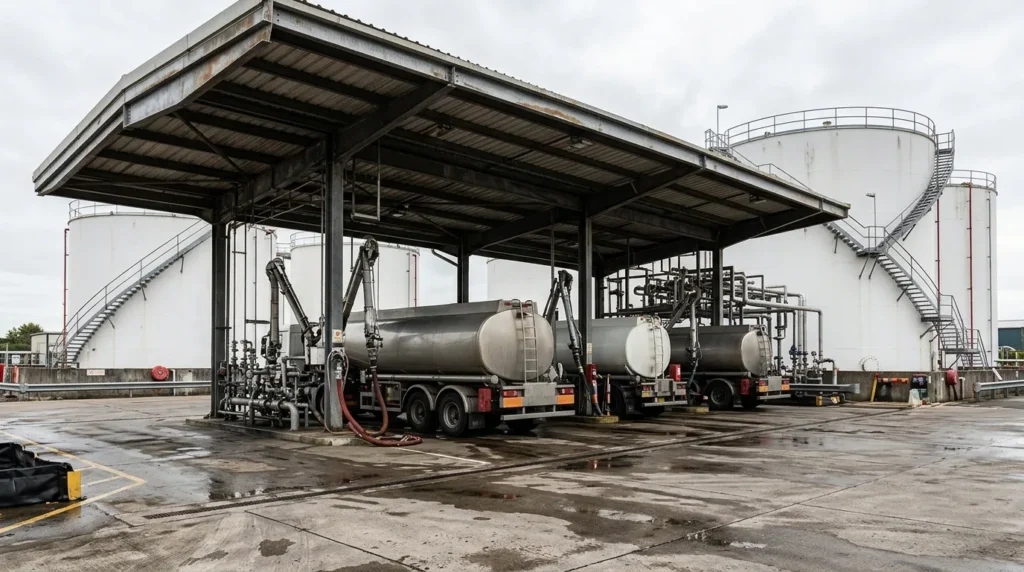
ReFuelEU offtake starts with a question that surprises many developers: who is actually obliged to buy SAF? In fact, the blending obligation under ReFuelEU Aviation falls on aviation fuel suppliers, not on airlines. Instead, airlines have a different obligation, on fuel uplift and reporting. Consequently, that changes who you should talk to first, and what a lender expects to see in the contract.
In short
- Firstly, fuel suppliers must make a minimum SAF share available at EU airports.
- Airlines must uplift at least 90 % of their yearly fuel at a given EU airport and must report.
- Your first offtake counterparty is therefore often a supplier or trader, with airlines as downstream buyers.
- In addition, a 10-year transitional period lets suppliers meet the share as a weighted average, which affects contract volumes.
- Finally, only eligible feedstock counts: the regulation excludes palm, soy and PFAD from the calculation.
In this article
Who is obliged in a ReFuelEU offtake
Article 4(1) of Regulation (EU) 2023/2405 puts the duty on the aviation fuel supplier. All aviation fuel made available to aircraft operators at each Union airport must contain the minimum shares of SAF set out in Annex I. That includes the minimum shares of synthetic aviation fuel. In practice, the ladder runs from 2 % in 2025 to 70 % in 2050. For the supplier, that is a blending duty on the fuel it sells at the gate, not a target it can report at group level.
The scope is set in Article 3. A Union airport means an airport with more than 800 000 passengers or more than 100 000 tonnes of freight in the previous reporting period. An aircraft operator means an operator with at least 500 commercial passenger flights, or 52 all-cargo flights, from Union airports. Therefore the duty follows the fuel rather than the airline brand. A supplier delivering at a covered airport carries it whether the customer is a flag carrier or a cargo operator.
On the airline side, Article 5 requires each operator to uplift at least 90 % of the yearly fuel it needs at a given Union airport. The exemption is narrow: routes under 850 km, or 1 200 km for islands without rail or road links. Operators report under Article 8 and claim SAF use under Article 9, while suppliers report under Article 10 into the Union database. Moreover, Article 11 designates the competent authority in each Member State and Article 12 sets the fines. The airport managing body has a duty too, but Article 6 only asks it to take all necessary measures to facilitate access, not to own the blending infrastructure. For the rule itself, see What Is ReFuelEU Aviation?.
Who signs the ReFuelEU offtake?
The table below is the short version of who turns up at the table. In practice, the party that carries the obligation has the strongest reason to sign a multi-year contract, because a fine and a make-up duty sit on its books. That is why a ReFuelEU offtake usually starts with the supplier and not with the airline.
| Counterparty | Why they buy | Typical role |
|---|---|---|
| Fuel supplier | Meets the blending obligation | Main buyer of physical or certified SAF |
| Airline | Reduces emissions, uses ETS saving, meets own targets | Direct or indirect buyer |
| Trader | Aggregates supply | Intermediary, takes price risk |
| Corporate customer | Scope 3 targets | Buyer of the attribute, often by book and claim |
Two details decide who can actually perform. Article 4(6) lets a supplier demonstrate compliance through the mass balance system of Directive (EU) 2018/2001. The contract therefore has to say who holds the certificate and where the balance is kept. In addition, Article 9 forbids an operator from claiming the same batch of SAF under more than one greenhouse gas scheme. A double-sold attribute is therefore a contractual problem and not only an accounting one. In practice, the buyer with the balance sheet is also the one that can hold a long contract. The IEA notes in its 2025 investment report that LNG portfolio players have used their own balance sheets to fill the gap left by buyers unwilling to commit to long-term offtake over decades. The same pattern decides who your real counterparty is in a ReFuelEU offtake.
ReFuelEU offtake structures lenders read
There is no public price benchmark for SAF offtake that I have been able to verify. The only public price signal in the regulation is the penalty formula, and lenders read the contract against it. In practice, four variables decide whether a term sheet survives credit. They are take-or-pay or minimum volume, fixed price or indexation, tenor against the debt, and what happens if the buyer’s obligation changes.
Three provisions shape all four. Article 12(4) sets the fine for a supplier that misses the minimum shares. It is no less than twice the difference between the yearly average price of conventional aviation fuel and SAF per tonne, multiplied by the quantity that does not comply. The same text requires the supplier, under Article 4(7) and Article 12(8), to make up the shortfall in the following reporting period. Because the obligation cannot be bought out, the supplier needs physical molecules, and that is what turns a mandate into a volume commitment. By contrast, Article 15 gives the supplier flexibility on where it blends until 2034, which is why a contract needs a delivery-point clause and not just a national volume.
Take-or-pay is therefore the structure a lender prefers, and a minimum annual volume with a nomination window is the version most suppliers will accept. Moreover, the indexation clause matters as much as the level: a fixed price with no feedstock pass-through fails at the first used cooking oil spike. For the full guide, read How to Secure SAF Offtake Agreements That Lenders Will Back.
What the penalty formula does to a ReFuelEU offtake price
The fine is not a fixed amount. Because it is twice the price gap per tonne times the shortfall quantity, the fine grows exactly as SAF becomes more expensive relative to jet. That has a commercial consequence: the supplier’s exposure is proportional to the premium, so the premium is also what it can justify paying in order to avoid the fine. Consequently the fine works as a floor under the price in a ReFuelEU offtake, not as a cap.
Two limits matter. First, Article 12(1) leaves the penalty rules to Member States, which had to notify the Commission by 31 December 2024. The regulation sets a minimum and not a uniform tariff, so the cost of non-compliance is not the same in every Member State. Second, the make-up duty in Article 12(8) means a fine does not discharge the obligation. Therefore a supplier that misses a year must buy more the next year. A lender should treat that make-up volume as part of the demand case, not as a penalty line in the model.
The transitional period and ReFuelEU offtake volumes
Article 15(1) allows a supplier, from 2025 until the end of 2034, to meet the minimum shares as a weighted average. The average runs over all the aviation fuel it supplied across Union airports in that reporting period. In effect, the supplier can blend more where it is cheapest and less where logistics are hard, as long as the average holds. As a result, a single airport is not a guaranteed annual volume during that window.
The synthetic sub-target has its own windows. It averages 1.2 % over 2030 and 2031, with a yearly minimum of 0.7 %. It then averages 2.0 % over 2032 to 2034, with 1.2 % in 2032 and 2033 and 2.0 % in 2034. For a contract, that argues for a minimum annual volume with flexible delivery windows and an annual nomination, not a flat monthly schedule. In addition, the make-up rule in Article 4(7) means a shortfall does not disappear at the end of a year; it moves into the next one.
Selling from Southeast Asia into a ReFuelEU offtake
The obligation sits at EU airports and your plant does not. Therefore the buyer is an EU supplier or a trader that can take title at an EU airport. A ReFuelEU offtake also has to solve a chain of custody problem before it solves a price problem.
Feedstock is where most Asian projects fail the test. Article 4(5) excludes food and feed crops, intermediate crops, palm fatty acid distillate, palm and soy derived materials, and soap stock and its derivatives from the calculation of the minimum shares. In addition, Article 4(4) caps aviation biofuels that are not advanced biofuels at 3 % of the fuel supplied for compliance. For a producer counting on palm-derived feedstock, the fuel can be sustainable on paper and still not count for the buyer. A buyer that cannot count the fuel will not pay the premium.
What does count is feedstock listed in Annex IX of Directive (EU) 2018/2001, including used cooking oil and advanced residues. The batch must be certified against that directive’s sustainability and greenhouse gas criteria, and the chain of custody must be documented. Consequently the eligibility file comes before the offtake negotiation and not after it. For the certification and logistics sequence, read Export SAF to Europe.
A second buyer model: Singapore's SAFCo
Europe is not the only market where the obliged party is not the airline. In Singapore, the Civil Aviation Authority collects a SAF levy on origin and destination passengers. SAFCo, a company limited by guarantee wholly owned by CAAS, aggregates that demand together with voluntary demand and procures the SAF and the environmental attributes. The levy applies to tickets and services sold from 1 October 2026, for flights departing from 1 January 2027.
For a producer, the structure changes the counterparty and the document, compared with a ReFuelEU offtake. SAFCo manages the attributes separately from the physical fuel and allocates them to eligible users. It planned to launch a request for proposal for levy-funded SAF by the end of 2026, with the first batch delivered and uplifted in mid 2027. Therefore the Singapore procurement is a tender rather than a bilateral negotiation: stronger credit, competitive price discovery, and less room to negotiate bespoke terms. See Southeast Asia SAF for the regional picture.
Contract points a lender reads first in a ReFuelEU offtake
- Counterparty credit quality, including whether the buyer is the obliged supplier or an airline buying on top of the mandate.
- Take-or-pay or minimum volume, with the make-up duty in Article 12(8) reflected in the floor.
- Price formula and feedstock pass-through, tested against a used cooking oil spike and a freight shock.
- Certification and delivery obligations: which scheme, which mass balance, which airport.
- Change-in-law and termination clauses, written against the 2027 review and the end of the transitional period in 2034.
I am not the one who has negotiated these contracts, so I bring in an independent offtake specialist with ten years of experience structuring SAF offtake deals when the contract needs to be built. In addition, see offtake agreements and ReFuelEU Bankability.
Sources
Sources
- Regulation (EU) 2023/2405 of 18 October 2023 on ensuring a level playing field for sustainable air transport (ReFuelEU Aviation), Articles 3, 4, 5, 6, 8, 9, 10, 11, 12, 15 and Annex I, EUR-Lex: https://eur-lex.europa.eu/eli/reg/2023/2405/oj/eng
- European Parliamentary Research Service, “ReFuelEU Aviation initiative”, PE 698.900, November 2023 (scope thresholds, final schedule, transitional period, stakeholder positions): https://www.europarl.europa.eu/RegData/etudes/BRIE/2022/698900/EPRS_BRI(2022)698900_EN.pdf
- Civil Aviation Authority of Singapore, media release of 3 September 2026 on the SAF Levy, SAFCo and environmental attribute allocation: https://www.caas.gov.sg/resources/media-and-publication/newsroom/caas-to-start-sustainable-aviation-fuel-levy-for-origin-destination-passengers-from-1-october-2026-for-flights-departing-from-1-january-2027
- IEA, World Energy Investment 2025 (buyers hesitant to commit to long-term offtake, portfolio players financing the gap): https://www.iea.org/reports/world-energy-investment-2025
FAQ
Is the airline the buyer under ReFuelEU?
Not by obligation. In fact, the blending obligation sits on suppliers. Airlines can still buy directly.
Can I sign directly with an airline?
Yes, many do. A lender will still ask whether the airline’s volume is firm.
Who reports under ReFuelEU?
Operators report under Article 8 and suppliers under Article 10. Therefore the reporting duty follows the obligation, and the supplier holds the blending data a lender will ask for.
Does the transitional period reduce demand?
Indeed, it gives suppliers flexibility on timing, not an exemption.
Does the fine replace the obligation?
No. Under Article 12(8) the supplier must still make up the shortfall in the following period.
What is book and claim?
A system where the SAF attribute is sold separately from the physical fuel. See Book and Claim for SAF.
How long should an offtake be?
Long enough to cover the debt tenor. Therefore, lenders ask for this early.
Is there a public price for ReFuelEU offtake?
No. In practice the penalty formula is the only public anchor, and the rest is negotiated deal by deal.
Next step
A short call is usually enough to see where your project stands before a lender or an offtaker looks at it.
If you want to test your offtake structure, book a 30-minute call.
I do not provide investment advice or arrange investments. I act as a strategic advisor and facilitator.

Alex, Founder of WeConnect Asia
I help low-carbon fuel and carbon removal project developers in Southeast Asia secure the commercial and financial partners needed to reach FID.
Related articles

Biomethane: What It Is, How It Is Made and Who Buys It
Biomethane is biogas cleaned to pipeline quality. I explain how it is made, how it differs from biogas and who buys it in Southeast Asia.

Southeast Asia SAF: Policies, Demand and Project Status
Southeast Asia SAF policy is moving country by country. Here is where demand is forming, who the buyers are and what a developer can rely on today.

e-SAF Project Finance: Why the Sub-Mandate Is Not Enough
The synthetic fuel sub-mandate creates demand for e-SAF, but not a bankable project. Here is what e-SAF project finance still needs in Southeast Asia.

SAF Mandates by Country: A Developer’s Comparison
SAF mandates differ by country in scope, target and penalty. Here is a side-by-side comparison and what each one means for project revenue.

Sustainable Aviation Fuel: Pathways, Mandates and What Gets Financed
Sustainable aviation fuel has several pathways and sells into mandates. I explain the routes, the demand and what gets financed in Asia.

ReFuelEU Offtake: Who Actually Buys Your SAF?
The ReFuelEU mandate sits on fuel suppliers, not airlines. Here is what that means for ReFuelEU offtake contracts and what lenders expect to see.