


Home » Advanced Biofuels: Why Multi-Product Plants Get Built
Advanced Biofuels:
Why Multi-Product Plants Get Built
7 min read · Oct 13, 2025 · By Alex
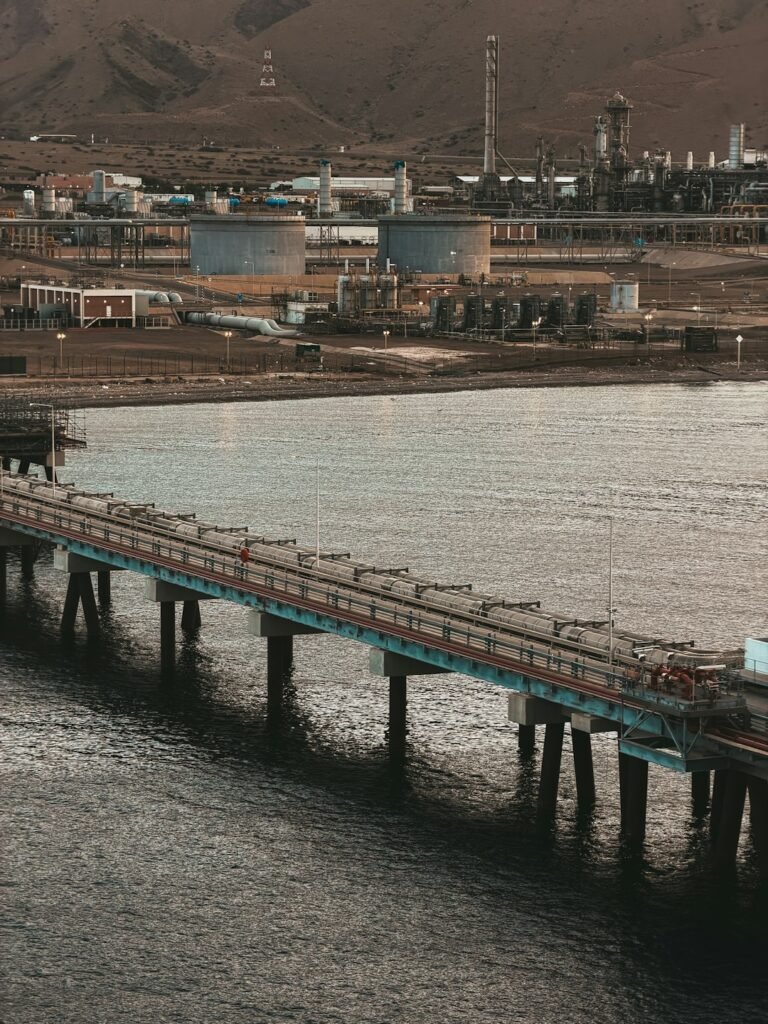
When it comes to multi-product plants, the details below decide whether a project gets financed. Petronas, Italy’s Enilive and Japan’s Euglena began building a 650,000 tonne a year biorefinery at Pengerang in Johor. Operations are targeted for the second half of 2028. The plant takes up to 650,000 tonnes a year of used cooking oil, animal fats and vegetable oil residues. It turns them into sustainable aviation fuel, hydrogenated vegetable oil and bio-naphtha for Asia. It is not a single-product SAF plant with a single feedstock. That design choice, not the capacity figure, is why this project moved from announcement to construction. Several single-product SAF projects in the region are still negotiating their first offtake.
In short: Advanced biofuel plants that flex between SAF, HVO and bio-naphtha reach construction faster than single-product designs. Multi-product plants pair that product flexibility with a diversified feedstock pool, instead of one feedstock and one buyer. This article looks at why that flexibility matters, using Pengerang as the reference case.
In this article
Multi-product plants: why feedstock diversification changes the bankability case
A plant that runs on used cooking oil, animal fats or vegetable oil residues interchangeably avoids a single-feedstock shock. It is also insulated when an exporting country changes policy. Indonesia has signalled limits on used cooking oil exports, as discussed elsewhere on this site. A single-feedstock plant has no answer to that shock. A multi-feedstock design lets a developer substitute inputs as relative prices and availability shift. For a lender, that is a different risk profile from a plant that fails when one feedstock dries up. Multi-product plants reduce that exposure at the design stage.
Multi-product plants: why product flexibility matters as much as feedstock flexibility
SAF, HVO and bio-naphtha come from a closely related processing route. A plant built to swing output between them hedges against the price volatility this site has covered in SAF markets. The premium moves independently of the underlying fuel price and differs by region with feedstock competition. If SAF offtake negotiations stall, or the SAF premium compresses, the same feedstock can go to HVO or bio-naphtha. Those outputs serve road transport and petrochemical feedstock instead. A single-product SAF plant has no equivalent fallback; its economics depend entirely on one buyer type accepting one price.
What this means in practice: multi-product plants versus a single-product SAF plant
| Multi-product biorefinery (Pengerang) | Single-product SAF plant | |
|---|---|---|
| Feedstock exposure | Used cooking oil, animal fats, vegetable oil residues, interchangeable | Typically one or two feedstocks, often UCO specifically |
| Product exposure | SAF, HVO, bio-naphtha, can shift output mix with market conditions | SAF only; revenue depends entirely on the SAF offtake and premium |
| Sponsor structure | A national oil company, a European biofuel major, and a Japanese biotech firm, each bringing distribution, technology or market access | Often a single developer or a smaller consortium without the same market reach |
| Status | Construction underway, targeting operations H2 2028 | Several regional projects remain pre-FID or have deferred FID |
Where this breaks in practice
The most common mistake I see is designing a plant around one product with the highest headline price, usually SAF. They rarely ask whether the same plant could also make HVO or bio-naphtha when SAF offtake drags. That optionality costs something at the design stage. Additional processing flexibility is not free. It is also what let Pengerang move to construction with multiple products and sponsors sharing the risk. The alternative is waiting on a single buyer to commit.
The second mistake is assuming this multi-party, multi-product structure is only for a national oil company. Companies like Enilive and Euglena show otherwise. The underlying principle applies at smaller scale too: multi-product plants are built on feedstock and product flexibility, not on one input and one buyer.
A four-step method for building multi-product plants
- Design the feedstock intake to accept more than one input. Even at smaller scale, a plant that switches between used cooking oil, animal fats or other residues is less exposed. One market’s policy or price shock then hurts it less.
- Keep the product slate open where the technology allows it. If your process can produce HVO or bio-naphtha alongside SAF, keep that option live. Do not commit the whole design to SAF alone.
- Bring in partners who extend market reach, not just capital. Pengerang pairs a national oil company’s domestic position with a European major’s distribution and a Japanese firm’s technology. Think about what gaps a partner can close beyond funding.
- Sequence offtake negotiations across products, not just one. Negotiating SAF, HVO and bio-naphtha offtake in parallel keeps one stalled product line from blocking the whole project.
Common mistakes
- Designing around a single feedstock because it is cheapest today, without checking policy or export risk in the source country.
- Committing the full plant design to one product, usually SAF, before offtake negotiations are mature enough to justify that bet.
- Bringing in partners purely for capital, rather than for market access or technology that closes a specific gap.
- Treating multi-product flexibility as a cost to avoid rather than a bankability feature that justifies the extra design complexity.
Checklist for designing flexible multi-product plants
- Can your plant accept more than one feedstock without a major redesign?
- Can your process route produce more than one output product (SAF, HVO, bio-naphtha, or others) from the same feedstock?
- Have you mapped feedstock policy risk in every country you plan to source from?
- Are you negotiating offtake across more than one product line in parallel, rather than betting everything on one?
- Do your partners bring market access or technology, not only capital?
Sources
FAQ
Next step:
stress-test your advanced biofuels project in Southeast Asia before you commit to a single-product design. Feedstock and product flexibility are the two things I check first. That is the conversation I have. Book a 30-minute call or see how I work on feedstock supply and strategic partnerships.
Not sure your project would survive a credit conversation?
A short call is usually enough to see where your project stands against what a lender or an equity investor will ask for. Tell me where your project is today, and I will tell you what the next conversation needs to look like.
I do not provide investment advice or arrange investments. I act as a strategic advisor and facilitator.
Related articles

Biomethane: What It Is, How It Is Made and Who Buys It
Biomethane is biogas cleaned to pipeline quality. I explain how it is made, how it differs from biogas and who buys it in Southeast Asia.

Southeast Asia SAF: Policies, Demand and Project Status
Southeast Asia SAF policy is moving country by country. Here is where demand is forming, who the buyers are and what a developer can rely on today.

e-SAF Project Finance: Why the Sub-Mandate Is Not Enough
The synthetic fuel sub-mandate creates demand for e-SAF, but not a bankable project. Here is what e-SAF project finance still needs in Southeast Asia.

SAF Mandates by Country: A Developer’s Comparison
SAF mandates differ by country in scope, target and penalty. Here is a side-by-side comparison and what each one means for project revenue.

Sustainable Aviation Fuel: Pathways, Mandates and What Gets Financed
Sustainable aviation fuel has several pathways and sells into mandates. I explain the routes, the demand and what gets financed in Asia.

ReFuelEU Offtake: Who Actually Buys Your SAF?
The ReFuelEU mandate sits on fuel suppliers, not airlines. Here is what that means for ReFuelEU offtake contracts and what lenders expect to see.