


We Connect Asia

BANKABILITY

How a Biogas Plant Works:
From Palm Mill Effluent to Pipeline Gas

7 min read  ·  Sep 30, 2025  ·  By Alex

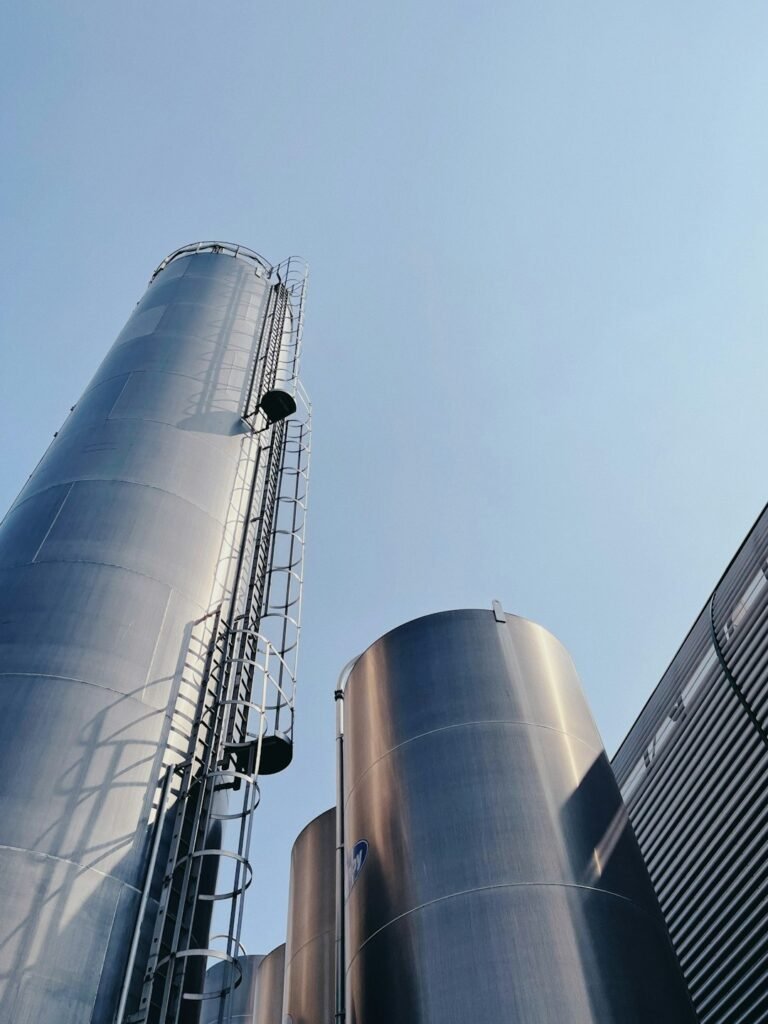
Industrial processing silos against a clear sky

When developers ask me about the biogas plant process in Southeast Asia, they’re usually picturing a small farm digester somewhere. The real opportunity here is industrial-scale: every crude palm oil mill produces a liquid waste stream called POME. Palm oil mill effluent (POME) is one of the largest untapped biogas feedstocks on the planet. Most of it still sits in open ponds, releasing methane straight into the atmosphere.

In short: a biogas plant captures methane from organic waste, usually by sealing an anaerobic digestion pond or tank, and either burns that gas on-site for power and heat or upgrades it to pipeline-grade biomethane. In this region, the single biggest feedstock pool is POME from palm oil mills, and most of it is sitting idle.

Facebook
Twitter
LinkedIn

In this article

The biogas plant process, step by step

  1. Feedstock collection. For a palm mill, this is the effluent stream that already flows out of the mill’s processing line into holding ponds. No separate collection logistics needed, unlike municipal waste.
  2. Anaerobic digestion. The effluent sits in an oxygen-free environment, either a covered open pond or a sealed tank digester, where bacteria break down organic matter and release methane-rich biogas as a byproduct.
  3. Gas capture. A floating or fixed cover over the pond traps the gas instead of letting it vent, and a collection pipe network carries it to a flare, a generator, or an upgrading unit.
  4. End use decision. You can flare the captured gas to destroy methane for carbon credits, even though flaring wastes the energy. You can also burn it in a gas engine to generate electricity. Or scrub CO2 and moisture to reach pipeline-grade biomethane for grid injection or bio-CNG compression.
  5. Digestate handling. What’s left after digestion is a nutrient-rich liquid. Plantations can often apply it to their land as fertilizer, closing part of the nutrient loop.

Biogas plant process economics: Indonesia's POME math

Indonesia alone produces around 125 million metric tonnes of POME a year, from plantations covering about 16.8 million hectares that yield roughly 250 million tonnes of fresh fruit bunches annually. Each tonne of POME yields around 28.8 cubic meters of biogas, according to palm industry economist Tungkot Sipayung. Run that math across the national POME volume and the theoretical annual biogas output comes out to about 3.6 billion cubic meters.

Here’s the number that should get a developer’s attention: bioenergy currently uses only about 15% of that POME. The other 85% mostly sits in open ponds. Methane escapes untreated into the atmosphere instead of operators capturing and monetizing it.

Annual POME volume (Indonesia) ~125 million tonnes
Biogas yield per tonne of POME ~28.8 m³
Theoretical national biogas potential ~3.6 billion m³/year
Current utilization rate ~15% of capacity
Emissions avoided per standard capture unit ~1,131 tonnes CO2e/month

Who's actually moving on this

The deal structures emerging in the region give a good sense of how this gets built. In Malaysia, FGV Palm Industries signed an MoU with Sime Darby Energy Solutions and Biotek Dinamik covering a potential rollout across 35 brownfield and greenfield mill sites to produce bio-compressed natural gas from POME. The roles split cleanly: FGV provides the mill sites and the POME supply, Sime Darby Energy Solutions handles design and construction, and Biotek Dinamik develops, owns, and operates the plants on a build-operate-own basis.

That three-way split, landowner plus EPC plus BOO operator, is a structure worth studying for a POME biogas deal. It secures deal financing without pushing construction and operating risk onto the mill owner.

Where the biogas plant process breaks in practice

  • Underestimating seasonal feedstock swings. POME volume tracks fresh fruit bunch processing, which varies with harvest cycles and crop age. A biogas plant sized for peak-season POME flow will sit underutilized for months at a time if the model doesn’t account for this.
  • Treating the end-use decision as an afterthought. Flaring is the easiest path to a carbon credit, but it leaves power or pipeline-gas revenue on the table. Deciding whether you’re building for carbon credits, on-site power, or grid-injectable biomethane changes the equipment spec substantially, and that decision needs to happen before procurement, not after.
  • Assuming digestate disposal is free. It usually has real value as plantation fertilizer, but only if there’s a logistics plan to move it from the digester to the fields. Without that plan, it becomes a disposal cost instead of a revenue offset.

A practical method for evaluating a POME biogas opportunity

  1. Get 12 months of actual mill throughput data, not an annual average, to capture seasonal POME flow variation.
  2. Decide your end use before you spec equipment. Carbon credits via flaring, on-site power generation, and pipeline-grade biomethane each call for a different capture and treatment train.
  3. Map the digestate offtake route to plantation land or elsewhere before finalizing the project. That way it appears as a revenue line instead of getting ignored.
  4. Check whether the mill owner wants to operate the asset or not. The FGV-Sime Darby-Biotek structure above shows a workable template when the landowner wants the gas but not the operating risk.

Common mistakes I see developers make

  • Pricing a POME biogas project purely on carbon credits without checking whether a power or pipeline-gas offtake would be worth more.
  • Not accounting for the mill’s own seasonal fresh fruit bunch processing cycle in the feedstock model.
  • Skipping a clear ownership and operating structure, which is often the deciding factor for whether a mill owner will sign on.
  • Ignoring digestate as a disposal cost rather than modeling it as a fertilizer revenue offset.

A biogas plant process checklist before you take this to lenders

  • Twelve months of actual mill POME throughput data, not an annual estimate
  • A defined end-use path: flaring for credits, power generation, or pipeline-grade biomethane
  • A digestate offtake plan with an identified buyer or use
  • A clear ownership and operating structure between the mill owner, the EPC contractor, and the asset operator
  • An understanding of the applicable carbon crediting mechanism, since methane capture economics increasingly depend on it

Sources

FAQ

The mill already concentrates the feedstock on site, so the project needs no collection logistics and the volumes are enormous. Indonesia alone produces roughly 125 million tonnes of POME a year, and bioenergy uses only about 15% of it.

Flaring destroys the methane and can qualify for carbon credits, but it leaves the energy value unused. Whether that trade-off makes sense depends on local power prices, grid access, and available carbon credit value. Make the end-use decision early in project design.

A build-operate-own structure splits the roles cleanly. The mill owner supplies the site and feedstock, while the EPC contractor handles design and construction. A third-party operator then owns and runs the asset. Multi-site rollouts in Malaysia now use this workable template.

If you’re evaluating a POME or industrial biogas opportunity and want to pressure-test the feedstock model or the ownership structure, that’s exactly the kind of conversation I have with developers regularly. Get in touch and we can work through your numbers.

I’m part of the WeConnect Asia team, working with developers and investors on low-carbon infrastructure projects across Southeast Asia.

This article is for general informational purposes and does not constitute financial, legal, or engineering advice. Figures cited are drawn from publicly reported data and should be independently verified before use in any financial model.

Not sure your project would survive a credit conversation?

A short call is usually enough to see where your project stands against what a lender or an equity investor will ask for. Tell me where your project is today, and I will tell you what the next conversation needs to look like.

Alex, Founder of WeConnect Asia

Alex, Founder of WeConnect Asia

I help low-carbon fuel and carbon removal project developers in Southeast Asia secure the commercial and financial partners needed to reach FID.

More about me·Get in touch

Facebook
Twitter
LinkedIn

Related articles




