


We Connect Asia

SOUTHEAST ASIA

The Green Ammonia Market in Southeast Asia:
Why Singapore's Bunkering Bet Matters

6 min read  ·  Jun 30, 2026  ·  By Alex

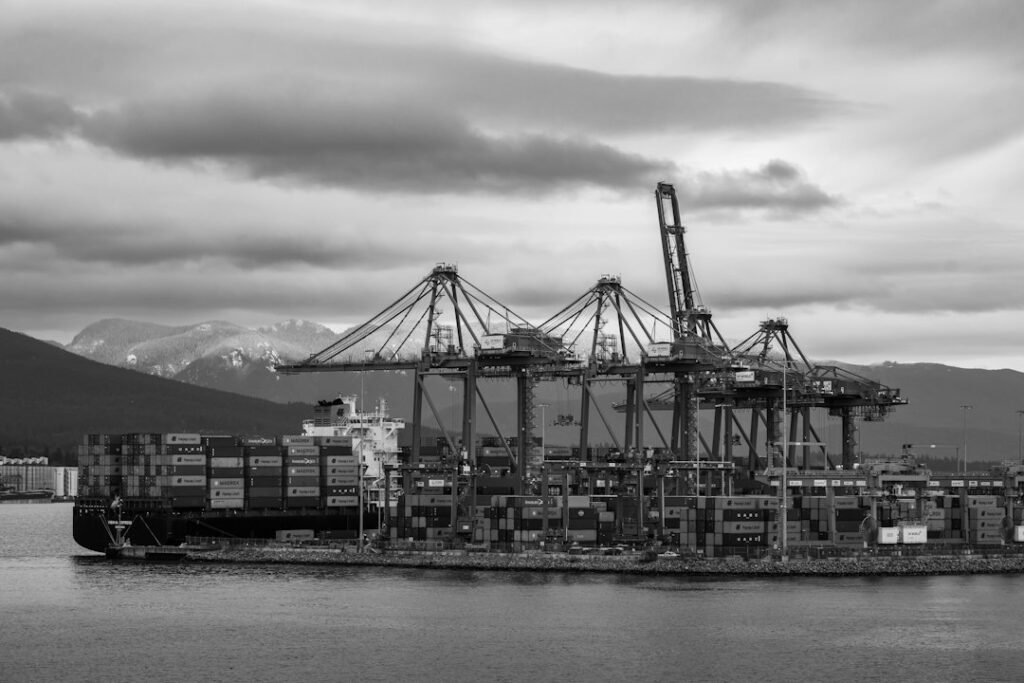
Cranes unloading a cargo ship at a port

Most conversations about green ammonia in this region still center on production, who’s building a plant, what the retrofit economics look like. Fewer people are looking closely at the demand side, and that’s a mistake, because the clearest, most concretely dated demand signal in Southeast Asia right now isn’t a production project at all. It’s Singapore’s bet on ammonia as a marine fuel.

In short: Singapore’s Maritime and Port Authority granted the region’s first ammonia bunkering authorization in May 2026, and the Global Centre for Maritime Decarbonisation projects Singapore’s ammonia bunker demand could reach about 2 million tonnes per year by 2035. That’s a real, dated, quantified demand pool, distinct from the production-side announcements that dominate most market coverage.

Facebook
Twitter
LinkedIn

In this article

What actually happened in Singapore

Singapore’s MPA authorized the region’s first ship-to-ship ammonia bunkering operation, effective May 15, 2026, for a trial period of up to two years. The operator is ZETA Bunkering, a subsidiary of Japan’s Itochu Corporation, which is building a newbuild ammonia bunker vessel with about 5,000 cbm of capacity, expected for delivery in September 2027, with bunkering trials expected to begin by late 2027.

The vessel orders behind this give a sense of how real the demand is: Mitsui O.S.K. Lines and CMB.TECH jointly own three ammonia-fitted 210,000 dwt Newcastle bulk carriers on 10-year charters to MOL, plus six chemical tankers (two ammonia-fitted on delivery, four ammonia-ready) chartered to MOL Chemical Tankers. Classification society DNV reports 14 confirmed orders for ammonia-capable vessels for delivery through 2026, eight of them bulk carriers. This isn’t a pilot built on paper projections, it’s built on actual ship orders already placed.

The demand number that matters: 2 million tonnes by 2035

The Global Centre for Maritime Decarbonisation (GCMD) has shortlisted three sites to pilot ammonia bunkering infrastructure in Singapore: the Advario terminal at Jurong Port (roughly 580,000 cbm storage capacity), the Vopak Banyan Terminal (where Vopak plans to expand existing ammonia infrastructure), and Raffles Reserved Anchorage. GCMD’s own study projects Singapore’s ammonia bunker demand will reach approximately 2 million metric tonnes per year by 2035, with rapid growth expected in the mid-2030s as more ammonia-capable vessels enter service.

Metric Figure
First ammonia bunkering authorization (Singapore MPA) Effective May 15, 2026, up to 2-year trial
Bunker vessel capacity ~5,000 cbm, delivery expected September 2027
Confirmed ammonia-capable vessel orders (DNV, through 2026) 14, including 8 bulk carriers
Projected Singapore ammonia bunker demand by 2035 ~2 million tonnes/year
Advario terminal storage capacity (shortlisted site) ~580,000 cbm

Why this matters beyond Singapore

Singapore is one of the world’s largest bunkering ports, and its move here effectively sets a regional demand signal that production projects elsewhere in Southeast Asia, Thailand’s PTT/EGAT/ACWA Power green hydrogen-ammonia value chain, for instance, can plausibly target as an offtake market. A marine fuel bunkering hub with dated regulatory authorization and confirmed vessel orders is a fundamentally different kind of demand signal than a government’s stated decarbonization ambition. It’s demand that’s already been capitalized by shipowners, not just announced by a ministry.

Where this breaks in practice

  • Conflating green ammonia with the broader ammonia market. Most of the ammonia bunkering buildout described here doesn’t specify green versus blue versus conventionally produced ammonia; a developer targeting this demand pool with a green ammonia offtake needs to confirm the buyer actually requires the green certification, not just ammonia as a fuel.
  • Treating the 2035 demand projection as current demand. The 2 million tonne figure is a 2035 projection tied to fleet growth, not today’s offtake volume. Bunkering trials haven’t even started as of this writing; a production project timed to serve this market needs its own timeline matched to the demand ramp, not to today’s figures.
  • Overlooking the infrastructure dependency. Bunkering demand depends on terminal storage and vessel availability coming online in parallel. A green ammonia producer betting on this market needs the midstream infrastructure, not just the ships, to actually materialize.

A practical method for sizing a green ammonia offtake opportunity

  1. Separate the marine fuel demand pool from the fertilizer and industrial demand pool, since they have different buyers, certification requirements, and price sensitivities.
  2. Match your production timeline to the actual demand ramp, not the eventual 2035 ceiling, since bunkering trials are only expected to begin in late 2027.
  3. Confirm whether your target buyer requires green certification specifically, or is agnostic to production pathway, before structuring an offtake around a green premium.
  4. Track terminal and bunker vessel infrastructure progress alongside vessel orders, since both sides of the supply chain need to mature together for this demand to actually clear.

Common mistakes I see developers make

  • Pitching a green ammonia project against generic “growing Asian demand” instead of a specific, dated demand pool like Singapore’s bunkering buildout.
  • Assuming marine fuel buyers automatically require or will pay a premium for green-certified ammonia.
  • Sizing a production project’s commissioning date against the 2035 demand ceiling rather than the actual, earlier ramp-up timeline.
  • Ignoring that bunkering demand depends on parallel infrastructure buildout, not just vessel orders.

A quick checklist before you take this to lenders

  • A clearly identified target demand pool: marine fuel, fertilizer, or industrial, not a blended regional estimate
  • Confirmation of whether your target buyer requires green certification specifically
  • A production and commissioning timeline matched to the actual demand ramp, not the eventual ceiling
  • Visibility into complementary infrastructure (terminals, bunker vessels) needed for your target demand pool to materialize

Sources

FAQ

Not yet operationally. Singapore’s MPA authorized the trial in May 2026, but the dedicated bunker vessel isn’t expected until September 2027, with bunkering trials expected to begin in late 2027. The authorization and vessel orders are real and dated, but actual bunkering volumes are still ahead.

GCMD’s study projects approximately 2 million metric tonnes per year by 2035, with the fastest growth expected in the mid-2030s as more ammonia-capable vessels enter service. That projection depends on both vessel fleet growth and terminal infrastructure coming online on schedule.

Not automatically. Much of the current bunkering buildout is about ammonia as a lower-carbon marine fuel generally, not specifically green-certified ammonia. A producer targeting this market for a green premium needs to confirm that requirement with the specific buyer rather than assuming it.

If you’re structuring a green ammonia offtake and want to pressure-test whether your target buyer actually needs green certification, or how your production timeline lines up with Singapore’s bunkering ramp, that’s exactly the kind of question I help developers and investors work through. Get in touch and we can look at your project together.

I’m part of the WeConnect Asia team, working with developers and investors on low-carbon infrastructure projects across Southeast Asia.

This article is for general informational purposes and does not constitute financial, legal, or engineering advice. Figures cited are drawn from publicly reported data and should be independently verified before use in any financial model.

Not sure your project would survive a credit conversation?

A short call is usually enough to see where your project stands against what a lender or an equity investor will ask for. Tell me where your project is today, and I will tell you what the next conversation needs to look like.

Alex, Founder of WeConnect Asia

Alex, Founder of WeConnect Asia

I help low-carbon fuel and carbon removal project developers in Southeast Asia secure the commercial and financial partners needed to reach FID.

More about me·Get in touch

Facebook
Twitter
LinkedIn

Related articles




