
Home » Book and Claim for SAF: How It Works and Who Needs It
Book and Claim for SAF: How It Works and Who Needs It
9 min read · Sep 16, 2026 · By Alex
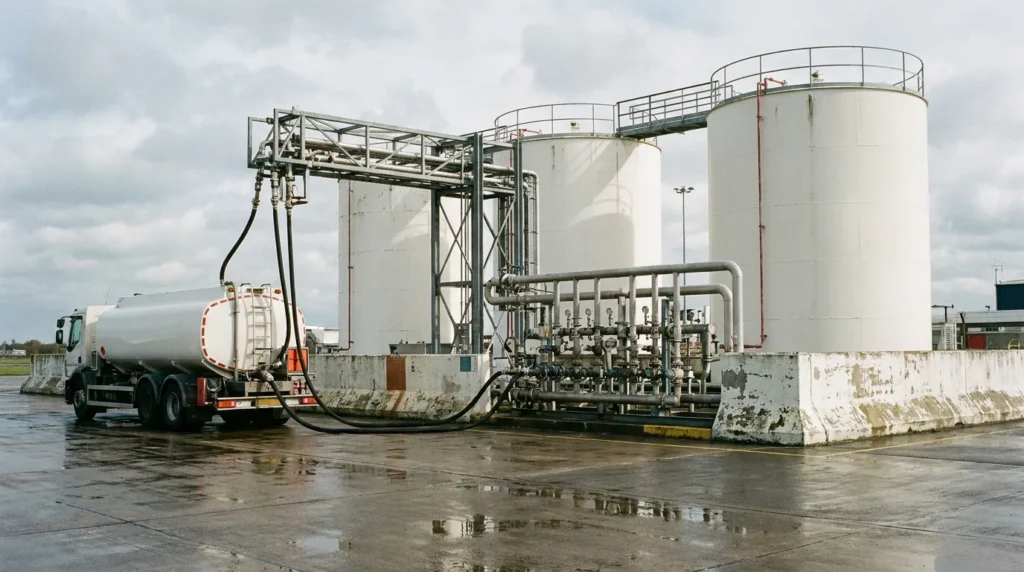
In essence, book and claim is a system that separates the environmental attribute of SAF from the physical fuel. A producer sells the attribute, a buyer claims the emissions reduction, and the physical fuel is used wherever it is most practical. As a result, a SAF developer far from the buyer can unlock demand that physical delivery cannot. At the same time, a lender faces specific questions about registries and double counting. Accordingly, this guide covers both sides.
In short
- The scheme sells the SAF attribute separately from the molecules.
- It helps when the buyer is far from the plant, or when the buyer has no physical use for fuel, such as a corporate customer.
- Most important, lenders worry about registry integrity, double counting and the regulatory status of the claim.
- In the EU debate, airport representatives asked to explore this scheme instead of obliging suppliers to deliver SAF physically at each airport.
- However, the European Commission concluded in 2025 that complex additional flexibility was unwarranted at that stage, so book and claim is not an EU compliance route today.
In this article
Physical delivery versus book and claim
With physical delivery, the SAF is blended into the fuel supply of the airport where the buyer operates. By contrast, with this scheme, the SAF may enter the fuel system near the producer, and the attribute is transferred to the buyer through a registry. In other words, the buyer pays for the emissions reduction without receiving the fuel itself.
The unit of trade is a certificate, not a litre. A registry issues a unit against a certified batch, records each transfer, and then retires it when a buyer makes a claim. Moreover, that retirement step is what stops the same attribute from being sold twice. Consequently, the quality of an attribute contract depends less on the fuel specification than on the registry behind it.
For a producer, the economics are simple. The physical fuel goes to the nearest buyer at the local price, and the attribute goes to whoever pays most for the reduction. In practice, that split can lift the blended revenue of a plant that cannot reach a premium market. However, it also creates two buyers, two contracts and two sets of audit evidence.
Why airports raised book and claim
During the ReFuelEU Aviation process, airport representatives said many operators neither own nor operate fuel supply infrastructure on their sites. They argued that suppliers should not have to meet the obligation through physical SAF at each airport, and proposed exploring how flexibility in physical SAF supply chains could be ensured, for example through such a system. In other words, that shows the idea is not marginal: it was part of the policy debate.
The final text kept the idea alive but did not adopt it. Recital 48 and Article 15(2) of Regulation (EU) 2023/2405 require the Commission to assess whether to facilitate the cost-effective distribution of SAF by separating purchase from physical delivery. Moreover, the article names the mechanism explicitly: a system of tradability, incorporating elements of a book and claim scheme, under which operators or suppliers could claim the use of SAF at Union airports.
The answer came in February 2025. The Commission published its report on the flexibility mechanism and concluded that the existing averaging rule, combined with growing capacity, was already driving progress, and that complex additional flexibility mechanisms appeared unwarranted at that stage. In addition, it said a further assessment of SAF accounting mechanisms, including virtual trading of certificates, was under preparation. Therefore, book and claim remains a voluntary and corporate instrument in Europe, not a way to discharge the supplier obligation. For the underlying rule, see What Is ReFuelEU Aviation?.
Who buys the book and claim attribute
Buyers can be airlines, and also corporate customers who want to reduce the emissions of their business travel or freight. For example, a buyers alliance announced in 2024 that close to 20 organisations had committed about $200 million over five years for roughly 50 million gallons of SAF certificates, equal to 500,000 tonnes of avoided CO2. In that structure, the corporates bought the certificates and the physical fuel flowed to an aircraft operator.
Moreover, corporate buyers are a second demand pool for a developer, outside the regulated mandate. They pay for a claim they can report, not for a molecule they can burn. As a result, their willingness to pay tracks their own disclosure obligations and their budget cycle, which is a different risk from an airline facing a fine.
Singapore shows how a state can formalise the same idea. Its levy-funded purchaser manages environmental attributes separately from the physical fuel and splits them into Scope 1 attributes for aircraft operators and Scope 3 attributes for organisations reducing business travel and freight emissions. Consequently, a producer selling into that system deals with a central counterparty that allocates claims by rule rather than by bilateral deal.
How registries record a book and claim unit
Three registry models matter for a project today. The first is the CADO SAF Registry, developed with airlines, authorities and producers. It reports more than 210 active users from about 150 organisations, issues SAF fuel units, tracks Scope 1 and Scope 3 reductions, supports claims under CORSIA and the EU ETS, and publishes a redemption table. In addition, it is free of charge until April 2027 and then operates on cost recovery.
The second is the RSB Book and Claim System, which registers, transfers and retires sustainability attributes as book and claim units, with a manual, a registry and a recognition procedure for other registry operators. The third is the ISCC approach, whose guidance on SAF book and claim was still in public consultation in May 2026 and defines a transferable claim unit equal to one tonne of certified neat SAF. Therefore, the registry landscape is converging, but it is not yet harmonised.
For a lender, that matters because interoperability is the difference between a liquid attribute and a stranded one. A unit that one registry will not recognise is a unit with one buyer. Hence, I ask which registries the offtaker accepts, and whether the scheme is recognised for the compliance claim the buyer intends to make.
What a lender needs to see
| Question | Why it matters |
|---|---|
| Which registry records the claim? | After all, a claim is only as good as its record |
| How is double counting prevented? | An attribute sold twice destroys value, and the EU forbids claiming one batch under two schemes |
| Does the regulator accept the claim for compliance? | Voluntary and regulated demand differ, and only one of them carries a penalty |
| Is the contract long-term? | Otherwise, short certificates do not cover debt |
| Who owns the attribute if the plant stops? | A claim tied to a batch that was never produced is a liability, not revenue |
| Can the certification be withdrawn? | That risk sits in the contract, not in the fuel specification |
In practice, I read the certificate terms before the price. A five-year strip of certificates from a registry with public redemptions is financeable. A one-year certificate from a scheme still in consultation is trading income, not contracted revenue. On terms, I ask for the vintage, the delivery window and the retirement date. Moreover, I check who pays the registry fee and who carries the risk of a failed certification. In addition, I want the price expressed per tonne of CO2e, because that is the unit the registry retires. Finally, I test whether the buyer can walk away if its disclosure rules change. Therefore, the lender question is not whether the mechanism works, but whether this particular attribute has a durable buyer.
Where the book and claim model breaks down
Three failures recur in diligence. Firstly, the claim may not count where the buyer needs it. CORSIA allows a purchase-based claim, yet the EU does not let a supplier discharge its ReFuelEU share with a certificate, and Article 9 forbids claiming one batch under two greenhouse gas schemes. Consequently, an attribute sold to a corporate cannot also serve an airline’s compliance file.
Secondly, the registry may not be accepted by the auditor. A unit issued in one system and refused in another has one buyer, and that buyer sets the price. Thirdly, the batch may lose its sustainability certification after signature, which turns revenue into a dispute. In practice, the second and third risks sit in the contract, and they are the ones a lender reads first.
Moreover, the volume is small relative to a plant. Corporate programmes measured in hundreds of thousands of tonnes of CO2 are real money, but they do not replace a physical offtake of hundreds of thousands of tonnes of fuel. Therefore, I size the attribute book at a fraction of capacity and treat it as a margin enhancer, never as the base revenue line.
Where book and claim helps a Southeast Asia plant
Generally, a plant in the region may be too far from EU airports to deliver economically, or may have buyers with no physical need. Even so, this approach can bridge that. However, if the buyer’s compliance rules require physical supply, it will not. Further, see Export SAF to Europe and ReFuelEU Offtake.
The realistic route is a mix. A producer sells physical SAF into a regional levy scheme or a local airline, and sells the attributes attached to that fuel to a corporate buyer through a registry. As a result, one plant can serve a regulated buyer and a voluntary buyer without building two supply chains. Moreover, the Singapore design already separates those two layers, which makes it the clearest test case in the region.
Nevertheless, I would not present the attribute as the base case in a bank model. It is the upside case, contracted where possible, and sized below the physical offtake. For the contract mechanics, see offtake agreements, and for the policy risk, see SAF Policy Risk.
Sources
Sources
- Regulation (EU) 2023/2405 (ReFuelEU Aviation), recital 48, Article 9 and Article 15(2), EUR-Lex, OJ L 2023/2405, 31 October 2023.
- European Commission, Commission brings clarity on ReFuelEU Aviation implementation, 28 February 2025, with the report on the SAF flexibility mechanism.
- IATA, Sustainable Aviation Fuel, consulted 3 November 2026, for the definition of the mechanism and the CORSIA purchase-based approach.
- CADO, SAF Registry, consulted 3 November 2026, for users, units and regulatory claims.
- RSB, RSB Book & Claim System, consulted 3 November 2026.
- ISCC, Book and Claim of Sustainable Aviation Fuel Guidance, version 1.0, May 2026, under public consultation.
- Sustainable Aviation Buyers Alliance, announcement of SAF certificate purchases, 17 April 2024.
- Civil Aviation Authority of Singapore, media release of 3 September 2026 on the SAF Levy and environmental attributes, read in the corpus.
FAQ
What is book and claim?
In short, a system that sells the SAF environmental attribute separately from the physical fuel.
Does the buyer receive SAF?
Not necessarily. Instead, the buyer receives the right to claim the reduction.
Is it accepted for EU compliance?
Not today. In fact, the EU required an assessment, and the Commission found additional flexibility unwarranted in 2025. Check the current text before relying on it.
Can I finance a plant on book and claim alone?
Rarely. Lenders prefer long-term contracts and regulated demand as the base.
What is the main risk?
Chiefly, double counting and registry integrity. Therefore, I check the registry before the price.
Next step
A short call is usually enough to see where your project stands before a lender or an offtaker looks at it.
To see whether attribute sales fit your offtake plan, book a 30-minute call or read about offtake agreements.
I do not provide investment advice or arrange investments. I act as a strategic advisor and facilitator.

Alex, Founder of WeConnect Asia
I help low-carbon fuel and carbon removal project developers in Southeast Asia secure the commercial and financial partners needed to reach FID.
Related articles

Biomethane: What It Is, How It Is Made and Who Buys It
Biomethane is biogas cleaned to pipeline quality. I explain how it is made, how it differs from biogas and who buys it in Southeast Asia.

Southeast Asia SAF: Policies, Demand and Project Status
Southeast Asia SAF policy is moving country by country. Here is where demand is forming, who the buyers are and what a developer can rely on today.

e-SAF Project Finance: Why the Sub-Mandate Is Not Enough
The synthetic fuel sub-mandate creates demand for e-SAF, but not a bankable project. Here is what e-SAF project finance still needs in Southeast Asia.

SAF Mandates by Country: A Developer’s Comparison
SAF mandates differ by country in scope, target and penalty. Here is a side-by-side comparison and what each one means for project revenue.

Sustainable Aviation Fuel: Pathways, Mandates and What Gets Financed
Sustainable aviation fuel has several pathways and sells into mandates. I explain the routes, the demand and what gets financed in Asia.

ReFuelEU Offtake: Who Actually Buys Your SAF?
The ReFuelEU mandate sits on fuel suppliers, not airlines. Here is what that means for ReFuelEU offtake contracts and what lenders expect to see.