
We Connect Asia

BANKABILITY

The Biogas Production Process:
The Four Stages Behind Any Digester

7 min read  ·  Oct 23, 2025  ·  By Alex

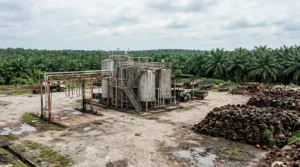
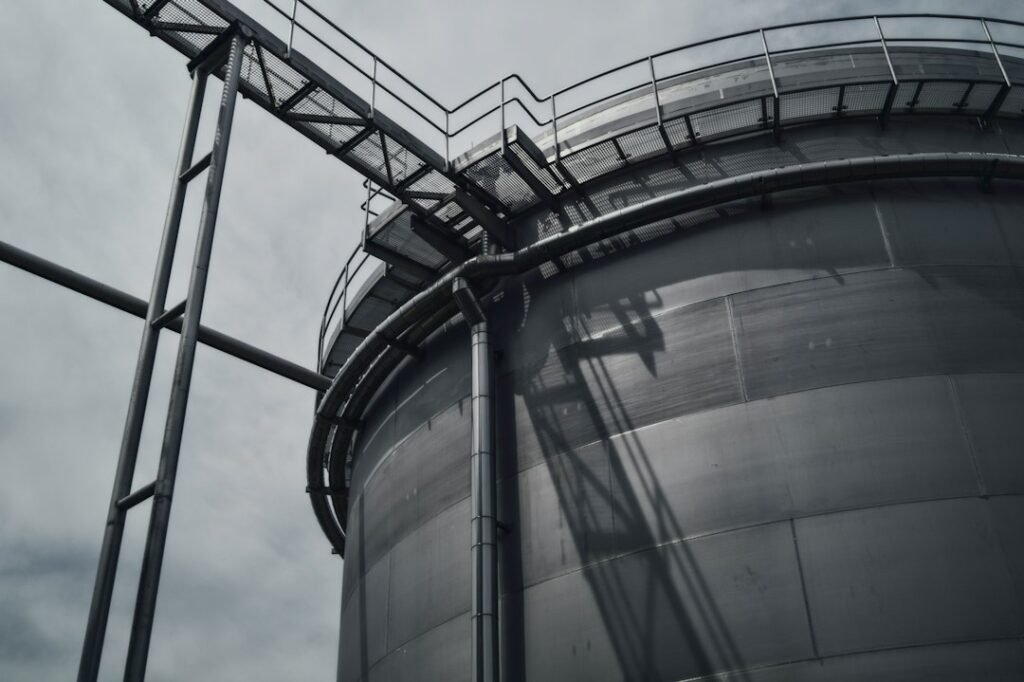
Industrial metal tower at a processing facility

When it comes to biogas production process, the details below decide whether a project gets financed. Developers often come to me with a feedstock in hand, livestock wastewater, food processing residue, agricultural byproduct, and ask what kind of digester they need. The honest answer is that the biological process stays the same regardless of feedstock. What changes is the reactor design, the retention time, and how tightly you control conditions. Understanding the actual production process is what lets you evaluate a vendor’s claims instead of just taking their word for it.

In short: four sequential biological stages produce biogas: hydrolysis, acidogenesis, acetogenesis, and methanogenesis. Different microbial communities run each stage inside an oxygen-free digester. The reactor technology (the tank, the mixing, the temperature control) exists to keep those four stages running smoothly together, not to replace them.

Facebook
Twitter
LinkedIn

In this article

Biogas production process: the four biological stages

  1. Hydrolysis. Bacteria break complex organic matter, fats, proteins, carbohydrates, into simpler soluble compounds like sugars, amino acids, and fatty acids. This is usually the slowest stage and often the rate-limiting one for fibrous or solid feedstocks.
  2. Acidogenesis. A different bacterial group ferments those simple compounds into volatile fatty acids, alcohols, hydrogen, and carbon dioxide. This stage happens quickly relative to hydrolysis.
  3. Acetogenesis. The volatile fatty acids and alcohols are converted into acetate, along with more hydrogen and carbon dioxide. This is the direct precursor stage to methane formation.
  4. Methanogenesis. Methanogenic archaea, a different domain of microorganism entirely from the bacteria doing the earlier stages, convert acetate and hydrogen/CO2 into methane and carbon dioxide, the biogas itself. This group is the most sensitive to pH swings and temperature shock, which is why digester upsets usually show up here first.

The practical implication: if your digester’s biogas output suddenly drops, suspect a methanogenesis upset first. A pH swing or an organic overload upstream usually causes it, not a mechanical fault. Knowing which stage is struggling tells you whether to check your feed rate or call a technician.

Biogas production process: the reactor technology that holds the process together: CSTR and GFS tanks

For livestock and agricultural wastewater projects in the region, the Continuous Stirred-Tank Reactor (CSTR) is the most common commercial design. A CSTR keeps feedstock and the microbial population fully mixed inside a closed tank through mechanical stirring, fed continuously or semi-continuously at a controlled temperature. Constant mixing prevents the crust and sediment buildup that kills throughput in a poorly designed digester. A steady feed rate keeps all four biological stages running in parallel, not in uneven batches.

Builders usually assemble the tank from glass-fused-to-steel (GFS) panels. The coating fuses a glass-like enamel onto steel at roughly 820 to 930°C during manufacturing. The coating resists corrosion from the acidic digestion environment and is smooth enough to limit biofilm buildup inside the tank, with vendors citing service lives beyond 30 years. A double-membrane roof commonly doubles as the gas holder, storing the biogas directly above the digestate rather than requiring a separate gas storage vessel. EPC contractors in Thailand’s livestock wastewater sector build projects on exactly this CSTR-plus-GFS-tank model. The country’s roughly 9.6 million head of beef cattle generate a meaningful wastewater stream.

Biogas production process: the operating parameters that actually matter

Parameter Why it matters
Hydraulic retention time (HRT) How long feedstock stays in the digester; set per project based on feedstock composition and target gas yield, not a fixed industry number
Temperature stability Methanogens are the most temperature-sensitive stage; swings disrupt output faster than any other variable
pH control Methanogenesis typically requires a near-neutral pH; acidogenesis naturally pushes pH down, so buffering capacity matters
C:N ratio of feedstock Too much nitrogen relative to carbon can inhibit methanogens through ammonia toxicity; too little nitrogen slows the whole process
Mixing intensity Enough to prevent crust and stratification, not so much that it shears the microbial flocs doing the digestion work

Where this breaks in the biogas production process

  • Treating hydraulic retention time as a fixed spec rather than a feedstock-specific calculation. A fibrous agricultural residue and a liquid livestock wastewater stream hydrolyze at very different rates. Copying another project’s HRT without recalculating for your own feedstock is a common, avoidable error.
  • Overloading the digester to hit a throughput target. Feeding faster than the slowest stage can handle leads to volatile fatty acid buildup. Expect a pH crash and a stalled digester that takes weeks to recover.
  • Underspecifying the tank coating or roof system to save capex. A GFS tank’s corrosion resistance and the double-membrane roof’s gas-holding function matter. Cutting corners here shows up as maintenance cost and downtime within a few years of commissioning.

Sizing the biogas production process: a practical method

  1. Characterize your feedstock’s C:N ratio and solids content before selecting a reactor type, since this drives both retention time and mixing requirements.
  2. Calculate hydraulic retention time from your feedstock’s actual hydrolysis rate, not a generic industry figure borrowed from a different feedstock type.
  3. Specify temperature and pH control systems to the methanogenesis stage’s tolerance, since that stage fails first under any process upset.
  4. Choose tank and roof construction for a multi-decade operating life, matching the digester’s expected service period to the project’s financing tenor.

Common mistakes I see developers make

  • Assuming all organic feedstocks digest at the same rate and sizing the reactor on a generic benchmark.
  • Not budgeting for ongoing pH and temperature monitoring, which is cheap insurance against a much more expensive digester upset.
  • Choosing a reactor technology based on capex alone without weighing tank lifespan against the project’s financing tenor.
  • Diagnosing a biogas output drop as a mechanical problem when it’s actually a biological process upset further upstream.

A quick checklist before you take this to lenders

  • Feedstock characterization: C:N ratio, solids content, and expected hydrolysis rate
  • A hydraulic retention time calculated for your specific feedstock, not borrowed from another project
  • Temperature and pH monitoring and control systems specified to methanogenesis tolerances
  • Tank and gas-holder construction specified for a service life matching your financing tenor
  • A clear plan for diagnosing and recovering from a process upset without a prolonged shutdown

Sources

FAQ

Most output drops come from a methanogenesis upset. A pH swing or an organic overload usually triggers it, outpacing the slower hydrolysis or methanogenesis stages. The methanogenic archaea handling the final stage are also the most sensitive part of the whole process. They usually fail first.

A Continuous Stirred-Tank Reactor keeps feedstock and microbes fully mixed through mechanical stirring, fed continuously or semi-continuously at a controlled temperature. That steady state prevents the crust and sediment buildup that limits throughput in simpler digester designs, which makes it well suited to the steady wastewater streams livestock operations generate.

No. Hydrolysis, acidogenesis, acetogenesis, and methanogenesis happen regardless of feedstock. What changes is the rate at which hydrolysis proceeds, the carbon-to-nitrogen balance, and therefore the hydraulic retention time and reactor sizing needed to keep the process stable.

If you’re evaluating a digester vendor’s claims, I help developers and investors work through that question. The same goes for any gap between projected and actual gas yield. Get in touch and we can look at your process parameters together.

I’m part of the WeConnect Asia team, working with developers and investors on low-carbon infrastructure projects across Southeast Asia.

This article is for general informational purposes and does not constitute financial, legal, or engineering advice. Figures cited are drawn from publicly reported data and should be independently verified before use in any financial model.

Not sure your project would survive a credit conversation?

A short call is usually enough to see where your project stands against what a lender or an equity investor will ask for. Tell me where your project is today, and I will tell you what the next conversation needs to look like.

Alex, Founder of WeConnect Asia

Alex, Founder of WeConnect Asia

I help low-carbon fuel and carbon removal project developers in Southeast Asia secure the commercial and financial partners needed to reach FID.

More about me·Get in touch

Facebook
Twitter
LinkedIn

Related articles