
Home » Energy Transition Venture Capital: Where It Goes and Where It Does Not
Energy Transition Venture Capital:
Where It Goes and Where It Does Not
8 min read · Jun 25, 2026 · By Alex
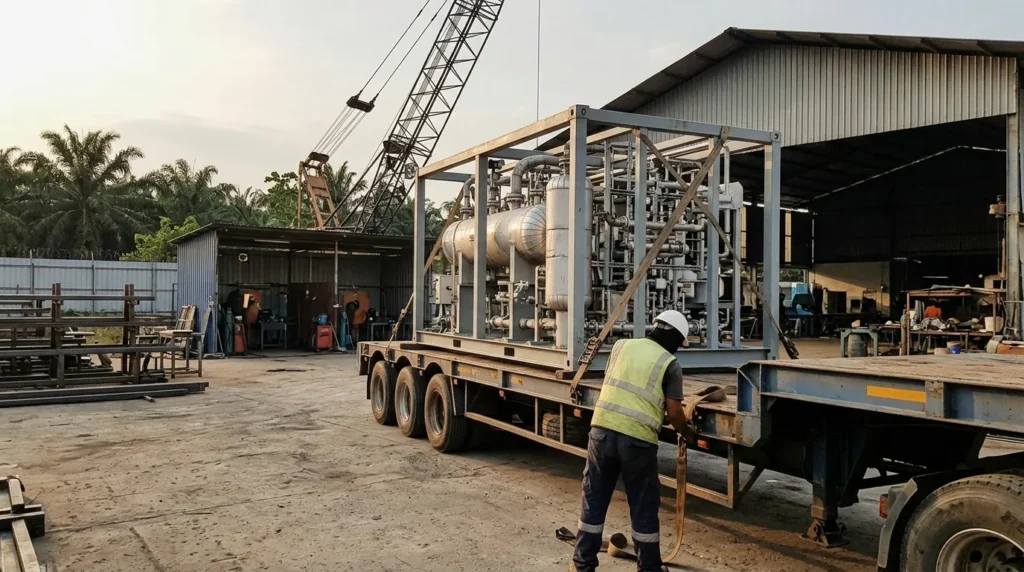
Energy transition venture capital funds technology companies, not plants. A fund that backs a battery start-up or a software platform for grid operators expects a company that can grow fast and sell for many times its cost. A fuel plant is a different animal. It is a large asset with slow, steady cash flow. So when a project developer asks me about the venture route, the first answer is usually that it is the wrong tool.
In short
- Transition venture capital backs scalable technology companies, with high risk and high return targets.
- Project developers building a plant usually need project capital: equity and debt tied to contracts.
- Some companies need both. A technology owner can raise early-stage equity, then finance its first plant with project capital.
- Strategic capital sits between the two, and it suits companies that have customers inside industry.
In this article
Energy transition venture capital in plain terms
Early-stage equity is money for young companies with a plan to grow quickly. The investors accept that most of their bets will fail, because one or two successes can return the whole fund. In energy transition, this logic works for companies that sell technology, software or equipment that can scale without owning every asset.
In practice, that means a particular profile. The company has a product that many customers can buy. It can grow revenue faster than costs. And it can reach a large market. I follow this market through the PwC State of Climate Tech report, and its latest edition shows where the money goes. Energy start-ups take nearly 35% of all climate tech funding in the first three quarters of 2024, and more than 30 clean-energy ventures raise at least US$100 million each in that period (PwC).
First, this matters for founders. Scale is what rewards this kind of fund. Second, it matters for investors. They look for outcomes that are many times larger than the investment. So the question shifts from the quality of a single asset to the size the company can reach.
What transition venture capital funds and what it skips
Transition venture capital funds categories where a company can scale with little capital per unit. Examples include energy software, grid tools, battery technology, industrial efficiency and some carbon management companies.
By contrast, it usually skips single plants. A fuel plant needs a large amount of capital, produces a modest and slow return, and depends on one site. In other words, it does not fit a venture fund’s return profile. I read the clearest explanation in Joshua Rauh’s analysis of the venture model. Conventional energy scales linearly, so each new unit needs a large new injection of capital. Later rounds led by infrastructure funds, private equity and strategic investors then dilute the early venture investors, so a fund that depends on occasional 50x or 100x outcomes cannot keep a large stake (The Energy Balance Sheet).
Moreover, the fuel sector has its own investors. Infrastructure funds, energy funds, strategic investors and lenders back plants. They accept lower returns for lower risk and for contracted cash flow. So a developer who approaches a venture fund usually hears that plants sit outside its mandate, and loses time.
For how project capital works, see infrastructure project finance and how to finance a hydrogen project.
Transition venture capital or project capital: how to choose
The choice depends on what the company sells and what it owns. Here is a simple test.
- What do you sell? If you sell technology or software that many customers can buy, you may fit the venture route. If you sell fuel or power from your own plant, you fit project capital.
- How does the business scale? If revenue can grow without building a plant for each customer, early-stage equity can fit. If every unit of growth needs a new plant, it cannot.
- Who owns the assets? If customers own the assets, you look like a technology company. If you own them, you look like a developer.
- What return can you offer? Venture funds look for large multiples. Project investors accept lower, steadier returns.
Therefore, many founders end up with a blend. For example, a company that owns a new fuel technology may raise early-stage equity to develop it, then use project finance for the first commercial plant. In that case, the two kinds of capital serve different stages. If you want to understand the lender side, read the SAF capital stack article.
A Southeast Asia test: transition venture capital or project capital
In Southeast Asia the split is easy to see, because both sides of it are documented. A regional scale-up raises company equity. Tracxn tracks about USD 1.4 billion of disclosed equity funding across 269 rounds in the region from 2020 to May 2026, and Singapore attracts about USD 1.1 billion of that total (Tracxn, Southeast Asia Climate Tech Report 2026). Amperesand raised USD 80 million in 2025 in a round co-led by Temasek, one of several climate tech companies raising capital through Singapore (Singapore EDB). Both rounds buy shares in a company, and both exit through a sale or a listing.
A fuel plant raises a different instrument. In the first project financing of a sustainable aviation fuel plant in Asia Pacific, ADB arranged a USD 86.2 million debt package (Clifford Chance, first SAF project financing in Asia Pacific). It mixed USD 41.2 million from ADB’s ordinary capital resources with USD 45 million of syndicated loans (Clifford Chance). Shell Eastern Trading of Singapore signed a long-term offtake for up to 145,000 tonnes a year from that plant (Clifford Chance). That debt sits on the plant’s contracts, not on a growth story.
So a founder in Kuala Lumpur, Jakarta or Singapore should read the two paths side by side. If value grows with users, features and volume per site, the venture route fits. If value comes from tonnes produced at one location, project capital fits, and the offtake contract matters more than the deck.
Strategic capital: the third route for transition venture capital
Strategic capital comes from companies that invest because the technology matters to their own business. Energy companies, industrial groups and infrastructure owners are typical examples.
For a technology company, strategic capital sits between venture and project capital. It brings money, but it also brings a customer, a supplier or a pilot site. For example, an energy company can fund a company’s first demonstration plant and then become its first buyer. As a result, strategic capital can bridge the gap that venture funds leave when the next step is a physical asset.
However, the terms need care. Strategic investors may ask for exclusivity or rights over the technology. So a founder should negotiate with the next investor in mind. I describe how I think about partners in the strategic partnerships service. For the investor side, see climate tech investors.
Where transition venture capital gets stuck
Conversations with venture investors tend to stall for the same reasons.
- The company looks like a project. The investor sees a plant with a slow return, not a scalable business.
- No proof of demand. There are no customers or pilots that show buyers will pay.
- Unclear path to capital for scale. The company has not explained how it will fund the first commercial plant.
- Weak unit economics. The company cannot show that each unit makes money.
- Wrong timing. The company raises before it has the proof investors need.
Above all, a founder who confuses the two kinds of capital loses months. A mismatch tells the investor that the company has not done the thinking. So I check the fit before I make any introduction. If a project is better served by project capital, I say so, and I point to the project finance service. If it is a technology company with traction, I look at the ClimateTech and GreenTech industry page.
Checklist
- Your model states whether you sell technology or operate a plant.
- You can explain how revenue scales without a new plant for each customer.
- Proof of demand sits with customers or pilots.
- Documents support the unit economics claim.
- A plan covers the capital your first commercial plant needs.
- You know how much you need and what it funds.
- The capital type matches your stage.
- You have read the terms of any strategic offer for exclusivity.
Next step
If you are weighing transition venture capital against project capital for your company, book a 30-minute call or send me a short brief. I tell you early which route fits, even if the answer is not the one you hoped for.
Sources
- PwC, State of Climate Tech 2024
- IEA, World Energy Investment 2025, Venture capital funding of energy-related companies
- Joshua Rauh, The Venture Capital Model and Climate Tech, The Energy Balance Sheet
- Tracxn, Southeast Asia Climate Tech Report 2026
- Singapore EDB, Singapore’s climate tech startups ride government’s green energy ambitions, 2026
- Clifford Chance, first project financing of a sustainable aviation fuel project in Asia Pacific, 2024
FAQ
What is energy transition venture capital?
It is equity money from venture funds for young companies in energy and climate technology, with high risk and high return targets.
Should a fuel plant approach a venture fund?
Rarely. A plant is a large asset with a steady return, which fits project capital better than venture funds.
What is project capital?
Equity and debt tied to the contracts of a single project, such as a plant. It accepts lower, steadier returns.
Can a company use both?
Yes. A technology owner can raise early-stage equity to develop the product and project capital to build the first plant.
What is strategic capital?
Investment from a company that benefits from the technology. It often brings a customer or a pilot as well as money.
How do I know which one fits?
Ask what you sell, how the business scales and who owns the assets. If you own the plants, start with project capital.
Not sure your project would survive a credit conversation?
A short call is usually enough to see where your project stands against what a lender or an equity investor will ask for. Tell me where your project is today, and I will tell you what the next conversation needs to look like.

Alex, Founder of WeConnect Asia
I help low-carbon fuel and carbon removal project developers in Southeast Asia secure the commercial and financial partners needed to reach FID.
Related articles

Biomethane: What It Is, How It Is Made and Who Buys It
Biomethane is biogas cleaned to pipeline quality. I explain how it is made, how it differs from biogas and who buys it in Southeast Asia.

Southeast Asia SAF: Policies, Demand and Project Status
Southeast Asia SAF policy is moving country by country. Here is where demand is forming, who the buyers are and what a developer can rely on today.

e-SAF Project Finance: Why the Sub-Mandate Is Not Enough
The synthetic fuel sub-mandate creates demand for e-SAF, but not a bankable project. Here is what e-SAF project finance still needs in Southeast Asia.

SAF Mandates by Country: A Developer’s Comparison
SAF mandates differ by country in scope, target and penalty. Here is a side-by-side comparison and what each one means for project revenue.