


We Connect Asia

BANKABILITY

Power-to-Liquid Investing:
What I Check Before FID

9 min read  ·  Jul 13, 2026  ·  By Alex

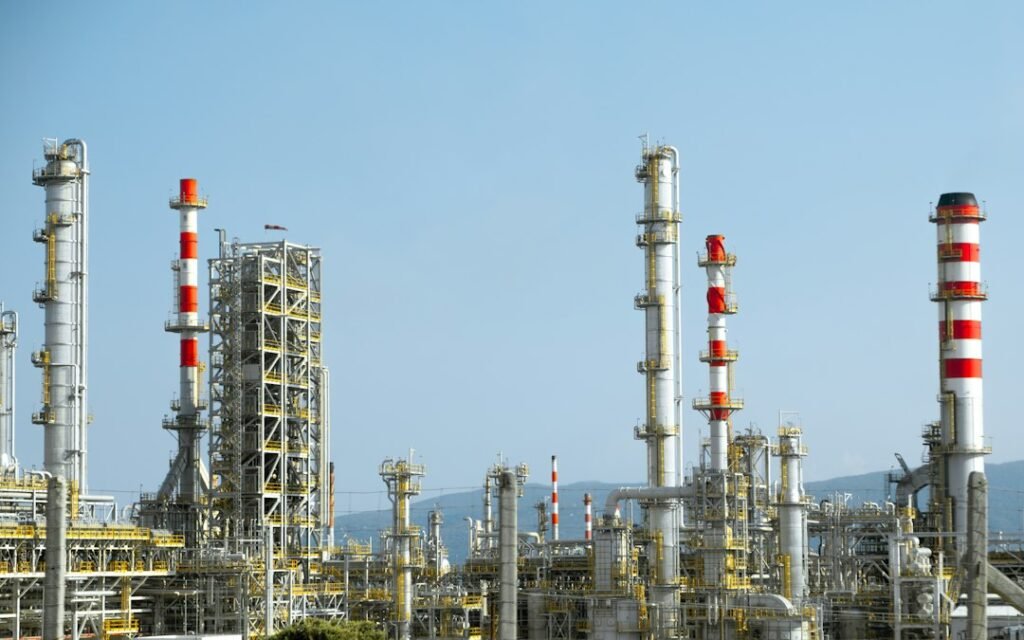
Industrial plant with pipes and process equipment

Concrete Chemicals is a joint venture of Zaffra and ENERTRAG. In early 2026 it secured 350 million euros in public funding for an eSAF plant in Brandenburg, Germany. The sponsor targets its final investment decision for 2027, a full year after the funding announcement. In Vietnam, BSR and GIZ signed a memorandum of understanding in May 2026 to study a power-to-liquid pilot plant. They do not expect an EPC tender before mid-2028. Two very different projects, one lesson for an investor. A grant, a memorandum, or a feasibility study does not signal a commitment. It is the start of a long runway.

In short: Power-to-liquid turns renewable electricity into synthetic aviation fuel, methanol or naphtha. The route runs through electrolysis and a Fischer-Tropsch or methanol synthesis step. It is capital intensive and slow to reach FID, even with public funding secured. This article sets out what I verify before I bring an investor to a PtL opportunity. I use two live examples: one in Europe, one in my own region.

Facebook
Twitter
LinkedIn

In this article

What a grant actually buys you

Concrete Chemicals’ plant will produce roughly 30,000 tonnes of eSAF and 7,000 tonnes of e-naphtha a year. It will cut at least 100,000 tonnes of fossil CO2 from aviation annually. The 350 million euros came through the EU’s CEEAG state aid framework ([Air Cargo Week](https://aircargoweek.com/funding-secured-for-germanys-largest-esaf-plant/)). European Commission review was in its final phase at the announcement, after approval at national and regional level. That funding round names no private lender or equity investor. The announcement mentions no offtake agreement. Technical planning starts immediately, but FID is still a year or more out.

That gap between grant approval and FID is normal for PtL, not a red flag specific to this project. A grant de-risks the capex. It does not replace the commercial package a lender or equity investor needs. That package covers a contracted buyer, a contracted power supply, and a sponsor who can build and run a plant.

The Southeast Asia angle: Vietnam's BSR-GIZ pilot

Bình Sơn Refining and Petrochemical is Vietnam’s state-linked refiner. In May 2026 it signed an MOU with Germany’s GIZ to develop a power-to-liquid pilot at a BSR site. The pilot targets e-methanol and sustainable aviation fuel from renewable electricity and sustainable carbon ([Vietnam News](https://vietnamnews.vn/economy/1780991/deal-signed-on-developing-a-power-to-liquid-pilot-plant-in-viet-nam.html)). Germany’s International Climate Initiative backs the project through GIZ’s PtX Hub. The Vietnamese-German University’s Green Hydrogen Hub plays a supporting role ([PtX Hub](https://ptx-hub.org/mou-signed-on-development-of-a-power-to-liquid-pilot-plant-in-viet-nam/)). The published roadmap starts with joint planning in May 2026. It moves through feasibility and front-end engineering design, then an EPC tender targeted for June 2028. Results and approvals still gate the schedule.

This is the earliest stage a PtL opportunity gets in this region. The sponsor brings refining and industrial experience, and a development partner brings technical and grant access. The project has published a conditional timeline, and no capacity figure, financing plan or offtake commitment is public yet. For an investor, that means years before there is anything to underwrite. It also means a real chance to shape the commercial terms if you engage early.

What I check before bringing a PtL opportunity to an investor

Check Why it matters for PtL specifically
Power price and tenor Electrolysis is the dominant cost driver; a plant without a long-term renewable power contract at a workable price has no viable economics, whatever the grant covers
Carbon source secured Direct air capture and biogenic CO2 have very different costs and reliability; “sustainable carbon” in an MOU is not yet a contracted supply
Offtake, not just demand Aviation and shipping both want these fuels; a signed volume and price mechanism is a different thing from sector-wide demand signals
Technology provider track record Fischer-Tropsch and methanol synthesis at commercial scale have few operating references; ask who has actually run a plant this size, not just piloted one
Grant conditions and timing Public funding often disburses against construction milestones, not FID itself; know what has to happen, and by when, before the money moves
Who owns the FID decision In a multi-party consortium or JV, confirm which entity actually signs off, and on what conditions, before treating a project as close to FID

Where this breaks in practice

The mistake I see most with PtL is reading a grant announcement as a green light. A grant tells you the project passed a public funding review. It says nothing about the power contract, the carbon supply and the offtake lining up on one timeline. Concrete Chemicals had its funding in hand and still had a year to FID. A project earlier than that, like the Vietnam pilot, can sit two to three years from any commercial decision at all.

The second mistake is underestimating how much the technology risk premium still weighs on PtL. Simpler pathways like biodiesel or green methanol use more established electrolysis routes. Fischer-Tropsch synthesis at commercial scale has fewer operating plants to benchmark against. Lenders and insurers price that uncertainty into the capital stack, usually as longer due diligence and more conservative gearing.

A four-step approach for an investor evaluating PtL

  1. Map the full value chain before the capex, not after. Power contract, carbon source, synthesis technology, offtake: confirm each link separately. A grant or MOU can make the whole chain look more advanced than any single link.
  2. Ask for the FID decision owner and the conditions attached to it. In a JV or multi-party consortium, this is rarely obvious from the announcement, and it determines whose timeline actually governs the project.
  3. Benchmark the technology provider against operating plants, not pilot results. A pilot-scale success does not de-risk a commercial-scale Fischer-Tropsch or methanol synthesis unit the way operating history does.
  4. Engage early in regions like Southeast Asia, where projects are still pre-feasibility. The Vietnam BSR-GIZ pilot is years from FID. There is room to shape the offtake and financing structure now, before the project is bankable.

Common mistakes

  • Treating a public funding award as equivalent to a financing close.
  • Assuming aviation or shipping demand for synthetic fuel automatically becomes a signed offtake for a specific plant.
  • Underpricing the technology risk of Fischer-Tropsch or synthesis routes with limited commercial-scale operating history.
  • Waiting for a bankable feasibility study before engaging, then finding the commercial terms already set by earlier movers.

Checklist before committing capital

  • Is the renewable power contracted at a price and tenor that supports the plant’s economics, not just referenced as “available”?
  • Is the carbon source, biogenic or direct air capture, contracted and costed, not just named as a pathway under assessment?
  • Is there a signed offtake, or at minimum a termsheet, with a volume and price mechanism?
  • Does the technology provider have commercial-scale operating references, not only pilot or demonstration plants?
  • Are the grant’s disbursement conditions and milestones clear, and do they align with the construction timeline?
  • Which entity owns the FID decision, and which conditions does that entity still need to meet?

Sources

FAQ

if you evaluate power-to-liquid or adjacent low-carbon fuel opportunities in Southeast Asia, this is for you. You will want to know where a specific project stands against these checks. That is the conversation I have. Book a 30-minute call or see how I work on investor introductions and project finance.

Not sure your project would survive a credit conversation?

A short call is usually enough to see where your project stands against what a lender or an equity investor will ask for. Tell me where your project is today, and I will tell you what the next conversation needs to look like.

Alex, Founder of WeConnect Asia

I do not provide investment advice or arrange investments. I act as a strategic advisor and facilitator.

Facebook
Twitter
LinkedIn

Related articles




