


We Connect Asia

BANKABILITY

How a Waste-to-Energy Plant Actually Works:
A Developer's Guide

8 min read  ·  Mar 25, 2026  ·  By Alex

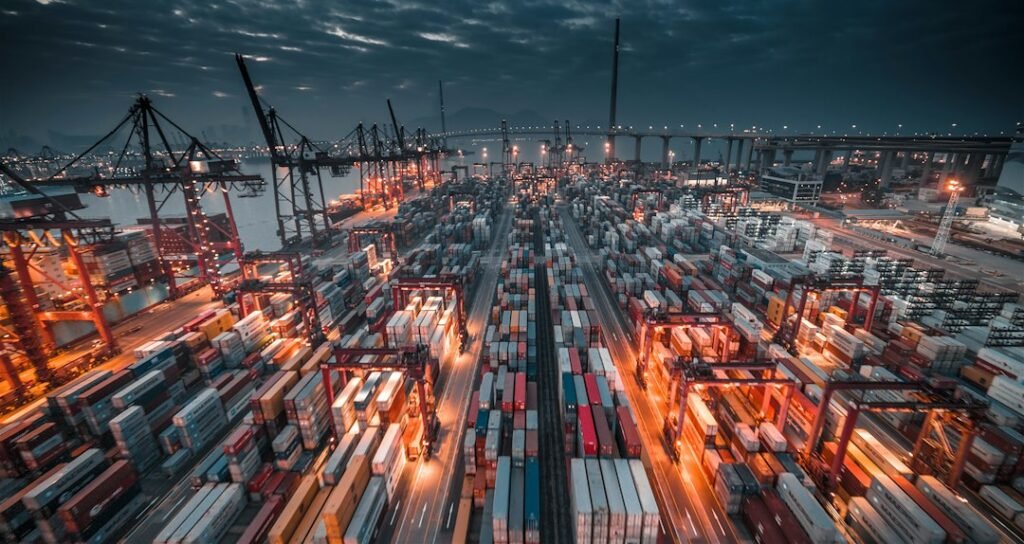
Industrial port and waste handling infrastructure in Southeast Asia

I get the same question from developers looking at waste-to-energy (WtE) for the first time: is this a power plant that happens to burn trash, or a waste management asset that happens to sell electricity? The honest answer is both, and getting that order wrong is where a lot of WtE projects in Southeast Asia lose money before they ever reach financial close.

In short: a WtE plant burns municipal solid waste on a moving grate, uses the heat to raise steam, and runs that steam through a turbine to generate power. The waste is the fuel, the tipping fee is usually the primary revenue line, and the electricity sale is often the secondary one. Mixing up that priority at the design stage is the most common mistake I see.

Facebook
Twitter
LinkedIn

In this article

The core process, step by step

Most WtE plants built in Southeast Asia today use mass-burn moving-grate incineration. It is not the only technology on the market, but it is the one lenders and EPC contractors are most comfortable financing here, because it has the longest operating track record with mixed, unsorted municipal waste.

  1. Waste reception and storage. Trucks tip waste into a bunker sized for several days of buffer, since collection volumes swing by weekday and by season.
  2. Feeding and combustion. A crane loads waste onto a moving grate inside the furnace, where it burns at 850-1,000°C. The grate keeps the waste moving and aerated so it burns completely rather than smoldering.
  3. Heat recovery. Hot flue gas passes through a boiler, converting water into high-pressure steam.
  4. Power generation. Steam drives a turbine connected to a generator. This is the same basic cycle as a coal plant, just with a different fuel and a dirtier flue gas stream to clean up.
  5. Flue gas treatment. This is where a large share of capex goes: scrubbers, activated carbon injection, and bag filters strip out acid gases, dioxins, and particulates before the stack.
  6. Ash handling. Bottom ash (the non-combustible residue) can often be processed into construction aggregate. Fly ash from the filters is more contaminated and typically needs stabilization before disposal.

A live reference point: Hanoi's new 2,000-tonne-per-day plant

Vietnam broke ground in mid-2026 on a waste-to-energy plant in Xuan Mai, on Hanoi’s southwest edge, developed by Xuan Mai Urban Environment Company together with Green Marble Joint Stock Company. It is a useful real-world sizing reference for anyone modeling a plant of this type in the region:

Waste throughput 2,000 tonnes per day
Power output 45 MW
Technology Mechanical grate incineration with heat recovery
Capex Over 5.25 trillion VND (about USD 200 million)
Ash handling Bottom ash recycled into construction materials
Power offtake Sold to the national grid
Timeline Trial operation Q3 2027, commercial operations Q4 2027

That works out to roughly 22.5 kg of waste processed per kW of installed capacity, which is in line with what I’d expect from a mixed-municipal-waste plant at this scale. If your own numbers come out wildly different from that ratio, it’s worth checking your waste composition assumptions before you go further.

Where WtE plants in Southeast Asia differ from the Singapore model

Singapore’s Tuas plant, now wholly owned by Mitsubishi Heavy Industries, handles about 35% of the city-state’s daily garbage at 120 MW, with 500 to 600 trucks delivering waste around the clock. It’s the benchmark everyone in the region points to, but it’s not the right comparison for most developers here, for one simple reason: Singapore has decades of centralized waste collection and tipping-fee infrastructure that most of its neighbors are still building.

Outside Singapore, most municipal solid waste in Southeast Asia is still openly dumped on vacant land, which is increasingly causing groundwater contamination that local governments are under pressure to address. That’s actually the opening for developers: the policy driver for a new WtE plant is frequently landfill diversion and groundwater protection, not just power generation. Mordor Intelligence projects the regional WtE market growing from USD 3.3 billion in 2023 to USD 6.1 billion in 2028, and most of that growth is in countries building their first tipping-fee and collection systems from a low base, not retrofitting a mature one.

Where this breaks in practice

I’ve seen three recurring failure points in WtE projects at the feasibility stage in this region:

  • Waste supply risk is underwritten on paper, not on the ground. A municipality’s stated tonnage and the tonnage that actually arrives at the gate, net of informal recycling and seasonal swings, can differ by a wide margin. Professor emeritus Masaru Tanaka of Okayama University has flagged this directly: there are real concerns that not enough waste will be collected to generate electricity profitably in some markets.
  • The tipping fee is treated as a formality instead of the primary revenue line. On a per-tonne basis, the tipping fee contract with the municipality is frequently worth more to project economics than the power purchase agreement. Developers who structure the deal around the PPA first and the tipping fee second often end up renegotiating.
  • Flue gas treatment capex gets squeezed in the budget. This is the system that keeps a WtE plant compliant and keeps local opposition from derailing the project. Cutting corners here to hit a capex target is a decision that tends to resurface during commissioning, not before.

A practical method for sizing your own project

  1. Start from verified waste tonnage, not population estimates. Get actual weighbridge data from the municipality’s existing collection and landfill operation, not a per-capita generation assumption from a national statistics office.
  2. Model the tipping fee and the PPA as two separate negotiations. They have different counterparties, different tenors, and different risk profiles. Treating them as one blended revenue number hides where the real risk sits.
  3. Size flue gas treatment to the strictest standard you’re likely to face over the plant’s life, not the current one. Emissions standards in this region have been tightening, and retrofitting gas treatment after commissioning is far more expensive than building to a higher spec up front.
  4. Sanity-check your capacity against a recent regional comparable. The Hanoi plant’s throughput-to-power ratio above is a reasonable starting benchmark for mixed municipal waste; if your feasibility study lands far outside that range, it’s worth asking why before the model goes to lenders.

Common mistakes I see developers make

  • Assuming WtE economics transfer directly from Singapore’s model without adjusting for a market that lacks mature tipping-fee infrastructure.
  • Underestimating how much of total capex sits in flue gas treatment rather than in the boiler and turbine island.
  • Not securing a long-tenor, inflation-indexed tipping fee contract before finalizing the PPA.
  • Ignoring ash offtake logistics until after financial close, when it should be part of the original site and permitting plan.

A quick checklist before you take this to lenders

  • Verified, multi-year weighbridge data for the waste catchment area
  • A tipping fee agreement with tenor matching or exceeding the debt tenor
  • Flue gas treatment specified to the strictest emissions standard expected over the asset’s life
  • An ash offtake agreement or disposal route secured before construction
  • A power offtake structure that is genuinely secondary to, not a substitute for, the tipping fee revenue

Sources

FAQ

Mass-burn moving-grate incineration is the dominant technology for mixed municipal waste in the region, but it’s not the only one. Co-firing waste streams like palm oil residue alongside coal has also been tested in Malaysia, and some developers are exploring carbon capture retrofits on new incineration units.

Because the municipality is paying the plant to take waste off its hands, that fee is often contracted at a higher effective value per tonne of input than the electricity generated from burning that same tonne. A plant with a weak PPA but a strong, long-tenor tipping fee can still be bankable; the reverse is much harder to finance.

Based on recent regional projects, roughly 18 months from groundbreaking to trial operation for a plant in the 1,500 to 2,500 tonne-per-day range is a reasonable planning assumption, though permitting and land acquisition ahead of groundbreaking typically take longer than the construction itself.

If you’re sizing a waste-to-energy project in Southeast Asia and want a second set of eyes on the tipping fee structure or the waste supply assumptions, that’s exactly the kind of question I help developers work through. Get in touch and we can look at your numbers together.

I’m part of the WeConnect Asia team, working with developers and investors on low-carbon infrastructure projects across Southeast Asia.

This article is for general informational purposes and does not constitute financial, legal, or engineering advice. Figures cited are drawn from publicly reported project data and should be independently verified before use in any financial model.

Not sure your project would survive a credit conversation?

A short call is usually enough to see where your project stands against what a lender or an equity investor will ask for. Tell me where your project is today, and I will tell you what the next conversation needs to look like.

Alex, Founder of WeConnect Asia

Alex, Founder of WeConnect Asia

I help low-carbon fuel and carbon removal project developers in Southeast Asia secure the commercial and financial partners needed to reach FID.

More about me·Get in touch

Facebook
Twitter
LinkedIn

Related articles




