


We Connect Asia

PROJECT FINANCE

Inside the NEOM Green Hydrogen Deal:
What a $8.4bn Capital Stack Actually Looks Like

8 min read  ·  May 11, 2026  ·  By Alex

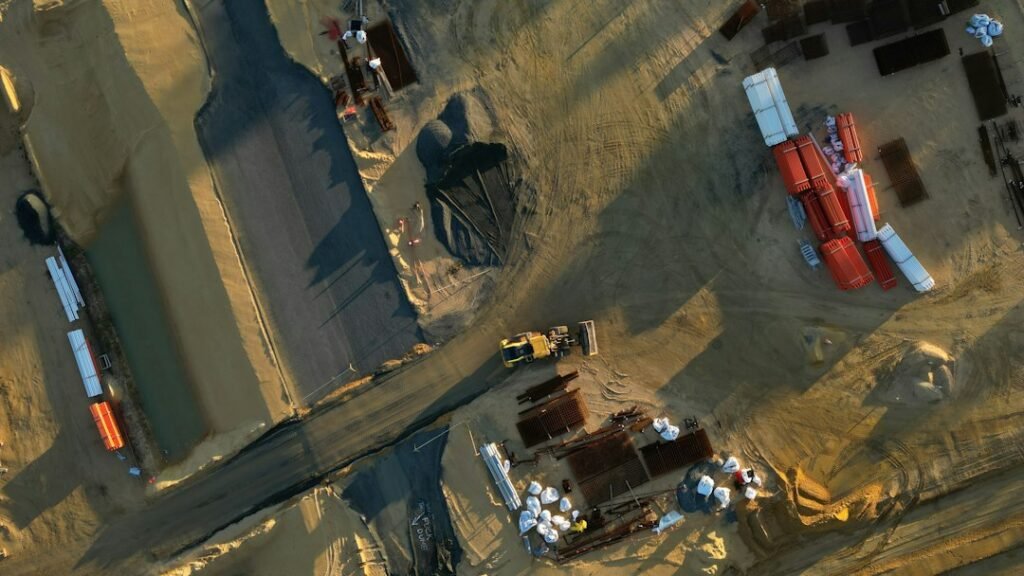
Aerial view of a large industrial construction site

When it comes to NEOM capital stack, I keep coming back to NEOM Green Hydrogen Company (NGHC). It is the clearest real-world answer I know to what a bankable green hydrogen project actually requires. The project isn’t typical, since most projects in Southeast Asia will be a fraction of its size. Still, every piece of its capital stack and partnership structure is now public. It shows exactly which boxes a lender or an offtaker needs checked before they commit.

In short: NGHC reached Final Investment Decision on the strength of three things working together. Firstly, an anchor offtaker signed a 30-year exclusive contract. The same partner also acted as EPC contractor. Secondly, a syndicate of 23 lenders split $8.4 billion in debt. Lenders joined because counterparties already covered both the offtake and the construction risk. By early 2026, crews had built roughly 90% of all sites. The plan called for first ammonia deliveries in early 2027. I’ll walk through the pieces, then what a developer in Malaysia, Indonesia, or Vietnam can take from it.

Facebook
Twitter
LinkedIn

In this article

NEOM capital stack: what NGHC actually is

NEOM Green Hydrogen Company is a joint venture between Air Products, ACWA Power, and NEOM itself. Air Products is a US industrial gas company. ACWA Power is a Saudi renewables developer. NEOM is the state-backed entity developing the giga-project region in the country’s northwest. Once operating, the plant will run on close to 4 GW of combined solar and wind power. As a result, it feeds 2.2 GW of electrolyzers and will produce roughly 600 tonnes of hydrogen a day. That hydrogen never leaves the site as hydrogen. Instead, crews convert it on-site into green ammonia, about 1.2 million tonnes a year. In other words, ammonia is the form that ships and stores well at this scale.

In particular, I’d flag one thing for anyone sizing their own project against this. NGHC’s original scope was closer to 4.6 GW of renewable capacity. The number that shipped is “up to” 4 GW. That is not a failure. It is what happens on the way to FID. At that point, the project’s engineering, financing, and offtake terms must line up with each other. In general, scope compression between early announcement and FID is normal. Treat NGHC’s trajectory as a template for what to expect in your own numbers. Nothing went wrong.

NEOM capital stack: piece by piece

The financing agreements that closed around FID totaled $8.4 billion in debt. A syndicate of 23 lenders provided the money. For example, it spans local Saudi banks, regional Gulf institutions, and international banks and export credit agencies. Overall, that’s a wide syndicate for a single project, and it tells you something specific. No single lender, and no single country’s banking system, could carry this exposure alone. Moreover, the spread of risk across 23 counterparties is itself a signal. Each lender could accept its slice, because the offtake contract made the revenue certain.

Element Detail
Debt financing $8.4 billion, 23 lenders (local, regional, international)
Offtaker Air Products, 30-year exclusive ammonia offtake
EPC contractor Air Products, contract valued at roughly $6.7 billion
Shareholders Air Products, ACWA Power, NEOM
Scale ~4 GW solar+wind, 2.2 GW electrolyzers, ~600 t H2/day, ~1.2 Mt ammonia/year
Timeline ~90% construction complete (Jan 2026), first deliveries expected early 2027

NEOM capital stack: the offtaker is also the EPC contractor

Actually, I think analysts overlook this detail. Air Products isn’t just buying the ammonia for 30 years. It also won the EPC contract to build the plant, worth around $6.7 billion. That’s not a coincidence of convenience. When your anchor offtaker also delivers the asset on time and on spec, the usual construction-versus-revenue tension largely disappears. As a result, lenders no longer underwrite two separate questions. Will this get built as promised, and will someone buy what it produces? In other words, the same counterparty answers both.

I don’t think every project can replicate this exact structure. Still, most developers won’t have an EPC-capable offtaker willing to take both roles. But the underlying principle travels. The fewer independent parties a lender has to trust simultaneously, the easier the financing conversation becomes. If you can’t collapse offtake and construction into one counterparty, align the rest. Specifically, make sure your offtaker, your EPC contractor, and your feedstock or power supplier are all referenceable and creditworthy. Ideally, the lenders you’re approaching already know them. In particular, see Green Hydrogen Plant Economics for the wider numbers behind that conversation.

NEOM capital stack: where this breaks in practice

None of this happened quickly, and none of it happened without friction. For example, the Saudi ministry of industry and mineral resources had to issue an industrial operating license. Only then could certain construction and financing milestones close. The headline financing figure also shifted between early announcement ($8.5bn) and final signing ($8.4bn). Even so, that shift is a reminder. The number you read in a press release eighteen months before FID rarely matches the number that actually closes.

The distribution plan is also worth noting as a practical constraint, not just a market detail. Meanwhile, Air Products intends to distribute the ammonia to global demand centers. Its particular focus is northern Europe, for mobility and industrial use. In effect, that’s a long shipping chain from a production site on the Red Sea. The economics therefore depend on ammonia shipping and import infrastructure at the destination. They matter as much as anything happening at NEOM itself. For that reason, a developer evaluating a similar project in Southeast Asia should ask the same question early. Who will receive this product, through what port, and is that receiving infrastructure ready yet?

NEOM capital stack: what a Southeast Asian developer can take from this

  • Lock in your offtaker before you go deep on financing conversations. NGHC’s 23-lender syndicate only makes sense because the 30-year Air Products contract existed first.
  • Look for ways to reduce the number of independent counterparties a lender has to trust. You may not get an offtaker-as-EPC structure, but aligned, well-known parties across construction, supply, and offtake materially shorten the financing timeline.
  • Expect your scope to compress between early announcement and FID. Build your investor materials around a range, not a single headline capacity number.
  • Trace your buyer’s actual receiving infrastructure, not just their letter of intent. A long-haul export project lives or dies on both ends of the supply chain.
  • A wide, geographically diverse lender syndicate isn’t a sign of a troubled raise, it’s often a sign the underlying offtake de-risked the deal enough that lenders were competing to get a seat, not avoiding it.

Common mistakes I see developers make when citing NEOM as a benchmark

  • Treating NEOM’s $8.4bn syndicate size as proof that project finance debt is generally available at this scale for any green hydrogen project. It’s available when the offtake and EPC risk are this well contained, not by default.
  • Ignoring the compression between headline capacity and final committed capacity, and then being surprised when their own numbers shift during due diligence.
  • Assuming the state-backing NEOM enjoys as a Saudi giga-project is replicable. It isn’t, for most developers, and shouldn’t be the basis of a financing plan.

Sources

FAQ

NGHC is a joint venture between Air Products, ACWA Power, and NEOM, the Saudi giga-project entity.

The project closed financing agreements worth $8.4 billion, provided by a syndicate of 23 local, regional, and international lenders.

Air Products holds a 30-year exclusive offtake agreement for the plant’s green ammonia output, and plans to distribute it to global demand centers with a focus on northern Europe.

As of January 2026, construction was roughly 90% complete across all sites, with first green ammonia deliveries expected in early 2027.

Having the same counterparty responsible for both delivering the asset and buying its output reduces the number of independent risks lenders need to underwrite, which likely helped the project secure such a large and diverse lending syndicate.

If you’re structuring a green hydrogen or green ammonia project in Southeast Asia and want to think through how your own offtake, EPC, and financing pieces need to line up to reach FID, I’m happy to compare notes.

I’m Alex, founder of WeConnect Asia. I connect low-carbon fuel project developers in Southeast Asia with the capital, offtakers, and strategic partners they need to reach FID.

This article reflects publicly reported information as of January 2026 and is provided for general informational purposes. It does not constitute financial, legal, or investment advice.

Not sure your project would survive a credit conversation?

A short call is usually enough to see where your project stands against what a lender or an equity investor will ask for. Tell me where your project is today, and I will tell you what the next conversation needs to look like.

Alex, Founder of WeConnect Asia

Alex, Founder of WeConnect Asia

I help low-carbon fuel and carbon removal project developers in Southeast Asia secure the commercial and financial partners needed to reach FID.

More about me·Get in touch

Facebook
Twitter
LinkedIn

Related articles




