
Home » IMO Net-Zero Framework: Where It Stands for Fuel Projects
IMO Net-Zero Framework: Where It Stands for Fuel Projects
11 min read · Jul 6, 2026 · By Alex
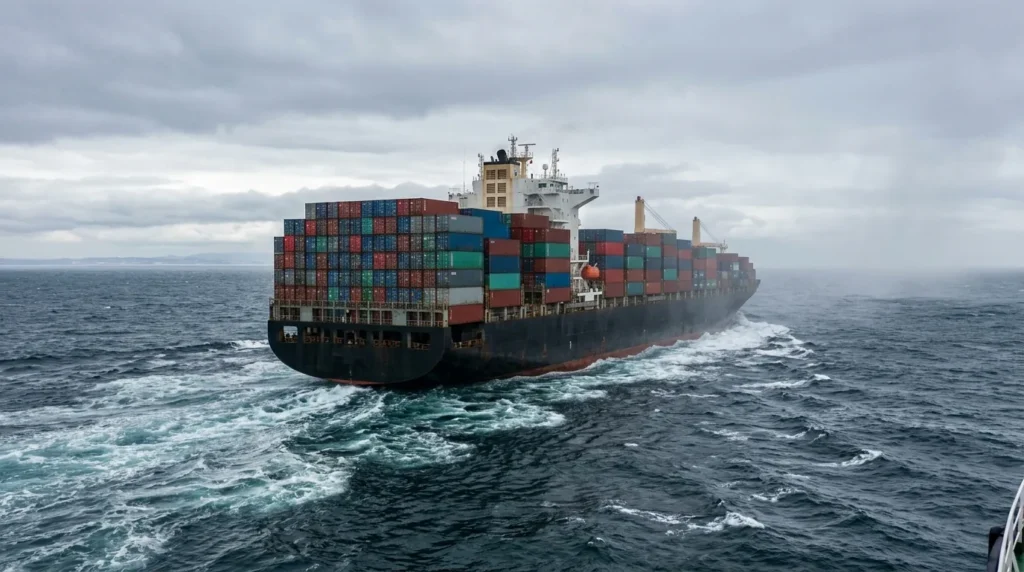
The IMO Net-Zero Framework is the draft global rulebook that would put a fuel standard and an emissions price on international shipping. In practice it would apply to ships of every flag. That is the main difference from the EU rules, which cover only voyages to, from or between EU ports. So for a marine fuel developer in Southeast Asia, it is the policy with the largest potential effect on demand. Still the IMO Net-Zero Framework is the policy that has moved most. So this article carries a dated status section, and I checked that status on 3 November 2026.
In short
- In short, the IMO Net-Zero Framework combines a global fuel standard with a price on greenhouse gases above set thresholds.
- However the text is approved, not adopted: the adoption session adjourned in October 2025 and is set to resume on 4 December 2026.
- Moreover the draft covers ships above 5,000 gross tonnage, which the IMO links to more than 85 % of shipping emissions.
- So a developer should model it as upside, and finance on contracts that survive a delay.
In this article
What the IMO Net-Zero Framework is
Today the International Maritime Organization is the United Nations agency for shipping, with 176 member states. In practice the framework would sit in a new chapter 5 of Annex VI of MARPOL, the convention that governs pollution from ships. The IMO Net-Zero Framework has two linked parts. First a global fuel standard caps the greenhouse gas intensity of ship fuel. Second a pricing mechanism charges ships that exceed set thresholds.
So the standard uses a metric called GHG Fuel Intensity, measured in grams of CO2 equivalent per megajoule. Thus the calculation runs well to wake, and it counts CO2, methane and nitrous oxide across the life of the fuel. Thus the framework looks at the same physical quantity as FuelEU Maritime, and it applies it worldwide.
Then approval in principle came at the Marine Environment Protection Committee in April 2025, at its 83rd session. Still approval is a step in the treaty process, not the end of it. In practice the tacit acceptance procedure requires an amendment to be adopted, then survive a period for objections, then enter into force. Hence the gap between a headline and an obligation.
Where the IMO Net-Zero Framework stands on 3 November 2026
Status checked on 3 November 2026. In practice the framework is approved but not adopted, so no global fuel standard or emissions price binds a ship today. In fact the last official decision is the closing of the 84th session of the Marine Environment Protection Committee on 1 May 2026. However it ended with a commitment to rebuild consensus, and with no adoption. Moreover the scope has not moved: the draft covers ships above 5,000 gross tonnage, which the IMO links to more than 85 % of the emissions of international shipping.
So the sequence since approval runs as follows. In October 2025 the second extraordinary session met from 14 to 17 October to consider adoption, and it adjourned for one year instead. Indeed the vote on 17 October 2025 counted 57 states for the postponement, 49 against and 21 abstentions. Then the committee used its 84th session, held in London from 27 April to 1 May 2026. About 100 delegations worked through the contested points. That session created an intersessional working group and scheduled two meetings, from 1 to 4 September and from 23 to 27 November 2026. In addition it kept new proposals for amendments admissible, so the text can still change before the vote.
So the next dates are fixed. The 85th session runs from 30 November to 3 December 2026. The second extraordinary session is set to resume on 4 December 2026, subject to confirmation by that 85th session. Therefore the decision window is weeks away, and the outcome is still open. Yet entry into force follows 16 months after adoption, so the earliest realistic date is 2028: March 2028 if the text is adopted this year, and later if the vote slips again.
The two compliance tiers and what they cost
The draft sets a tightening intensity curve rather than a single target. A ship must report its GHG Fuel Intensity each year and keep it under a limit that falls annually through 2035. The framework then uses two thresholds. The base threshold is the softer of the two. The direct threshold is the steeper one.
Then the price follows the threshold. The International Energy Agency reads the draft as an 8 % intensity cut by 2030 on the base trajectory. It reads the direct trajectory as closer to 20 %. In its reading, a ship that misses the base threshold pays USD 380 per tonne of CO2 equivalent. A ship that meets the base threshold but misses the direct one pays USD 100. Thus the softer target carries the higher price, and the design pushes ships to the middle of the curve rather than to the floor.
Under the IMO Net-Zero Framework, compliance is flexible. A ship that beats its threshold earns surplus units. Then it can bank them or transfer them to another ship. A ship that falls short buys those units or pays into the IMO Net-Zero Fund for remedial units. Therefore the framework creates a market in compliance, and the price of that market is the first number a fuel producer should watch.
What the pricing mechanism does with the money
The revenue does not go to national treasuries. So the IMO designed a dedicated fund. It would reward low-emission ships, support clean fuel projects and infrastructure, and finance training and technology transfer. It would also cushion the impact on small island states and least developed countries. A governing board would run the fund and report to the Marine Environment Protection Committee.
Moreover rewards are the other half of the IMO Net-Zero Framework. A ship that switches fully to zero or near-zero emission fuels qualifies for financial support. The IMO defines that category as fuels with an intensity of no more than 19.0 gCO2eq/MJ. That is 80 % below the current average of 93.3. For example, e-methanol and e-ammonia can fall inside that band, while a blend of fossil methanol and bio-methanol usually does not.
Therefore this matters to a project, because the reward is a second revenue line. It sits on top of the fuel price and does not depend on a single shipowner’s willingness to pay. However the reward rules are still guidelines in draft, and no fund exists yet.
What the IMO Net-Zero Framework settles and what stays open
Overall some elements are stable after two years of negotiation. Others remain open, and the table below separates them as they stand on 3 November 2026.
| Element | Status |
|---|---|
| Fuel intensity standard | Approved draft with an annual GFI curve to 2035, waiting for adoption. |
| Emissions pricing | Two tiers and two prices, with remedial units paid into the fund. |
| Entry into force | Expected 16 months after adoption, so the trigger has not started. |
| Default intensity values | Still to be decided, according to the IEA. |
| Land use and credits | Treatment of indirect land use change and the trading rules remain open. |
| Revenue distribution | Allocation formulas and the fund’s governing board are not final. |
However two gaps carry the most risk for a developer. First the default intensity values decide whether a fuel qualifies without a full life-cycle study, and those values can make or break a project’s carbon score. Second the rules on credit trading decide whether a compliance surplus is a liquid asset or a bilateral favour.
Why the December 2026 meeting decides the demand case
In fact the delay is political, not technical. In October 2025 the United States led a campaign against adoption, and the session adjourned rather than put the text to a vote. Then the 84th session in April 2026 faced a counter-proposal from Liberia and Panama, with support from Argentina. Those two flag states carry a large share of the world fleet. That proposal would have removed the pricing element in substance.
Yet the framework survived. Supporters such as Brazil, the European Union and Pacific island states argued that the text was already a balance of interests. Still the committee closed with a commitment to rebuild consensus. Consequently the December session is the moment when the market learns whether a global price exists before 2030. If adoption happens, entry into force follows 16 months later. If it fails again, the regional rules become the only bankable demand for the rest of the decade.
How the IMO Net-Zero Framework would sit next to FuelEU Maritime
In practice the IMO Net-Zero Framework and FuelEU Maritime would overlap without replacing each other. FuelEU Maritime binds ships above 5,000 gross tonnage on voyages to, from or between EU ports. The global framework would bind the same size class on international voyages everywhere. A ship trading to Europe would therefore face two intensity tests on the same fuel. A ship trading inside Asia would face only the global test, if it exists.
The EU text anticipates the overlap. It requires the Commission to report to the European Parliament and the Council if the IMO adopts a global fuel standard. That report must examine alignment and the risk of duplicate regulation. In practice a global standard would give the Commission a reason to adjust the European curve, and possibly the RFNBO sub-target that starts in 2034. Thus a project that models only the EU rule is modelling half the policy risk.
Therefore for a producer the practical question is certification. Moreover both regimes need verified life-cycle values, and both accept certification schemes, but the recognised schemes and the default values may differ. So a fuel that qualifies in Rotterdam may need a second file for a global registry, and that cost belongs in the offtake price.
What lenders do with an open question
In practice a lender does not wait for a perfect rule, and it does not lend on a draft either. Instead it builds scenarios and assigns a probability to each. The base case usually rests on demand that already has a legal trigger, such as FuelEU Maritime, plus contracts with named buyers. The global framework then enters as an upside case, with its own date and its own price.
In practice three tests appear in most credit papers. First, does the offtake survive a two-year delay in global adoption? Second, can the plant sell into a regional market if the global price fails? Third, does the fuel qualify under both certification regimes without a new investment? Hence a project that answers all three with a yes can carry a higher leverage. Still a project that needs the global price to service debt cannot.
What the IMO Net-Zero Framework means for a project that cannot wait
First build the base case on contracts and on the regional rules that already apply. Then show the framework as a sensitivity, with the December 2026 date and a delay scenario. Finally keep the design flexible on fuel type, because the difference between methanol and ammonia in compliance value is smaller than the difference in project risk.
Three habits follow from the IMO Net-Zero Framework. First one is to date every policy statement in the data room, since an undated claim about the IMO reads as sloppy to a technical adviser. Another is to keep a certification file that can serve both regimes. The third is to price the reward optionality separately, so that a lender can see what the project is worth without it. See Maritime Fuel Bankability and Marine Fuel Offtake for the contract side.
Sources
Sources
- International Maritime Organization, The IMO Net-Zero Framework: FAQs (components, scope, GHG Fuel Intensity, two tiers, Net-Zero Fund, entry into force).
- IMO, IMO net-zero shipping talks to resume in 2026, 17 October 2025 (adjournment of the second extraordinary session).
- IMO, IMO progresses work on ship emissions, pollution and ocean protection, 1 May 2026 (outcome of the 84th session, intersessional dates, 4 December 2026 resumption).
- International Energy Agency, Renewables 2025 (8 % base trajectory, tier prices of USD 380 and USD 100 per tonne, open questions on default values).
- Carbon Brief, Q&A: How countries got the global net-zero shipping deal back on track, May 2026 (positions at the 84th session).
- Green Fuel Journal, IMO Net-Zero Framework: compliance costs 2027 to 2030 (vote of 57 to 49 on the adjournment, 17 October 2025).
- SAFETY4SEA, IMO decides to postpone adoption of Net-Zero Framework, 17 October 2025 (vote count: 57 for, 49 against, 21 abstentions).
FAQ
What is the IMO Net-Zero Framework?
A draft set of global rules for shipping that combines a fuel intensity standard with a price on emissions above two thresholds.
Has the IMO adopted it?
No. As of 3 November 2026 the IMO Net-Zero Framework is approved but not adopted, and the adoption session is set to resume on 4 December 2026.
When could it enter into force?
About 16 months after adoption, so a December 2026 adoption points to 2028 at the earliest.
Does it replace FuelEU Maritime?
No. The EU rule stays in force, and the Commission must report on alignment if a global standard is adopted.
Should I wait for it before FID?
No. A project that needs the global price to work is not bankable today, so finance on contracts and treat the framework as upside.
Who benefits first?
Producers with a certified low-carbon fuel, a port with bunkering capacity and a signed buyer that already faces a regional rule.
Next step
A short call is usually enough to see where your project stands before a lender or an offtaker looks at it.
So to test your marine fuel case against different policy outcomes, book a 30-minute call. For the European side of the same question, read What Is FuelEU Maritime? and Sustainable Maritime Fuels.
I do not provide investment advice or arrange investments. I act as a strategic advisor and facilitator.

Alex, Founder of WeConnect Asia
I help low-carbon fuel and carbon removal project developers in Southeast Asia secure the commercial and financial partners needed to reach FID.
Related articles

Biomethane: What It Is, How It Is Made and Who Buys It
Biomethane is biogas cleaned to pipeline quality. I explain how it is made, how it differs from biogas and who buys it in Southeast Asia.

Southeast Asia SAF: Policies, Demand and Project Status
Southeast Asia SAF policy is moving country by country. Here is where demand is forming, who the buyers are and what a developer can rely on today.

e-SAF Project Finance: Why the Sub-Mandate Is Not Enough
The synthetic fuel sub-mandate creates demand for e-SAF, but not a bankable project. Here is what e-SAF project finance still needs in Southeast Asia.

SAF Mandates by Country: A Developer’s Comparison
SAF mandates differ by country in scope, target and penalty. Here is a side-by-side comparison and what each one means for project revenue.

Sustainable Aviation Fuel: Pathways, Mandates and What Gets Financed
Sustainable aviation fuel has several pathways and sells into mandates. I explain the routes, the demand and what gets financed in Asia.

ReFuelEU Offtake: Who Actually Buys Your SAF?
The ReFuelEU mandate sits on fuel suppliers, not airlines. Here is what that means for ReFuelEU offtake contracts and what lenders expect to see.