
Home » ReFuelEU Bankability: Can It Finance a SEA SAF Plant?
ReFuelEU Bankability: Can It Finance a SEA SAF Plant?
13 min read · Mar 3, 2026 · By Alex
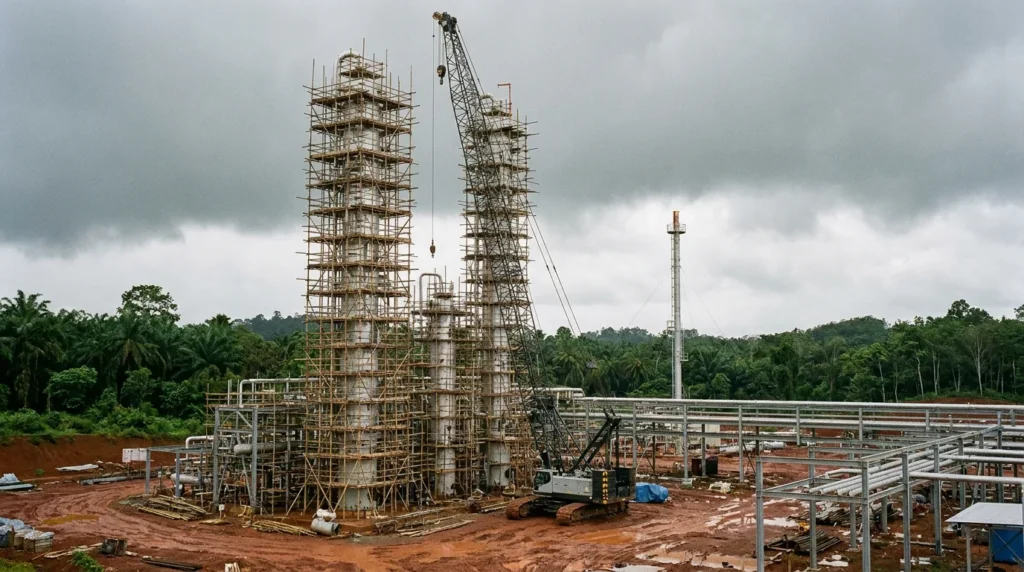
ReFuelEU bankability is the question every SAF developer in Southeast Asia asks sooner or later: does the EU mandate make my plant financeable? In practice, my answer is that it helps a lot with one risk, demand, and it does nothing on its own for the others. Therefore ReFuelEU bankability depends on what you build around the mandate: a creditworthy buyer, a contract, a certified feedstock and a price mechanism. This guide walks through that chain, from the regulation to the lender’s credit paper.
In short
- For one thing, the mandate gives long-dated, regulated demand, with minimum SAF shares from 2 % in 2025 to 70 % in 2050, and a synthetic fuel sub-share that reaches 35 % in 2050.
- Moreover, it does not set a price, does not name a buyer and does not guarantee a contract with your plant.
- Instead, lenders finance the chain: obliged party, contract, feedstock, certification, price.
- By comparison, the weak link for a Southeast Asia project is geography: the obligation sits at EU airports, your plant does not.
- In addition, the fine formula and the no-buy-out rule are what push fuel suppliers to sign volume contracts in the first place.
- Still, a project with the chain documented moves toward FID. In contrast, a project with only the mandate stays a story.
In this article
ReFuelEU bankability: what changes for project revenue
Before the regulation, SAF demand rested on voluntary purchases and on incentives that, in the European Commission’s own assessment as summarised by the European Parliamentary Research Service, had not produced enough SAF uptake. The Commission concluded that the renewable energy framework and the EU Emissions Trading System had not led to a sufficient increase in SAF, and that CORSIA alone might not provide a sufficient economic incentive for airlines. As a result, Regulation (EU) 2023/2405 replaces that with a legal obligation on fuel suppliers: a minimum SAF share in the fuel supplied at EU airports, and the schedule sits in Annex I of the act (see What Is ReFuelEU Aviation?). For a lender, a regulated, rising demand curve through 2050 is a real strength. In effect, it reduces the risk that the market for your product disappears before the debt is repaid.
ReFuelEU bankability as a demand curve to 2050
The numbers a lender will underwrite are fixed in Annex I: 2 % SAF from 1 January 2025, 6 % from 2030, 20 % from 2035, 34 % from 2040, 42 % from 2045 and 70 % from 2050. Inside that curve, synthetic aviation fuels carry their own ladder, from an average of 1.2 % over 2030 to 2031, to 2.0 % over 2032 to 2034, then 5 % in 2035, 10 % in 2040, 15 % in 2045 and 35 % in 2050. The obligations in Articles 4, 5, 6, 8 and 10 apply from 1 January 2025. Moreover, the European Commission states that more than 95 % of air transport departing from EU airports falls under the rule, and that ReFuelEU replaces national SAF mandates in Member States, which gives one rulebook and lower compliance costs across the market. For ReFuelEU bankability that matters, because a single binding schedule across a whole continent is easier for a credit committee to accept than a patchwork of voluntary schemes.
ReFuelEU bankability and the cost of not buying
However, a mandate only becomes purchasing pressure when non-compliance hurts. Article 12 of the regulation sets the fine for a fuel supplier that misses the minimum shares at no less than twice the difference between the yearly average price of conventional aviation fuel and SAF per tonne, multiplied by the quantity that did not comply. In addition, the IATA ReFuelEU Aviation Handbook is explicit that there is no buy-out provision: a supplier that falls short still has to make up that shortfall in the next reporting period, on top of its normal obligation and on top of the fine. Consequently, the obliged party cannot escape the volume, it can only delay part of it and pay for the delay. That is exactly why a developer with contracted, eligible volume is talking to a buyer who has a legal reason to sign, and why the contract, not the mandate, remains the asset you finance.
What ReFuelEU bankability adds next to CORSIA and the EU ETS
By contrast, the two regimes that existed before ReFuelEU do not create a volume obligation. CORSIA lets an airline use eligible SAF instead of buying offsets, and the EU ETS treats eligible SAF as zero emissions so that no allowances are surrendered for it. Both improve the economics of a gallon of SAF, and neither obliges anyone to buy a fixed share of it. Moreover, between 1 January 2024 and 31 December 2030, a maximum of 20 million EU ETS allowances is reserved for commercial aircraft operators to help cover part of the price difference between conventional and eligible fuels. I read that as a bridge for the airline’s operating cost, not as revenue for a producer. Therefore a project model should keep ReFuelEU bankability, CORSIA and EU ETS aviation in three separate lines: obligation, offset substitute, and allowance support.
What does not change for ReFuelEU bankability
However, a lender does not read the regulation. Instead, a lender reads contracts. Four gaps remain between the text on the statute book and the revenue line in your model.
- No price. The mandate sets volumes. The premium over fossil jet comes from the offtake contract, and from nothing else.
- No named buyer. In fact, the obliged party is the aviation fuel supplier, which may buy from many producers and is not obliged to buy from you.
- Flexibility. Specifically, Article 15 lets a supplier meet the share as a weighted average over all the aviation fuel it supplied across Union airports, from 1 January 2025 until 31 December 2034.
- Policy design is still debated. For instance, IATA states that its position remains that technology-push policies should come first at today’s stage of SAF production, airport representatives have questioned who carries the physical supply obligation, and waste-based fuel producers have warned against fencing off certain waste feedstocks.
The feedstock limits inside ReFuelEU bankability
Two clauses of Article 4 decide whether your output can count at all. First, biofuels other than advanced biofuels and other than those made from feedstock listed in Part B of Annex IX to RED II are capped at 3 % of the aviation fuel a supplier supplies, for the purpose of meeting the minimum shares. Second, SAF made from food and feed crops, intermediate crops, palm fatty acid distillate, palm and soy-derived materials, and soap stock and its derivatives is excluded from the calculation, unless the feedstock sits in Annex IX of RED II under the conditions set there. Moreover, a supplier may demonstrate compliance using the mass balance system of RED II, which means traceability documentation flows through the whole chain. In practice, this is where a Southeast Asia project is won or lost, because several regional residues sit on the wrong side of those lines. Consequently, the eligibility proof belongs in the first version of the credit file, and SAF Sustainability Criteria is where I set out what lenders ask to see.
The review clause behind ReFuelEU bankability
Furthermore, the regulation reviews itself. Under Article 17 the Commission must present a report by 1 January 2027 and every four years after that, and the report assesses whether the scope, the SAF definition, the eligible fuels, the minimum shares and the level of fines need revision. It also has to consider whether support mechanisms should bridge the price difference between SAF and conventional aviation fuels, and it must cover policy developments in relevant third countries and any SAF framework emerging at ICAO level. The IATA handbook notes a provision that allows amendments to align the regulation with such a framework. In addition, the Commission has already published a report on the SAF flexibility mechanism. Therefore a lender treats revision risk as a dated, visible event rather than an open-ended threat, and a good file says what happens to the revenue case if the 2027 review softens a share or widens the flexibility.
The ReFuelEU bankability chain, as a lender reads it
Instead of a story about decarbonisation, the credit paper is a chain of five links, and each link needs its own proof. If one of them is missing, the mandate does not compensate for it.
| Link | What reassures a lender | What worries a lender | Proof asked |
|---|---|---|---|
| Mandate | Legal demand to 2050 | Revision risk, flexibility to 2034 | Regulation text, own policy review |
| Obliged party | Large, rated fuel supplier | Small trader, no balance sheet | Counterparty credit file |
| Contract | Long-term, volume and price terms | MOU or letter of intent only | Signed offtake, term sheet |
| Feedstock | Certified, traceable, contracted | Spot sourcing, uncertified residues | Supply agreements, certification |
| Price | Indexation, feedstock pass-through | Fixed price against volatile inputs | Price formula, sensitivity |
| Eligibility | Fuel inside Annex I definitions | Feedstock on the excluded list | RED II certificate, mass balance records |
| Route to market | Documented path to an EU airport | Undefined logistics and extra distance | Delivery and handling agreements |
The debt view and the equity view of ReFuelEU bankability
However, the two sides of the capital structure read the same chain differently. A lender wants contracted cash flow that covers debt service through the tenor, so it focuses on the offtake term, the take-or-pay floor and the feedstock pass-through. An equity investor wants the upside if the SAF premium stays wide, so it focuses on what happens after the debt is repaid and on whether the project survives a weaker policy case. Moreover, both sides discount the same physical risk, which is that an eligible gallon has to reach an airport in scope. Consequently, I prepare one factual base and two readings of it: coverage ratios and downside cases for the debt, sensitivity on the premium and on the policy case for the equity. For the investor side in detail, see What Equity Investors Are Underwriting.
Where ReFuelEU bankability breaks for a Southeast Asia plant
The obligation applies to fuel supplied at Union airports. A plant in Malaysia, Indonesia or the Philippines sits outside that geography, so it has two honest options: get certified fuel into the supply chain of an EU airport, or sell to a regional buyer instead. Consequently, three questions arrive first in any lender meeting: who certifies the fuel, who moves it, and who pays for the extra distance. In particular, I cover the export route in Export SAF to Europe, and the regional alternative in Southeast Asia SAF. By contrast, a project that answers only with the words “the EU mandate exists” has not answered any of the three.
Who certifies the fuel for ReFuelEU bankability
Certification is not a logo on a document, it is a reporting chain. Fuel suppliers report to the Union database by 14 February each year, for the first time in 2025, the tonnes supplied at each Union airport, the conversion process, the characteristics and origin of the feedstock, and the lifecycle emissions of each type of SAF. Aircraft operators report by 31 March, and their report must be verified by an independent verifier. Therefore your buyer will ask you for feedstock origin, conversion route and lifecycle numbers early, because those numbers end up in its own filing. Moreover, the same data set is what a lender tests when it asks whether the fuel is inside Annex I. As a result, certification work done before the offtake negotiation shortens the negotiation, and work done after it delays FID.
Who moves the fuel and who pays for the distance
Physical delivery is the second break point. A SAF plant in Southeast Asia has to cover feedstock cost, conversion cost and then freight, storage and handling into an EU airport. In practice, the buyer will not absorb that chain silently, so the price formula has to say how distance, handling and certification cost are treated. By contrast, a fixed price that ignores the freight leg simply transfers the risk to the producer and usually breaks in the first bad quarter. For example, the 20 million ETS allowances reserved for operators between 2024 and 2030 soften the premium for airlines, which means they have less reason to pay more than the contract obliges them to pay. Consequently, the pass-through clause and the delivery obligation are the two paragraphs I read first in any draft.
A four-step method to build ReFuelEU bankability
- Map the obliged parties. List the fuel suppliers and airlines active at the EU airports you could serve, then rank them by balance sheet and by their existing SAF position. What you get: a target buyer list that a lender can test. In addition, a small trader with no rating is a warning sign rather than a fast close.
- Test the contract structure. Take-or-pay or minimum volume, indexation, duration, change-in-law, and what happens if the buyer’s obligation changes. What you get: a term sheet a lender can read. See ReFuelEU Offtake.
- Lock the feedstock and the certification path. Contract the residue, confirm it is not on the excluded list, and choose the certification and mass balance route your buyer accepts. What you get: proof the fuel is eligible. See SAF Sustainability Criteria.
- Build the credit story. Mandate, contract, feedstock and route to market in one file, with a downside case that removes part of the premium. What you get: a package for the lender and the equity investors. See How to Finance a SAF Project.
Common mistakes that weaken ReFuelEU bankability
- For example, presenting the mandate as the revenue. The mandate is the reason a buyer comes to the table, it is not the price line in your model.
- Another mistake is treating a letter of intent as an offtake. A lender reads an MOU as evidence of interest, not of cash flow.
- Also, assuming the obliged party is an airline. The blending obligation sits with the fuel supplier, and airlines buy through suppliers or directly depending on the contract.
- Ignoring feedstock certification until after the offtake talks, which puts eligibility questions in the middle of commercial negotiation.
- Finally, showing a fixed price with no feedstock pass-through, or a delivery clause that never prices the distance to an EU airport.
Checklist before you approach lenders
- I can name the obliged party I plan to sell to, or the regional buyer I plan to use instead, and I can show why that counterparty will still be solvent in 2030.
- I have a signed term sheet, not only an MOU, with volume, term, price formula and change-in-law wording.
- Also, my feedstock is on an eligible list and I can prove it with traceability records.
- Moreover, my price formula survives a feedstock price spike and a wider freight cost.
- I know the delivery route to the buyer, including who handles and who pays for each step.
- Finally, I have written what the revenue case looks like if the 2027 review changes a share.
If you ticked fewer than three, the work is upstream: offtake agreements and feedstock supply. For the investor view of the same risks, read SAF Policy Risk and What Equity Investors Are Underwriting.
Sources
Sources
- Regulation (EU) 2023/2405 of the European Parliament and of the Council of 18 October 2023 on ensuring a level playing field for sustainable air transport (ReFuelEU Aviation), Articles 4, 5, 6, 8, 10, 12, 15, 17 and Annex I, EUR-Lex: https://eur-lex.europa.eu/eli/reg/2023/2405/oj/eng
- European Parliamentary Research Service, “ReFuelEU Aviation initiative”, PE 698.900, November 2023 (Commission assessment of existing measures, final schedule, transitional period, impact assessment figures, stakeholder positions): https://www.europarl.europa.eu/RegData/etudes/BRIE/2022/698900/EPRS_BRI(2022)698900_EN.pdf
- European Commission, “ReFuelEU aviation” (scope, coverage above 95 %, replacement of national mandates, flexibility report): https://transport.ec.europa.eu/transport-modes/air/environment/refuelEU-aviation_en
- European Commission, FAQ on the interpretation of Regulation (EU) 2023/2405 (application from 1 January 2025, scope thresholds): https://transport.ec.europa.eu/transport-modes/air/environment/refueleu-aviation/faq-refueleu-aviation_en
- IATA, ReFuelEU Aviation Handbook, September 2024 (no buy-out provision, shortfall make-up, ETS allowances reserved for SAF, flexibility mechanism): https://www.iata.org/contentassets/d13875e9ed784f75bac90f000760e998/refuel-eu-aviation-handbook.pdf
- IATA, Sustainable Aviation Fuel (SAF) programme page (policy sequencing position, lifecycle reduction): https://www.iata.org/en/programs/environment/sustainable-aviation-fuels/
FAQ
Does ReFuelEU Aviation make a SAF plant bankable?
Still, it strengthens the demand case. A plant becomes bankable when the mandate is backed by a contract, a feedstock and a price formula. In practice, the mandate is the reason a supplier sits down with you, and the contract is what the lender finances.
Who is the buyer under ReFuelEU?
In fact, the obliged party for blending is the aviation fuel supplier. Instead, airlines buy through suppliers or directly, depending on the contract, and they carry a separate obligation on uplift and reporting.
Can a Southeast Asia plant use the EU mandate?
Only if its fuel is certified and reaches the supply chain of an EU airport. Otherwise the honest plan is regional demand, and that plan has to be written down too.
Does the 10-year transitional period weaken demand?
Indeed, it gives suppliers flexibility across airports until 31 December 2034. It does not remove the obligation, but lenders should not assume demand arrives evenly at each airport each year.
What do lenders ask first?
Usually: who signs the offtake, for how long, and at what price formula. After that come feedstock eligibility and the route to the airport.
Next step
A short call is usually enough to see where your project stands before a lender or an offtaker looks at it.
If your SAF project is pre-FID and you want to test how the mandate turns into a financeable file, book a 30-minute call. You can also read about my project finance and investor introductions work, or the bankability hub.
I do not provide investment advice or arrange investments. I act as a strategic advisor and facilitator.

Alex, Founder of WeConnect Asia
I help low-carbon fuel and carbon removal project developers in Southeast Asia secure the commercial and financial partners needed to reach FID.
Related articles

Biomethane: What It Is, How It Is Made and Who Buys It
Biomethane is biogas cleaned to pipeline quality. I explain how it is made, how it differs from biogas and who buys it in Southeast Asia.

Southeast Asia SAF: Policies, Demand and Project Status
Southeast Asia SAF policy is moving country by country. Here is where demand is forming, who the buyers are and what a developer can rely on today.

e-SAF Project Finance: Why the Sub-Mandate Is Not Enough
The synthetic fuel sub-mandate creates demand for e-SAF, but not a bankable project. Here is what e-SAF project finance still needs in Southeast Asia.

SAF Mandates by Country: A Developer’s Comparison
SAF mandates differ by country in scope, target and penalty. Here is a side-by-side comparison and what each one means for project revenue.

Sustainable Aviation Fuel: Pathways, Mandates and What Gets Financed
Sustainable aviation fuel has several pathways and sells into mandates. I explain the routes, the demand and what gets financed in Asia.

ReFuelEU Offtake: Who Actually Buys Your SAF?
The ReFuelEU mandate sits on fuel suppliers, not airlines. Here is what that means for ReFuelEU offtake contracts and what lenders expect to see.