
Home » From Soil Amendment to Bankable Asset: How CDR Changes a Biochar Project’s Finance Story
From Soil Amendment to Bankable Asset:
How CDR Changes a Biochar Project's Finance Story
15 min read · Jul 29, 2026 · By Alex
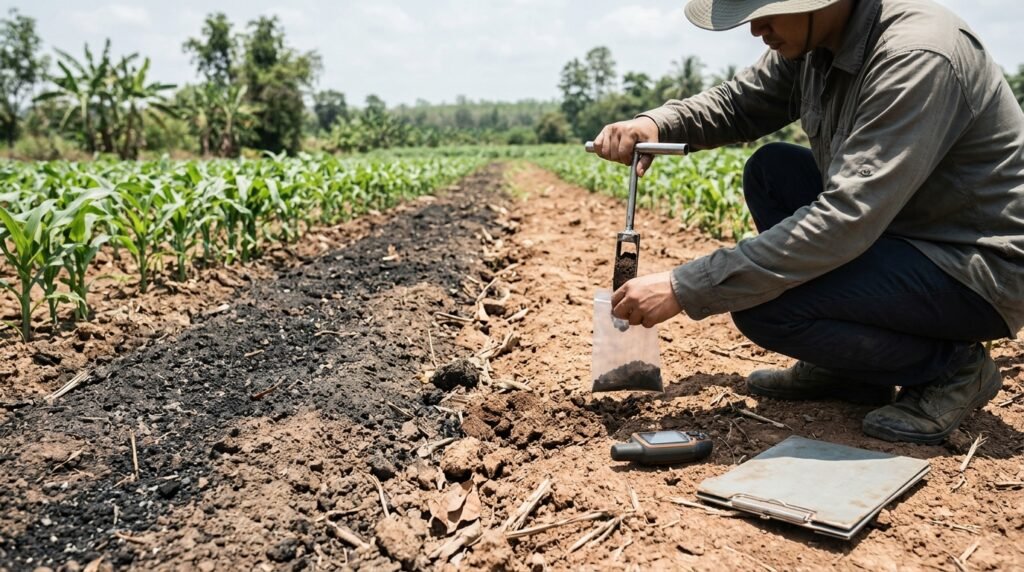
Carbon removal bankability is where most biochar projects meet reality. Almost every project I come across starts from a good instinct. Take a residue nobody wants, stop it burning in the open field, and turn it into soil that grows better. The idea also creates local income. The intuition is sound. What is much rarer is a biochar project that survives a structured financing process. The money may come from a fund, a bank, or a corporate balance sheet.
Whatever the pitch, investors ask the same question. What am I actually buying, and on which cash flow do I get my money back? A soil amendment story does not answer that question well. A carbon dioxide removal, or CDR, story does. This article sets out how reframing a biochar project as a CDR asset changes its carbon removal bankability. It also covers what that reframing requires in practice.
It builds on a companion piece, Why Most Biochar Projects Aren’t Bankable, and What Changes the Math. That piece also covers what investors check before funding: scale, feedstock, technology track record, and revenue structure. This article goes deeper on the carbon removal piece. In my experience it is therefore the single lever that moves a project furthest and fastest.
In short
- Biochar applied to soil improves fertility and water retention. The same physical process, with quantified, standardised carbon accounting, creates a sellable carbon removal credit.
- That shift opens access to recognised standards, premium credit buyers, and climate-focused investors. They will not look at an unverified soil amendment claim.
- Investors want to see a pipeline, not a single site. They want a chosen methodology with active MRV, and credits sold forward rather than hoped for. They also want written feedstock contracts and a plan for the carbon that does not end up in the char.
- For example, a forward sale of carbon credits fixes volume, price and duration. To a lender it reads like a power purchase agreement, a structure they already know how to finance.
- Several project companies under one platform beat a single isolated site. The difference shows between a one-off deal and a programme an investor wants to back. That programme logic is where carbon removal bankability takes hold.
In this article
Biochar versus CDR: the same reactor, a different asset
Run through a pyrolysis unit, agricultural residue becomes a carbon-rich char. Applied to soil, that char improves fertility, water retention, and microbial activity. It also keeps residue from being burned, which matters where open-field burning is common.
Structure it as carbon dioxide removal and the same operation gets described differently. The process pulls CO2 out of the atmosphere and locks it into a solid form. That form stays stable for decades to centuries. A recognised standard measures that removal. Companies buy the resulting credit to offset or neutralise their own emissions.
The practical difference is what the shift opens up. A soil amendment claim reaches an informal market, usually local, at a modest price, and not particularly solvent. A certified carbon removal credit trades into a market with established registries, defined methodologies, and buyers. Those buyers are often large technology or industrial companies that need durable removals for their own climate commitments. One of those markets is accessible to a village-scale operation. The other requires structure, but pays for it.
Why carbon removal bankability fails many biochar projects, briefly
The companion article on biochar project bankability covers this in full, so only the summary belongs here. What follows is the short version of why carbon removal bankability stalls. The projects that struggle to raise money typically run at sub-scale volumes. They have no chosen carbon removal methodology or MRV process. As a result, they depend on a single, uncontracted revenue line from biochar sales, with no written feedstock agreements. And they plan to scale technology that has never proved itself at that scale. Any one of these is a problem. Several together make a project look, to a credit committee, like a pilot rather than an asset. If that description fits your project, start with that article before coming back to this one.
What investors actually look for in carbon removal bankability
Scale and a pipeline, not a one-off site
Investors want to see a credible volume of biomass, typically tens of thousands of tonnes a year, and ideally a view toward several potential sites across a territory rather than one isolated plant. The logic is straightforward: they want to finance a platform capable of deploying multiple projects, not a single bet.
A recognised CDR methodology, properly run
A chosen standard, Puro.earth, Verra, Isometric or an equivalent registry, paired with a documented measurement, reporting and verification process. Isometric’s newer methodology for biochar stored in underground mines, with durability claims running to a thousand years, is one example of how fast the standards side is moving (Carbon Pulse). What matters is not which standard a team picks, but whether auditors, buyers and lenders trust the credits it generates.
Carbon revenue that is structured, not hoped for
Generating credits is not enough on its own. There need to be identified buyers, and ideally a forward offtake or pre-purchase agreement fixing volume, price and duration. Platts reports offtake prices of roughly $80 to $120 per tonne of CO2e for Puro Earth or Isometric certified biochar. Spot prices, however, run closer to $140 to $150 per tonne. Investors have asked for as little as 10 to 20 percent of total credits as offtakes, Platts noted (S&P Global). A pre-contracted credit stream looks to a lender like a quasi power purchase agreement. Fixed on those three dimensions, it is a financing structure banks already understand.
A biochar project in the United States recently raised $72 million through a carbon removal-linked note from Citi. The note pays investors from the issuance and delivery of certified credits rather than a fixed coupon (Citigroup).
Feedstock supply under contract
Long-term agreements with aggregators, cooperatives or industrial suppliers, specifying volume, quality, price and logistics. This is what turns “there is biomass in the area” into something a bank will actually underwrite. In Southeast Asia specifically, the resource case is strong. Palm plantations in Indonesia and Malaysia generate an estimated 140 million tonnes of unused biomass a year. One industry estimate puts the ceiling for durable carbon removal from that stream at 32 million tonnes of CO2 annually (BiocharToday). The resource is rarely the constraint. Getting it under contract is.
Valorising the fraction that is not char
Biochar accounts for roughly 30 to 40 percent of the carbon in the original feedstock. The remaining 60 to 70 percent leaves the process as a liquid or gas fraction. The most bankable projects use it directly for heat or power. Others build toward higher-value products: biomethanol, sustainable aviation fuel, biobitumen, or other bioproducts. Even when none of this earns money on day one, a credible technical pathway strengthens the case. Moreover, a letter of intent from an industrial buyer helps further. Buyers of these co-products are often also plausible buyers of the carbon credits, which gives a project two commercial relationships with the same counterparty instead of one.
How to structure a biochar project for carbon removal bankability
Step 1: Clarify the CDR model for carbon removal bankability
Define, precisely, how many tonnes of CO2 are removed per tonne of biomass and per tonne of biochar, and which methodology and underlying assumptions will be used. Build a credit generation model over a ten to twenty year horizon. This is the foundation everything else sits on. Getting it right at the design stage is therefore far cheaper than rebuilding once the plant operates. Carbon removal bankability is priced off this figure.
Step 2: Secure feedstock and technology before anything else gets exciting
Lock multi-year, written contracts with more than one feedstock supplier where possible, and choose a pyrolysis technology with a credible operating track record. Document expected yields, biochar quality, and operational reliability. This is unglamorous work. It is also what most determines whether the rest of the plan survives diligence.
Step 3: Talk to carbon removal credit buyers early, not late
Open conversations with large credit buyers, climate-focused funds, and corporate carbon initiatives well before the project is fully built. The goal is letters of intent or term sheets early, and offtake agreements once the technical case holds. Starting this conversation only when the plant operates is one of the most costly mistakes I see.
Step 4: Do not leave the liquid and gas fraction unaddressed
At minimum, have a plan for basic energy valorisation, steam, heat, or electricity. A more ambitious project pursues partnerships for biomethanol, sustainable aviation fuel, or biobitumen. It also runs analysis on the non-char fraction from the first months of operation. Even if carbon credits dominate revenue early on, a credible upside trajectory matters to investors. They evaluate the project’s ceiling, not just its floor.
Step 5: Build an investor-ready pack for carbon removal bankability
A structured data room covering technology, feedstock, contracts, financial models, and sensitivity analysis. A clear narrative for investors: what they are actually buying. Assets, a platform, or a pipeline: they need to see which one they own. Where the revenue comes from: credits, biochar, by-products. And how they eventually exit: dividends, a trade sale, or refinancing.
Why platform and pipeline structuring matters for carbon removal bankability
Beyond any single project, how a biochar business organises itself changes how financeable it is. Carbon removal bankability starts with that structure.
A platform holds the methodology expertise, the team, the MRV tools, and the sales channel for carbon credits. It provides these as a service, development, operations, MRV, carbon commercialisation, to individual project companies.
A pipeline is a series of project-level special purpose vehicles, each operating one biochar facility. Each SPV signs a service agreement with the platform, and separate offtake agreements for its carbon credits and any co-products.
This structure improves carbon removal bankability in three specific ways. Investors can finance a programme of sites rather than a single, isolated project, which is a very different risk profile. It separates platform-level risk, team quality, access to the carbon market, from site-level risk, local operations and feedstock. It also gives everyone in the deal, including the investor, a clear view of who earns what. Management fees sit at the platform level, project profits at the project level. That beats one undifferentiated pool of revenue.
Where carbon removal bankability breaks in practice
Teams build the carbon model after the plant, not before. Retrofitting an MRV process and methodology selection onto an operating facility costs more than building it in from the start. The bill therefore shows up in time and in lost early credit vintages. Late design is expensive, and carbon removal bankability pays for it.
Offtake conversations start too late. Developers often wait for full financing before they approach credit buyers. Instead, the opposite order gets better terms and gives lenders something concrete to underwrite.
Teams assert the platform and pipeline story instead of building it. Calling a single project a “platform” in an investor deck does not change how diligence reads the deal. The team, tools and second site are what change it.
The non-char fraction stays a slide, not a plan. Without data or a letter of intent, the upside case for those by-products reads as aspiration rather than value.
Common mistakes in carbon removal bankability
- Choosing a methodology based on which registry is easiest to start with, rather than which one buyers and auditors actually trust.
- Signing an offtake for a token share of credits just to say one exists. Doing so without checking whether the pricing and terms would satisfy a lender.
- Underestimating how much documentation MRV requires, and starting it too late to capture early credit vintages.
- Treating feedstock contracts and carbon offtake contracts as separate workstreams instead of negotiating them together.
Checklist for carbon removal bankability before approaching investors
- Do you have a defined tCO2-removed-per-tonne figure and a chosen methodology, documented and ready for review?
- Is MRV running, or at least designed and ready to start from commissioning?
- Do you have a forward offtake, or active, documented conversations with identified carbon credit buyers?
- Have you written multi-year feedstock contracts that cover volume, price and quality?
- Do you have real data, even preliminary, on the liquid or gas fraction, and a plan for using it?
- If you are planning more than one site, can you describe the platform and pipeline concretely? Team, tools, and a credible second project, not just the idea of one.
Next step toward carbon removal bankability
You may be structuring, or restructuring, a biochar project. To see whether it would survive real due diligence, answer three questions first. What is your defined CO2-removed figure? Do you have anything in writing with a credit buyer? And what is your plan for the non-char fraction? You can book a short call here, or start with the companion piece, Why Most Biochar Projects Aren’t Bankable, and What Changes the Math, for the fuller picture of what investors check before any of this.
As the carbon removal market matures, the winners will understand one thing. They are not selling char to put in the ground. They are selling durable, contracted carbon removal, with biochar and by-products as part of the package.
Sources
- S&P Global / Platts: Strong appetite for biochar carbon projects in India, offtakes essential (Oct. 2025)
- Citigroup: Citi closes $72 million carbon removal-linked note to support Applied Carbon biochar project (Oct. 2026)
- Carbon Pulse: Isometric certifies carbon removal methodology for storing biochar in underground mines
- BiocharToday: TSE Group collaborates to establish scalable palm biomass biochar systems in Southeast Asia (June 2026)
FAQ
What is the difference between biochar and carbon dioxide removal (CDR)?
Biochar is the physical product, a stable, carbon-rich char made by pyrolysing biomass. CDR describes the same process viewed as a quantified, verified removal of CO2 from the atmosphere, measured against a recognised standard. The physical process is identical. The accounting, verification and commercial access are not.
Why does a forward carbon credit offtake make a biochar project more bankable?
Because it converts an uncertain future revenue into a contracted one, with volume, price and duration fixed in advance. That resembles a structure lenders already know how to finance, closer to a power purchase agreement than to a spot commodity sale, which is why market participants describe it as frequently the first thing an investor checks.
Which carbon removal standard should a biochar project use, Puro.earth, Verra, or Isometric?
There is no single correct answer. What matters more than the specific registry is choosing one early, following its methodology properly, and running MRV consistently, since that is what gives buyers, auditors and eventually lenders confidence in the credits produced.
How long does it take to build a bankable biochar CDR project from scratch?
It varies by feedstock, technology and market, but the sequence that tends to work starts with the carbon model and methodology choice, runs in parallel with feedstock and technology work, and brings in credit buyers well before the plant is operating. Projects that leave the carbon and offtake work until after construction generally take longer, not less time, to become bankable.
Does a biochar project need multiple sites to be financeable?
Not necessarily for a first project, but investors increasingly look favourably on a platform structure with a credible path to more than one site, because it lets them finance a programme rather than a single, isolated bet, and it separates the risk of the business from the risk of any one location.
What revenue can come from the part of the biomass that doesn't become biochar?
The 60 to 70 percent of carbon that leaves as a liquid or gas fraction can be used for heat and power at minimum, or developed toward higher-value products such as biomethanol, sustainable aviation fuel, or biobitumen. Even a credible technical pathway, backed by early data, strengthens a project’s bankability beyond what the carbon credits and biochar sales provide on their own.
Not sure your project would survive a credit conversation?
A short call is usually enough to see where your project stands against what a lender or an equity investor will ask for. Tell me where your project is today, and I will tell you what the next conversation needs to look like.

Based in Kuala Lumpur, I am Alex, founder of WeConnect Asia. In Southeast Asia, I help low-carbon fuel and carbon removal project developers secure the partners they need to reach FID: capital raising, project finance, offtake agreements, feedstock supply and strategic partnerships. I do not provide investment advice or arrange investments. I act as a strategic advisor and facilitator.
Related articles

Biomethane: What It Is, How It Is Made and Who Buys It
Biomethane is biogas cleaned to pipeline quality. I explain how it is made, how it differs from biogas and who buys it in Southeast Asia.

Southeast Asia SAF: Policies, Demand and Project Status
Southeast Asia SAF policy is moving country by country. Here is where demand is forming, who the buyers are and what a developer can rely on today.

e-SAF Project Finance: Why the Sub-Mandate Is Not Enough
The synthetic fuel sub-mandate creates demand for e-SAF, but not a bankable project. Here is what e-SAF project finance still needs in Southeast Asia.

SAF Mandates by Country: A Developer’s Comparison
SAF mandates differ by country in scope, target and penalty. Here is a side-by-side comparison and what each one means for project revenue.

Sustainable Aviation Fuel: Pathways, Mandates and What Gets Financed
Sustainable aviation fuel has several pathways and sells into mandates. I explain the routes, the demand and what gets financed in Asia.

ReFuelEU Offtake: Who Actually Buys Your SAF?
The ReFuelEU mandate sits on fuel suppliers, not airlines. Here is what that means for ReFuelEU offtake contracts and what lenders expect to see.