
Home » SAF vs Methanol: Which Low-Carbon Fuel Is Easier to Finance?
SAF vs Methanol: Which Low-Carbon Fuel Is Easier to Finance?
9 min read · May 27, 2026 · By Alex
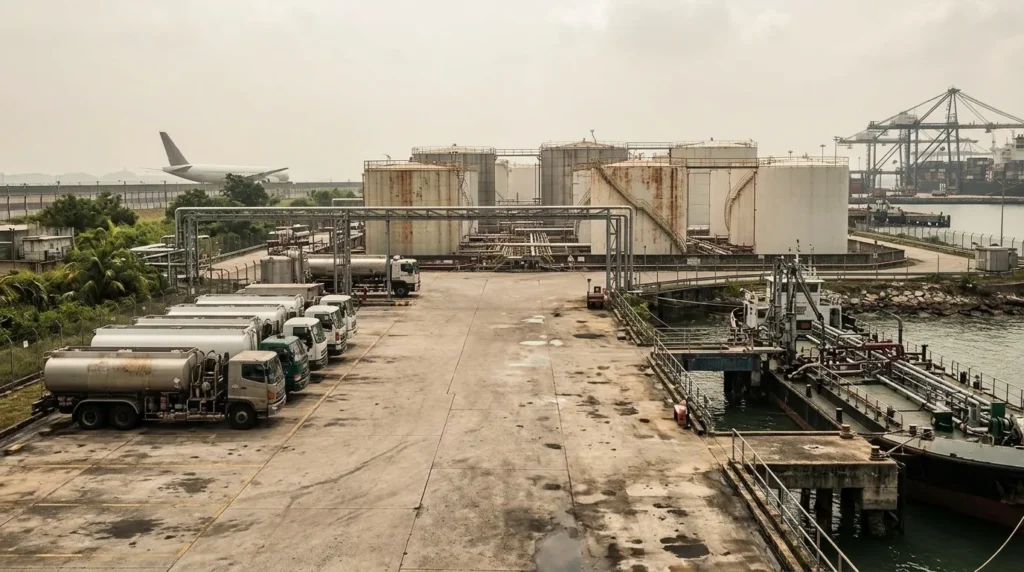
SAF vs methanol is a question developers ask when they have a technology and need to choose a market: aviation or shipping. After all both depend on regulation for demand. Either way both need a contract before a lender moves. However their buyers, feedstocks and risks differ. Therefore this comparison is about financeability, not about which fuel is better for the planet.
In short
- SAF has a clearer obliged party, the aviation fuel supplier under ReFuelEU, and a schedule that runs to 2050.
- By comparison marine methanol has a more fragmented buyer base and regulators are still settling its global rules.
- Either way the contract decides. Indeed the rule only gives the buyer a reason.
- Therefore the right choice depends on your feedstock, your location and who is already willing to talk.
In this article
Same logic, different buyers
In effect in both markets a rule makes low-carbon fuel valuable, a buyer signs a contract, and a lender finances against that contract. Still the difference is who the buyer is and how strong the rule is. In aviation the obligation sits on the aviation fuel supplier, which must ensure that all fuel made available at each Union airport contains the minimum SAF share. In shipping the obligation sits on the shipping company, which has to meet an average greenhouse gas intensity for the energy it uses on board.
Moreover the limit uses a reference of 91.16 gCO2eq/MJ, and it tightens by 2 % in 2025, 6 % in 2030, 14.5 % in 2035, 31 % in 2040, 62 % in 2045 and 80 % in 2050. In addition the rule covers ships above 5,000 gross tonnage, at 100 % of the energy used on intra-EU voyages and 50 % on voyages to or from outside the Union.
Therefore the aviation buyer is a fuel supplier that blends at the airport and passes the cost to airlines. The shipping buyer is an operator that decides which fuel to burn, and the charterer often shares that decision. Moreover the aviation obligation is a share of fuel, while the maritime obligation is an intensity limit. Consequently the two contracts price on different baselines. See also ReFuelEU Bankability and Maritime Fuel Bankability.
The SAF vs methanol comparison table
| Dimension | SAF (aviation) | Methanol (shipping) |
|---|---|---|
| Main rule | ReFuelEU Aviation: 2 % in 2025, 6 % in 2030, 20 % in 2035, 34 % in 2040, 42 % in 2045 and 70 % in 2050, with a synthetic sub-target rising to 35 % | FuelEU Maritime: a greenhouse gas intensity limit falling 2 % in 2025 and 80 % by 2050, plus the pending IMO framework |
| Obliged party | Aviation fuel suppliers at each Union airport, with a separate refuelling obligation on airlines | Shipping companies responsible for ships above 5,000 gross tonnage calling at EU ports |
| Typical buyer | Fuel supplier, trader, airline | Shipping line, trader, bunker supplier |
| Feedstock or route | Residues, used cooking oil, synthetic fuel from hydrogen and carbon dioxide | Biogenic carbon dioxide plus hydrogen, or biomass |
| Counterparty concentration | Higher, because fuel supply at an airport is a narrow market | Lower, because thousands of operators can buy fuel at hundreds of ports |
| Rule maturity | Regulation in force since 1 January 2024, with articles 4, 5, 6, 8 and 10 applying from 2025 | FuelEU applies since 1 January 2025, while the global IMO rule is still pending |
In practice the table explains why the same project can look strong in one column and weak in the other. A rule in force with a named obliged party supports a longer contract. A rule that is still moving supports a shorter one, or a contract with a change in law clause.
Where SAF vs methanol breaks down
- SAF: distance to EU airports, feedstock competition, and a schedule that rises steeply after 2035.
- In contrast methanol: buyer fragmentation, bunkering infrastructure, and a global rule that slipped by a year in October 2025.
Therefore neither column is a straight line. The SAF mandate is predictable, but the feedstock is contested and the synthetic sub-target is the hardest part to meet. The methanol case is more open, but the absence of a global price signal leaves the buyer exposed to a patchwork of regional rules. In practice the maritime penalty puts a floor under that exposure. FuelEU sets it at 2,400 EUR per tonne of VLSFO equivalent, on 41,000 MJ per tonne, and raises it by 1 + (n-1)/10 when the deficit repeats. On top of it, a ship at berth pays 1.5 EUR per kWh. Therefore a lender can size the compliance cost, even where the fuel price is uncertain.
What feedstock does to the SAF vs methanol choice
To begin with, SAF depends on what can be counted. ReFuelEU excludes SAF made from food and feed crops, intermediate crops, palm fatty acid distillate, palm and soy derived materials, and soap stock and its derivatives. In addition the rules cap aviation biofuels that are not advanced biofuels at 3 % of the fuel supplied for compliance. Consequently a developer with used cooking oil or a residue stream has a route, while a developer with a food crop does not.
By contrast methanol depends on hydrogen and carbon. IRENA estimates the production cost of e-methanol at USD 800 to 1,600 per tonne when carbon dioxide comes from bioenergy with capture at USD 10 to 50 per tonne, and USD 1,200 to 2,400 per tonne when it comes from direct air capture at USD 300 to 600 per tonne. Therefore the carbon source is not a detail. It decides whether the project can compete for a buyer who is already paying a premium.
Moreover, the two fuels need different certifications. A renewable fuel of non-biological origin has to show at least 70 % greenhouse gas savings under the EU methodology, and the chain of custody has to convince the buyer, not only the auditor. In addition FuelEU grants such fuels a multiplier of 2 on their energy from 1 January 2025 to 31 December 2033. Moreover it adds a 2 % sub-target for them from 2034 if their share stays under 1 % in 2031. In practice a developer who has never certified a parcel should test that step before signing anything.
What scale does to the SAF vs methanol case
In addition, scale changes the unit cost in both markets, but not in the same way. IRENA puts the capital intensity of renewable ammonia, a close cousin of marine methanol in cost structure, at around USD 4,800 per tonne of annual capacity for a 0.5 million tonne plant, falling to about USD 3,000 at 10 million tonnes. Consequently a small plant carries a cost penalty that no offtake can fully hide.
For methanol the market is large but almost entirely fossil. IRENA counted around 98 million tonnes of demand in 2019 and less than 0.2 million tonnes of renewable supply. Therefore a renewable producer is not entering a green market. It is entering a commodity market with a green premium, and the premium has to be visible in the contract.
For SAF the market is smaller and the obligation is a share, so the mandate defines the volume rather than the total fuel market. However the share rises to 6 % in 2030 and 20 % in 2035, which means the buyer’s need for volume grows on a published timetable. In practice that timetable is the most valuable thing SAF has.
Which one fits which developer
- If you have eligible waste feedstock and can certify it, SAF is a natural fit. In addition the EU schedule gives you a buyer with a rising obligation.
- If you have green hydrogen and a carbon dioxide source near a port, methanol may be closer to the buyer. However you will need a bunkering route and a licensed supplier.
- Otherwise if you have a named buyer in either market, start there. Therefore the buyer, not the molecule, decides the first move.
The SAF vs methanol verdict
Still neither is easy. In fact a project with an anchor contract is more financeable than a project with a better market and no buyer. Therefore my verdict is conditional: SAF is easier to explain to a lender today, because the obligation and the schedule are in force. Methanol is easier to scale in Southeast Asia, because the ports and the shipping demand are here. Moreover the cost of capital in the region is two to three times the level in developed markets, according to the IEA, so a thin premium hurts more here than in Europe.
See Sustainable Maritime Fuels, ReFuelEU Aviation and project finance.
The SAF vs methanol question in Southeast Asia
In practice the region tilts the answer toward methanol for a marine project and toward SAF for an export project. Singapore has built the delivery layer: it opened methanol bunkering licence applications on 26 March 2025, requires a licensee to hold an IMO Type 2 chemical tanker, and runs the licence from 1 January 2026 to 31 December 2030 with a well-to-wake carbon intensity and a chain of custody. Therefore a methanol producer in the region can point to a licensed buyer and a defined route.
By contrast a SAF producer in the region is usually exporting to Europe, because the obligation that creates the demand sits at Union airports. Consequently the project carries freight, certification and a longer commercial chain, and the lender prices all three. That does not make SAF weaker. It makes the contract harder to close.
What a lender asks in either case
In practice the same three questions decide both files. First, who is obliged, and will that party still exist if the rule tightens? Second, what happens to the revenue if the rule is delayed, as the IMO process was in October 2025, when adoption was adjourned by 57 votes to 49? Third, what is the fallback use if the offtaker walks away?
Here methanol has an advantage that is rarely discussed. IRENA counted around 98 million tonnes of conventional methanol demand in 2019, mostly in chemicals, so a plant can sell into that market at a lower price if the marine contract fails. SAF has almost no fallback, because the fuel is designed for aviation and the certification follows it. Therefore the SAF case is purer and more exposed at the same time.
Consequently the lender’s view is not that one fuel is better. It is that one file has a second exit and the other has a longer contract. In practice a strong sponsor can finance either, and a weak one can finance neither.
Sources
Sources
- European Parliamentary Research Service, ReFuelEU Aviation initiative, PE 698.900, November 2023.
- Regulation (EU) 2023/2405, ReFuelEU Aviation, Article 4 and Annex I (SAF and synthetic shares).
- European Commission, FuelEU Maritime (Regulation (EU) 2023/1805, targets and scope), consolidated text at eur-lex.europa.eu.
- International Maritime Organization, IMO’s work to cut GHG emissions from ships.
- SAFETY4SEA, IMO MEPC ES.2: key outcomes, 20 October 2025 (adjournment, entry into force 16 months after adoption).
- Maritime and Port Authority of Singapore, media release on the methanol bunkering licence, 26 March 2025.
- IRENA, Innovation Outlook: Renewable Methanol (2021) and Innovation Outlook: Renewable Ammonia (2022).
- IEA, World Energy Investment 2025 (cost of capital in emerging economies).
FAQ
Is SAF easier to finance than methanol?
It has a clearer obliged party and a long schedule. However it still needs a contract, and the synthetic sub-target is the hardest part to underwrite.
Which has stronger regulation?
In fact aviation has the more established regulated schedule today. By contrast the maritime rule is regional, and the global IMO framework was adjourned in October 2025.
Can one plant serve both?
Indeed some technologies can. Therefore it depends on the process and the certification, and on whether the plant can switch output without losing eligibility.
Which has more buyers?
Shipping has more potential buyers, but they are more fragmented. As a result the anchor contract is rarer and more valuable.
How do I choose?
Above all start from the buyer who will talk to you, then test the feedstock and the certification against that buyer’s rule.
Next step
A short call is usually enough to see where your project stands before a lender or an offtaker looks at it.
To compare the two for your project, book a 30-minute call.
I do not provide investment advice or arrange investments. I act as a strategic advisor and facilitator.

Alex, Founder of WeConnect Asia
I help low-carbon fuel and carbon removal project developers in Southeast Asia secure the commercial and financial partners needed to reach FID.
Related articles

Biomethane: What It Is, How It Is Made and Who Buys It
Biomethane is biogas cleaned to pipeline quality. I explain how it is made, how it differs from biogas and who buys it in Southeast Asia.

Southeast Asia SAF: Policies, Demand and Project Status
Southeast Asia SAF policy is moving country by country. Here is where demand is forming, who the buyers are and what a developer can rely on today.

e-SAF Project Finance: Why the Sub-Mandate Is Not Enough
The synthetic fuel sub-mandate creates demand for e-SAF, but not a bankable project. Here is what e-SAF project finance still needs in Southeast Asia.

SAF Mandates by Country: A Developer’s Comparison
SAF mandates differ by country in scope, target and penalty. Here is a side-by-side comparison and what each one means for project revenue.

Sustainable Aviation Fuel: Pathways, Mandates and What Gets Financed
Sustainable aviation fuel has several pathways and sells into mandates. I explain the routes, the demand and what gets financed in Asia.

ReFuelEU Offtake: Who Actually Buys Your SAF?
The ReFuelEU mandate sits on fuel suppliers, not airlines. Here is what that means for ReFuelEU offtake contracts and what lenders expect to see.