
Home » Feedstock Supply Stress Test: What I Do When the Tonne Disappears
Feedstock Supply Stress Test: What I Do When the Tonne Disappears
10 min read · Nov 2, 2026 · By Alex
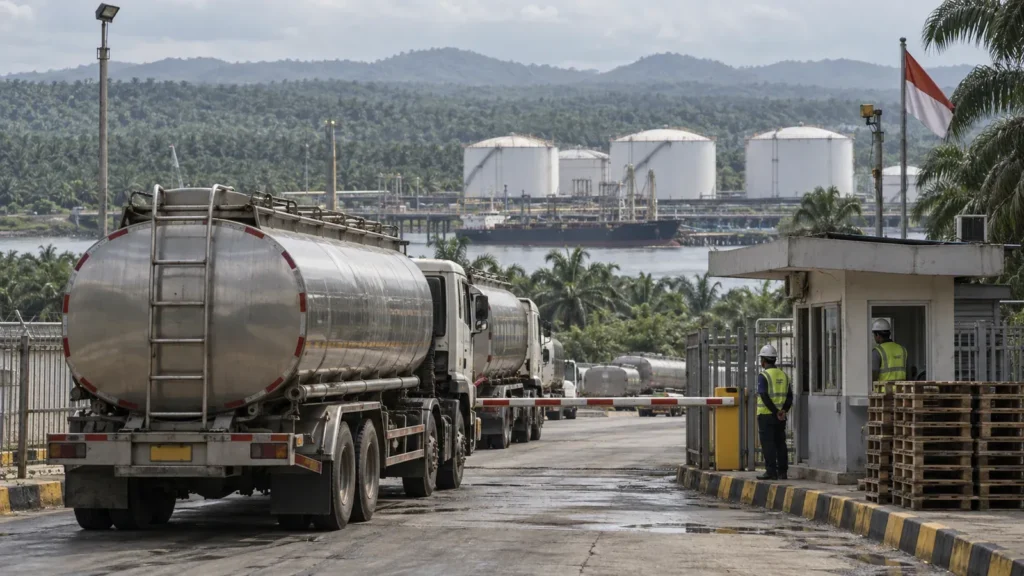
I run this test to find where debt service, meaning scheduled principal. In addition, interest repayments on project debt, stops being covered by cash flow, and then the clause that puts it back. Lenders want a long term feedstock supply arrangement from a credible source and a back-up plan for critical feedstock unavailability, meaning a documented alternative source or accepted volume shortfall the model already prices. Indonesia suspended exports of unprocessed palm oil mill effluent and used cooking oil on 8 January 2025 and has yet to resume export permits, which helped push regional waste oil prices to three year highs, and Indonesian exports of UCO and palm residue fell 13.75% over the first eleven months of 2024.
The scenario is on record. Therefore, a feedstock supply stress test is a search for the breaking point, not a table of averages, run against my feedstock supply picture for Southeast Asia.
A stress test is not a sensitivity row. I move one variable at a time until the model breaks, then I read the contract for the term that absorbs the gap. Every figure below is a published one, drawn from sources on sustainable aviation fuel supply, financing and mandates.
In short<\/strong><\/p>
- The output:<\/strong> a volume floor in tonnes, the price where it stops covering debt service, and the clause covering the gap below it.<\/li>
- Also, The cost line:<\/strong> feedstock is the largest cost component for a HEFA producer. In addition, its price moves with supply and demand.<\/li>
- The shock:<\/strong> Indonesia’s export suspension of 8 January 2025, with export permits still withheld and regional prices at three year highs.<\/li>
- The pull:<\/strong> ReFuelEU Aviation takes a 2% SAF share at EU airports from 2025 to 70% from 2050.<\/li>
- The traps:<\/strong> averaged volumes, a model with no back-up plan, and a competitor I never listed.<\/li><\/ul>
- Also, The cost line:<\/strong> feedstock is the largest cost component for a HEFA producer. In addition, its price moves with supply and demand.<\/li>
In this article
The short answer: the test has one output, the point where debt service breaks
The test has one output, and it is not a table. It is a volume floor, the tonnes per year that still cover scheduled principal and interest, plus the contract term that covers the difference when delivered volume falls below that floor. Dentons reports that lenders will expect a long term feedstock supply arrangement from a credible and reliable source meeting the EU’s strict eligibility criteria, and a back-up plan in case of critical feedstock unavailability. The same source says lenders will perform detailed due diligence and GHG modelling to ensure the fuel meets the EU’s regulatory requirements, and that change in law risk will feature prominently in that work. Dentons also notes that lenders will be reluctant to take significant merchant exposure for a new sector. That makes the floor a sizing input rather than a footnote.
What this means for you. Until I can state the floor, the breaking price and the covering clause in one line each. There is nothing for a credit committee to size against. I bring those three items forward before term sheet drafting starts.
Why feedstock is the variable that breaks the model first
HeFA, the hydrotreated esters and fatty acids route behind most sustainable aviation fuel production, carries a Technology Readiness Level of 9. Offers the lowest levelized cost of the pathways, and still prices at 2 to 2.5 times conventional aviation fuel. IATA states that feedstock accounts for the lion’s share of total HEFA production costs and that the feedstock price can vary significantly with market supply and demand dynamics. ICF describes HEFA as mature, with lower CapEx, limited technology risk and a shorter payback period, but sensitive to feedstock availability and commodity pricing. Stillwater Publications adds that the same lipids serve nearly all commercial production of biodiesel, renewable diesel and other lipid-based biofuels.
Therefore, a shortage in one product pulls directly on another. Stillwater also notes that plants with the right pre-treatment can substitute between these feedstocks, an option that exists only if the contract allows it.
What this means for you: when the biggest cost line is also the most volatile one. A single price row cannot carry the model. I run feedstock price as its own variable and size debt against the volume that survives the worst run.
The scenario set I would run
Instead, I run four cases, in order, and each one uses only published anchors.er, and each one uses only published anchors. Base case: contracted supply at current levels. Second run: remove competing domestic demand from the exportable pool. The tonnes a producing country keeps for its own biodiesel blending mandate. Third run: let mandated volumes absorb those same tonnes before they reach my gate. Fourth run: price at the level the market reached when supply stopped.
For scale, IATA expects global SAF production capacity to reach around 20 Mt by 2030 with the project success factor applied. Meaning the haircut applied because not all announced capacity gets built, and about 95% of that volume still from HEFA refineries. Industry expectations put used cooking oil and tallow at 40% of all SAF feedstock by 2030. In addition, Stillwater reads the same market as significant tightness for waste oils like UCO and tallow.
What this means for you: four runs give me one floor, one breaking price and one clause. That is a model output I can defend line by line. I take those three items into structuring, not a dashboard of averages.
The shock that is already on record
Indonesia moved to suspend exports of unprocessed palm oil mill effluent and used cooking oil since 8 January 2025 and has yet to resume issuing export permits, and Argus calls the pause a key factor in regional waste oil prices reaching three year highs in September 2025. The biodiesel blending mandate, the legal requirement to blend a share of palm oil-based fuel into diesel, rose by 5 percentage points to 40% starting from February 2025. With a further increase to 50% targeted for the second half of 2026. Reuters reports that the new regulation required exporters to acquire an export allocation. A government-issued authorisation, effective immediately, and that Indonesian exports of UCO and palm residue fell 13.75% over the first eleven months of 2024. Argus adds that some EU Member States including Portugal, Germany. In addition, Ireland have moved to disincentivise POME usage in their biofuels mandates.
What this means for you: this is not a hypothetical. Therefore, my policy risk work starts from a documented suspension with its date, mechanism and volume effect in hand. The committee sees the shock before it sees the downside case.
What the mandates do to the same tonnes
ReFuelEU Aviation sets a 2% SAF share at EU airports from 2025 rising to 70% from 2050, plus a 1.2% share of synthetic aviation fuels from 2030 reaching 35% from 2050, and covers more than 95% of air transport departing from EU airports. Obligations are shared between aviation fuel suppliers, aircraft operators and airports, and the regulation replaces any national SAF mandates in Member States, with compliance running through the Union database for biofuels. IATA notes that second generation feedstock, the waste fats, oils and greases, has high emission reduction potential but is relatively limited in availability, and that air transport requires a liquid fuel as long as aircraft propulsion involves jet engines, which argues for policies encouraging refineries to prioritize SAF over renewable diesel. Dentons flags competition for feedstock against other EU-mandated targets that also require biogenic feedstocks. That adds uncertainty to feedstock cost and value.
What this means for you: the mandate fixes demand, not supply. I use the mandate schedules to size the obligation, then I test whether the same tonnes are already committed to road fuel before I assume they reach the refinery gate.
Three ways the stress test lies to you
First lie: averaging. An average monthly volume hides the month when permits stop, and Indonesia has kept export permits withheld since 8 January 2025. Second lie: the missing fallback. A model that keeps full delivered volume without a back-up plan for critical feedstock unavailability is testing nothing. In addition, Dentons says lenders will expect that back-up plan. Third lie: the wrong competitor. Demand from food, feed and oleochemical uses sits in the same balance. That is because quantities not used for biofuels may be used as food, animal feed or inputs for some oleochemicals. In addition, Stillwater concludes there will be significant tightness in the market, especially for waste oils like UCO and tallow.
What this means for you: I check the model against all three before I trust an output. A smooth debt service profile built on averaged supply is the most expensive comfort a credit committee can receive.
The order I would run the work in
I run the work in four steps. Fix the deliverable volume in tonnes and the contract term that delivers it. Test the price line as an independent variable, since feedstock is the largest cost component for a HEFA producer. Also, Test the policy trigger, the event that changes eligibility or availability mid-term. Then read the contract for the term that covers the gap. ICF names policy uncertainty as one of three areas behind financing requirements, alongside stable long-term legislation through mandated volumes and incentives and regulatory oversight that certifies technology and defines lifecycle sustainability. The European Commission confirms ReFuelEU Aviation replaces national mandates and routes reporting through the Union database for biofuels, which tells me where any trigger gets reported.
What this means for you: I deliver in that order so each answer exists before the next question is asked. My feedstock supply work fixes the volume and price inputs; the contract review produces the clause.
How I would run this if it were my file
I would take a credit committee four items: the volume floor in tonnes, the price at which debt service breaks, the clause that covers the gap, and evidence that the shock is real. The evidence is on record: the export suspension of 8 January 2025 with permits still suspended. Per Argus; the 13.75% fall in Indonesian exports over the first eleven months of 2024, per Reuters. The feedstock share of HEFA production cost, per IATA; and the long term arrangement plus back-up plan requirement, per Dentons. I present them in that order and let the committee size against them.
What this means for you: the test does not secure financing, it gives a lender something specific to underwrite. If the four items hold, the conversation moves from whether supply can fail to which contract term carries the failure.
Sources
- Dentons, 15 April 2025.
- ICF, 3 October 2023.
- IATA, September 2025.
- Argus, 15 December 2025.
- Reuters, 8 January 2025.
- Stillwater Publications, 28 October 2025.
- European Commission, 16 November 2026.
Frequently asked questions
What does a feedstock supply stress test actually show?
It shows two floors: the delivered volume and the feedstock price at which debt service stops working, meaning scheduled principal and interest are no longer covered by project cash flow. It is always run against a stated requirement, since Dentons reports that lenders expect a long term feedstock supply arrangement from a credible and reliable source together with a back-up plan for critical feedstock unavailability.
Which supply shocks should the model include?
The documented ones. An export suspension with permits withheld, as Indonesia has run since 8 January 2025. A biodiesel blending mandate absorbing domestic volume, with the target raised to 40% from February 2025 and a further increase to 50% targeted for the second half of 2026. And competing uses for the same material, where Stillwater finds significant tightness in the market, especially for waste oils like UCO and tallow. All three are on record in the sources cited here.
How does a feedstock stress test change the debt sizing?
It feeds two inputs: the base delivered volume and the cost line. IATA states that feedstock is the largest cost component for a HEFA producer and that its price varies significantly with market supply and demand dynamics. ICF adds that HEFA projects, for all their maturity, are sensitive to feedstock availability and commodity pricing. Debt sized on an averaged cost line inherits that averaging.
What contract term protects the project when supply fails?
A long term feedstock supply arrangement from a credible source, paired with a back-up plan in case of critical feedstock unavailability. The distinction I care about is that both are tested in the model rather than described in a memo, because Dentons reports that lenders will expect the arrangement and the back-up plan as part of their due diligence.
Not sure your project would survive a credit conversation?
A short call is usually enough to see where your project stands.
If you are at pre-FID structuring and want the volume floor, the breaking price and the covering clause in one file, request an introduction. In addition, I will walk the model with you line by line before the committee does.
I do not provide investment advice or arrange investments. I act as a strategic advisor and facilitator.

Alex, Founder of WeConnect Asia
I help low-carbon fuel and carbon removal project developers in Southeast Asia secure the commercial. In addition, financial partners needed to reach FID.
Related articles

Pitching a Climate Tech Company to Strategic Investors: What the Corporate Has to Believe Before It Writes a Cheque
How to pitch a climate tech company to strategic investors: the metric cluster, the readiness evidence and the ask that corporates fund.

Biomethane: What It Is, How It Is Made and Who Buys It
Biomethane is biogas cleaned to pipeline quality. I explain how it is made, how it differs from biogas and who buys it in Southeast Asia.

CO2 Sourcing for e-SAF Projects: What the Rules Allow and What the Contract Must Say
Biogenic CO2, direct air capture or industrial flue gas: which sources an e-SAF plant may use, what they cost and which contract terms make the fuel certifiable.

Operating Performance Guarantees for SAF Plants: What Lenders Ask For
Minimum guarantees, performance damages, retesting and who stands behind them: the operating guarantees a SAF plant needs to keep debt and offtake intact.

EPC and Construction Risk in SAF Plants: What a Lender Actually Tests
FEED scope, convertible EPC, performance guarantees and damages caps: the construction risk questions a SAF project must answer before financial close.

Matching Feedstock and Offtake Risk Back-to-Back in a SAF Project: How Lenders Read the Chain
Lenders do not buy a feedstock plan and an offtake plan separately. They buy the link between the two, and the link is where most SAF files break.