
Home » SAF vs Conventional Jet Fuel: Cost, Carbon and Contract
SAF vs Conventional Jet Fuel: Cost, Carbon and Contract
10 min read · Nov 2, 2026 · By Alex
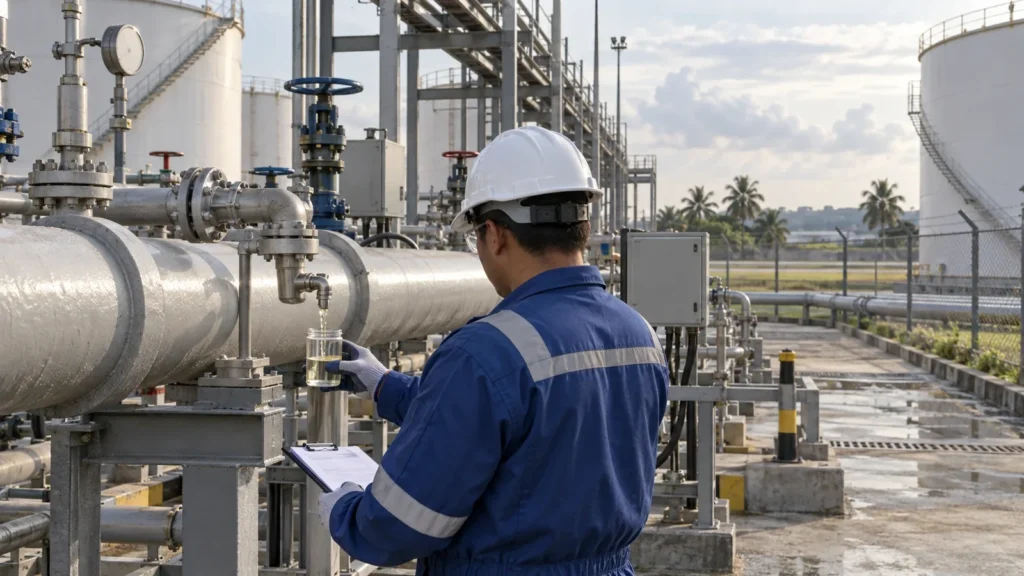
What changes when I move off conventional jet fuel is provenance, not specification: sustainable aviation fuel (SAF) is a non-fossil fuel for aircraft, chemically similar to conventional jet fuel and blended with Jet A, the conventional kerosene I buy today. Its blend limit, the maximum share approved in a mixture, sits between 10% and 50% depending on feedstock and pathway (US Department of Energy, consulted 16 November 2026). Life-cycle emissions, counted from feedstock through use, fall by around 80% for waste-based HEFA fuel (IATA, June 2026), the price runs 2 to 5 times fossil jet fuel (ICCT, October 2025), and that gap rides on my contract rather than on the market. This SAF vs jet fuel question at concept stage therefore turns on proof and premium, not on the engine.
I read those two fuels as one product with two provenance trails: the operating rules sit in ASTM standards and blend approvals, and the reduction claim sits in feedstock records and certificates. At concept stage I keep both trails in the same file.
In short
- Specification: SAF is chemically similar to conventional jet fuel and blends with Jet A in existing aircraft and infrastructure (US Department of Energy, consulted 16 November 2026).
- Blend limit: Approved pathways sit between 10% and 50%, set by feedstock and production route (US Department of Energy, consulted 16 November 2026).
- Carbon: Waste-based HEFA fuel cuts life-cycle emissions by around 80%, while crop-based SAF can match fossil levels (ICCT, October 2025).
- Price: SAF costs 2 to 5 times conventional jet fuel (ICCT, October 2025). It still covers less than 1% of global aviation fuel use (IATA, June 2026).
- Contract: The gap between those two prices belongs in my offtake agreement, with the certificate chain attached.
In this article
The short answer: the same specification, a different carbon
SAF refers to aviation fuels derived from non-fossil sources and is chemically similar to conventional jet fuel (ICCT, October 2025). Blended with conventional Jet A, it can be used in existing aircraft and infrastructure (US Department of Energy, consulted 16 November 2026). SAF can be blended at different levels with limits between 10% and 50%, depending on the feedstock and how the fuel is produced (US Department of Energy, consulted 16 November 2026). Most SAF production uses waste- and residue-based feedstocks through the Hydroprocessed Esters and Fatty Acids (HEFA) pathway, typically delivering life-cycle emissions reductions of around 80% compared with conventional aviation fuel (IATA, June 2026). SAF currently costs 2 to 5 times more than conventional jet fuel (ICCT, October 2025). Nothing in my file at this stage concerns an aircraft change.
What this means for you: the difference is not in the engine, it is in the evidence and the price, so I check what I can prove before I check what I pay.
The specification does not move, the evidence does
ASTM D7566 sets the fuel quality standard for non-petroleum jet fuel and the percent allowable in a blend with Jet A, while ASTM D1655 allows co-processing, meaning biomass feedstocks processed at a petroleum refinery alongside petroleum, in blends up to 5% (US Department of Energy, consulted 16 November 2026).
Approved pathways carry their own ceilings: Fischer-Tropsch SPK at 50%, HEFA-SPK at 50%, hydroprocessed fermented sugars at 10%, and Fischer-Tropsch SPK with aromatics at 50% (US Department of Energy, consulted 16 November 2026).
The reduction claim needs its own paperwork: SAF must meet sustainability criteria and certification requirements covering feedstock sourcing, land-use change, biodiversity protection, water use and emissions accounting, with traceability and independent verification throughout the supply chain (IATA, June 2026). A proof of sustainability, the document that traces feedstock source and chain of custody, is what I ask for, and that is what the sustainability criteria page carries: the fuel moves under documents, not under a label.
What this means for you: I confirm the pathway and its blend limit first, then the certificate chain, because the second is what makes the first worth paying for.
What the carbon difference is, and what it is not
When made from waste materials like used cooking oil or tallow, SAF can cut life-cycle emissions by up to 80% compared with fossil jet fuel, but these materials are limited, and crop-based SAF from corn or palm oil can lead to emissions similar to or higher than fossil fuels (ICCT, October 2025). No SAF is inherently carbon neutral: fuels made from slow-growing trees may create a carbon debt that takes many decades of growth to counteract (ICCT, October 2025). Emerging technologies and new feedstocks have the potential to increase life-cycle emissions reductions above 90%, even achieving negative emissions on a life-cycle basis (IATA, June 2026). The Sustainable Aviation Fuel Grand Challenge sets an ambition of at least a 50% reduction in life-cycle emissions (US Department of Energy, consulted 16 November 2026).
So the percentage I see on a quote is a property of a pathway and a feedstock, not a property of the liquid itself.
What this means for you: the credit sits in the feedstock and the accounting, not in the molecule alone, so I read the pathway before I read the percentage.
What the price difference is
SAF currently costs 2 to 5 times more than conventional jet fuel because of high production costs, limited availability, costly feedstocks and complex processes (ICCT, October 2025). SAF currently represents less than 1% of global aviation fuel use, and it is several times more expensive than conventional aviation fuel because of more expensive feedstocks, still developing production technologies, lack of physical and market infrastructure, and high upfront investment needs (IATA, June 2026). Global SAF production is expected to reach around 2.4 million tonnes in 2026, representing just 0.8% of aviation fuel use, at a cost to airlines of $4.3 billion (IATA, 6 June 2026). Production history runs from about 0.04 million tonnes in 2020 to about 1.9 million tonnes in 2025, around 0.6% of global jet fuel (IATA, June 2026).
In this SAF vs jet fuel file the price is the loudest number, and it is also the least stable one. This section is the price page in short form, and that page carries the rest.
What this means for you: I model the premium as a line item with a term, a volume and an exit, because a multiple without a contract is only a forecast.
Why the price follows the feedstock
SAF can be produced from non-petroleum-based renewable feedstocks including the food and yard waste portion of municipal solid waste, woody biomass, and fats, greases and oils (US Department of Energy, consulted 16 November 2026). All three known commercial producers in the United States use the hydroprocessed esters and fatty acids pathway: World Energy, Neste and Montana Renewables (US Department of Energy, consulted 16 November 2026).
First-generation bio-SAF uses food-based feedstocks such as vegetable oils, sugar or starch crops, already used at commercial scale in the road sector, with limited availability and significant sustainability risks. Second-generation bio-SAF uses non-food cellulosic materials such as agricultural residues, woody biomass or municipal solid waste, which are harder to process and require emerging technologies (ICCT, October 2025).
Demand for the same waste oils is not unique to aviation, which is why the feedstock map decides more of my margin than the fuel specification does.
What this means for you: I map the feedstock and its competing demand before I price the fuel, because the specification is fixed and the feedstock is not.
Who carries the difference
SAF is a drop-in fuel, meaning it can replace fossil jet fuel with minimal changes to aircraft and infrastructure, and most engines today are certified to use a 50% blend without modification (ICCT, October 2025).
Lowering costs requires a mix of public and private investment, demand-side strategies such as mandates, meaning legal requirements to blend or produce set volumes, and long-term offtake agreements, plus cost-sharing mechanisms that distribute added costs fairly (ICCT, October 2025). IATA asks for a global SAF market with sufficient volumes at commercially viable prices, with a book-and-claim system and harmonized standards, and for open access to fuel infrastructure including pipelines, storage and airport fuel systems (IATA, 6 June 2026).
Over 360,000 commercial flights have already used SAF at 46 different airports (US Department of Energy, consulted 16 November 2026). The offtake page is where I write who pays the gap and for how long.
What this means for you: I settle the term, the volume and the party that absorbs the premium before signature, because after signature the gap has nowhere else to go.
The line I draw: the rule that creates the buyer
IATA puts the condition plainly: “Any SAF mandates should therefore be introduced only where the necessary market conditions, production capacity, infrastructure readiness, and supportive policy measures are sufficiently in place, in order to avoid unintended economic impacts, supply constraints, or disproportionate cost burdens on the aviation sector and consumers.” (IATA, June 2026)
The EU and the UK have mandated e-SAF production of around 0.6 million tonnes by 2030 (IATA, 6 June 2026). CORSIA caps net CO2 from aviation at 2020 levels through 2035 (US Department of Energy, consulted 16 November 2026). Certain governments such as the UK and EU have restricted the types of SAF that can qualify for mandates and incentives (ICCT, October 2025).
A mandate creates a buyer, and a mandate without production capacity behind it hands the buyer a shortage priced as a premium.
What this means for you: I read the rule on the SAF mandate rules page first, because the rule decides whether the premium in my contract has a buyer behind it.
How I would run this if it were my file
I put three columns on one page: what the specification allows, what the feedstock can deliver, and what the contract carries. In the first I write the blend limit of the pathway I am buying, in the second I write the source and its competing demand, in the third I write the party that takes the price gap and the certificate chain that proves the reduction.
If one column is empty I do not sign: a blend limit without a source, or a source without a party carrying the gap, is a forecast rather than a contract. Nothing on that page depends on a label, it depends on documents I can hand to a lender and an auditor.
What this means for you: I keep the three columns in one file, because the specification, the feedstock and the price gap only make sense together when someone signs.
Sources
- IATA, Sustainable Aviation Fuels Fact Sheet, June 2026.
- IATA, SAF Production Volumes Still Disappointing, 6 June 2026.
- International Council on Clean Transportation (ICCT), 6 October 2025.
- International Council on Clean Transportation (ICCT), 15 May 2025.
- US Department of Energy, Alternative Fuels Data Center, consulted 16 November 2026.
Frequently asked questions
Is SAF a different fuel from Jet A, or the same one?
It is a different origin under the same operating specification: SAF is derived from non-fossil sources and is chemically similar to conventional jet fuel, it is blended with Jet A for use in existing aircraft and infrastructure, and ASTM D7566 sets the quality standard and the percent allowable in the blend (ICCT, October 2025; US Department of Energy, consulted 16 November 2026).
Can an aircraft fly on 100% SAF today?
The approved blend limits sit between 10% and 50% depending on the feedstock and how the fuel is produced, with Fischer-Tropsch and HEFA pathways approved at 50% and hydroprocessed fermented sugars at 10%, and most engines today are certified to use a 50% blend without modification (US Department of Energy, consulted 16 November 2026; ICCT, October 2025).
Why does SAF cost so much more?
More expensive feedstocks, still developing production technologies, lack of physical and market infrastructure, and high upfront investment needs, on top of high production costs, limited availability and complex processes (IATA, June 2026; ICCT, October 2025).
Does SAF reduce emissions in the air as well as on paper?
The reduction is measured over the life cycle and depends on the feedstock: waste-based pathways can reach around 80% against fossil jet fuel while crop-based SAF can end up similar to or higher than fossil fuels, and outside mandates most SAF credits are sold to corporations, so I check the feedstock and the certificate, not the claim (ICCT, October 2025).
Not sure your project would survive a credit conversation?
A short call is usually enough to see where your project stands.
If your file is still at concept stage and you need the premium, the term and the certificate chain written into one document, bring me your offtake questions and I will show you where the price gap sits before you commit a volume.
I do not provide investment advice or arrange investments. I act as a strategic advisor and facilitator.

Alex, Founder of WeConnect Asia
I help low-carbon fuel and carbon removal project developers in Southeast Asia secure the commercial and financial partners needed to reach FID.
Related articles

Pitching a Climate Tech Company to Strategic Investors: What the Corporate Has to Believe Before It Writes a Cheque
How to pitch a climate tech company to strategic investors: the metric cluster, the readiness evidence and the ask that corporates fund.

Biomethane: What It Is, How It Is Made and Who Buys It
Biomethane is biogas cleaned to pipeline quality. I explain how it is made, how it differs from biogas and who buys it in Southeast Asia.

CO2 Sourcing for e-SAF Projects: What the Rules Allow and What the Contract Must Say
Biogenic CO2, direct air capture or industrial flue gas: which sources an e-SAF plant may use, what they cost and which contract terms make the fuel certifiable.

Operating Performance Guarantees for SAF Plants: What Lenders Ask For
Minimum guarantees, performance damages, retesting and who stands behind them: the operating guarantees a SAF plant needs to keep debt and offtake intact.

EPC and Construction Risk in SAF Plants: What a Lender Actually Tests
FEED scope, convertible EPC, performance guarantees and damages caps: the construction risk questions a SAF project must answer before financial close.

Matching Feedstock and Offtake Risk Back-to-Back in a SAF Project: How Lenders Read the Chain
Lenders do not buy a feedstock plan and an offtake plan separately. They buy the link between the two, and the link is where most SAF files break.