
Home » What Is CORSIA? How the ICAO Scheme Affects SAF Projects
What Is CORSIA? How the ICAO Scheme Affects SAF Projects
10 min read · Oct 19, 2026 · By Alex
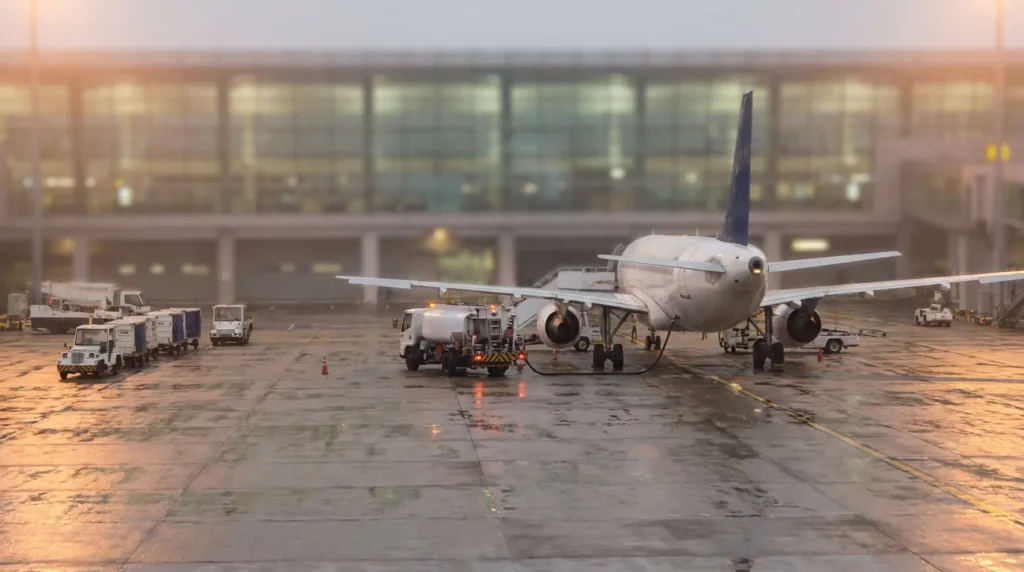
In essence CORSIA is the carbon offsetting and reduction scheme for international aviation. The International Civil Aviation Organization (ICAO) runs it. Still developers often ask whether CORSIA can finance a SAF plant. Overall it helps, but on its own it does not create enough economic incentive. Therefore this guide explains what the scheme is, how SAF fits into it, and what that means for your project.
In short
- CORSIA applies to international flights and is global in design, unlike the EU rules.
- Moreover it lets aircraft operators use eligible SAF that meets a sustainability framework, instead of purchasing emissions offsets.
- However the European Commission concluded that the scheme alone may not give airlines enough incentive to use more SAF.
- For a developer, the scheme is a supporting demand signal, not a replacement for a contract.
- In practice the price of an offset credit sets the value of a CORSIA claim. That price is low compared with the cost gap of SAF.
In this article
What CORSIA is and which flights it covers
Basically, CORSIA stands for Carbon Offsetting and Reduction Scheme for International Aviation. In fact ICAO created it to keep net CO2 emissions from international aviation from growing beyond a baseline. As a result airlines cover the growth in their emissions by buying eligible offsets, or by using eligible fuels. The technical rules sit in Annex 16, Volume IV. Its second edition applies from 1 January 2024.
In practice the scheme covers international flights only. Moreover domestic flights stay outside it, and so do humanitarian, medical, firefighting and State flights. A route counts only when both ends sit in States that participate that year. Consequently CORSIA applies to State pairs rather than to airlines. The same carrier can therefore be covered on one route and free on another.
Also small operators stay out. Thus an operator with annual emissions below 10 000 tonnes of CO2 from international flights falls outside the monitoring and reporting duties. The scheme concentrates on large network carriers and on cargo operators that fly long haul.
The three CORSIA phases and who is in them
Furthermore the scheme runs in three phases. Firstly there is a pilot phase from 2021 to 2023. A first phase runs from 2024 to 2026, and a second phase runs from 2027 to 2035. Participation is voluntary in the first two phases. From 2027 the criteria rest on 2018 revenue tonne kilometres. A State that wants to join early must notify ICAO by 30 June of the preceding year.
In addition the numbers matter for a developer. As of 2027, 134 States participate in CORSIA, according to the ICAO document that lists them. Within Southeast Asia that list includes Cambodia, Indonesia, Malaysia, the Philippines, Singapore, Thailand, Timor-Leste and Viet Nam. By contrast Brunei, Laos and Myanmar are absent from the 2027 list, so a route between two of those States carries no offsetting requirement.
Indeed Viet Nam is a recent addition. It notified its intention to participate from 1 January 2026. That makes it the newest Southeast Asian participant in the scheme. Therefore a developer selling into the region should treat participation as a moving list. Check the edition for the year in question instead of assuming the map is fixed.
The CORSIA baseline: 85 % of 2019
Moreover the baseline decides how much anyone has to offset. During the pilot phase the baseline uses total covered CO2 emissions in 2019. For the first and second phases, from 2024 to 2035, the baseline uses 85 % of those 2019 emissions. Consequently the scheme offsets growth above a fixed historical level. It recalculates the baseline each year when the set of covered routes changes.
Also two factors share the burden. Indeed the sector’s growth factor is the average growth of emissions across all participating operators in a given year. Hence an operator multiplies its covered emissions by that factor to obtain its offsetting requirement. In practice a sectoral approach applies from 2021 to 2032. Only in the final compliance period, from 2033 to 2035, does 15 % of the requirement follow an individual approach.
Therefore an airline’s CORSIA bill depends on how fast the whole sector grows, not only on its own traffic. That detail matters when you model a buyer’s willingness to pay a SAF premium. The buyer’s obligation can fall even while its own emissions rise.
CORSIA and SAF: offsets versus fuels
The scheme allows aircraft operators to use SAF that complies with a dedicated sustainability framework instead of purchasing emissions offsets. So a gallon of eligible SAF can reduce the offsetting obligation of an airline. In fact that gives airlines a reason to look at SAF. However the saving depends on the offset price, and SAF costs more than fossil jet fuel. As a result the gap is not closed by CORSIA alone.
In addition a claim needs evidence rather than intent. The operator uses its purchase records and applies the life cycle emissions values of the fuel. It holds a valid sustainability certificate and reports the verified reduction to its State. Therefore the paperwork chain is the same chain a lender will inspect, and a producer without certification has nothing to sell into the scheme.
What counts as a CORSIA eligible fuel
Moreover the scheme recognises two categories. Firstly a CORSIA sustainable aviation fuel is a renewable or waste derived aviation fuel that meets the CORSIA sustainability criteria. A CORSIA lower carbon aviation fuel is a fossil based fuel that meets the same criteria. That leaves a narrow space for cleaner conventional refining.
In practice certification decides eligibility. The fuel must come from a producer certified under a scheme that the ICAO Council has approved. Those schemes apply the ICAO document on sustainability criteria. The criteria widened in 2021 for fuel produced from 2024 onwards. They now cover environmental and socio economic themes, not only the CO2 saving.
Moreover the central test is a number. Criterion 1.1 of the ICAO sustainability criteria requires a net cut in greenhouse gas emissions of at least 10 % against the life cycle values of the aviation fuel it replaces. Consequently a pathway that saves less does not qualify, however clean the plant looks. In addition the land rule is absolute. No fuel made from biomass grown on land converted after 1 January 2008 is eligible. Therefore a project on recently cleared land fails before the carbon accounting starts.
Also the emissions number has to come from an approved source. ICAO publishes default life cycle emissions values for eligible fuels. The eighth edition of that document dates from November 2025. A producer that wants a better number can use the ICAO methodology to calculate an actual value. Consequently a Southeast Asian project should decide early between the default value and an actual-value study. That difference feeds straight into the credit a buyer can claim.
How a CORSIA claim cuts the offsetting bill
Furthermore the claim sits at the end of the compliance period, not at the pump. CORSIA runs on three year compliance periods. The first covers 2021 to 2023, and the fifth covers 2033 to 2035. At the close of each period the State subtracts the claimed fuel reductions from the operator’s total offsetting requirement.
Also in principle the reduction can go all the way. If the fuel claims are large enough, they can cut the final requirement to zero. The operator then cancels no units at all. In practice that outcome is rare. An airline would have to buy eligible fuel for a large share of its covered flights. Therefore the scheme is best read as a partial hedge for the airline, and as a marketing argument for the producer.
What an offset credit costs
Moreover the economics are set by the credit price, and that price is low. For example ICAO’s technical analysis used a mid price scenario of about 3 US dollars per emissions unit. On that basis the total cost of CORSIA offsetting for operators between 2021 and 2026 ranges from 0.1 to 1.8 billion dollars under one scenario. A second scenario puts it between zero and 0.4 billion dollars.
Also the same analysis shows what eligible fuels can do. Claims of CORSIA eligible fuels could reduce that cost by 80 to 530 million dollars. That sounds large until you set it against the cost of producing the fuel. Consequently the credit price, not the mandate, sets the ceiling on what an airline will pay for a CORSIA-eligible gallon. That ceiling is one input in Sustainable Aviation Fuel Price: What Sets It.
Indeed the volumes are large in aggregate. ICAO estimates that 0.6 to 2.1 billion tonnes of CO2 will need offsetting over 2021 to 2035. The mid recovery case comes to about 1.5 billion tonnes. That is a market for credits, and only a side door for fuel.
Why CORSIA alone does not finance a plant
When it designed ReFuelEU Aviation, the European Commission estimated a shortfall. The existing frameworks had not delivered enough SAF uptake. Those frameworks included the Renewable Energy Directive, the EU emissions trading system and CORSIA. That is the reason the EU added a supply side mandate. A lender reads this the same way. It is useful context, but it is not contracted revenue. I set out what a bankable version of that chain looks like in ReFuelEU Bankability.
CORSIA and ReFuelEU side by side
| Feature | CORSIA | ReFuelEU Aviation |
|---|---|---|
| Who sets it | ICAO (global) | European Union |
| Who is obliged | Aircraft operators on international flights | Fuel suppliers (blending) and aircraft operators (uplift, reporting) |
| What it asks | Offset emissions growth, or use eligible fuel | Minimum share of SAF at EU airports |
| Demand signal for a plant | Indirect, linked to offset prices | Direct, volume-based |
In short the second column is a volume obligation and the first is a price signal. I explain the mandate in What Is ReFuelEU Aviation?.
Why it matters for Southeast Asia
Overall international flights leave from Singapore, Kuala Lumpur, Bangkok, Jakarta and Manila every day, so the scheme touches the region’s carriers directly. Moreover most of the region’s larger aviation markets appear on the 2027 participation list. The offsetting obligation therefore applies to routes between them, and to routes to Europe, Japan, Korea and the Gulf.
Also the region is adding its own rules on top. Singapore announced a SAF levy on passengers and cargo to fund a 1 % SAF target for 2026. It then deferred the levy in March 2026. The levy now applies to tickets sold from 1 October 2026, for flights departing from 1 January 2027. Consequently a Singapore departure will soon carry a regulated SAF cost that CORSIA never imposed.
Therefore the practical use of CORSIA for a developer is to open conversations with regional airlines. Still it rarely closes them. For the country picture, see Southeast Asia SAF.
What a lender wants to see on CORSIA
In addition a lender will test whether the scheme creates cash flow or only goodwill. For that reason the file needs four items, and the absence of any one of them usually ends the discussion.
- First, proof that your fuel can be certified as eligible under the framework, by an approved scheme and with a documented life cycle value.
- Second, an airline or trader that will contract for it, not just an expression of interest.
- Third, a named route and State pair where the buyer has an actual obligation, since a CORSIA claim on an uncovered route is worth nothing.
- Finally, a view on how offset prices could move, treated as an upside, not the base case.
Moreover the double claiming rule closes the loop. A buyer cannot claim the same batch under CORSIA and under the EU emissions trading system. Your contract therefore has to say which scheme each cargo is claimed under. I set out the European side of that rule in EU ETS Aviation.
Sources
Sources
- ICAO, “CORSIA States for Chapter 3 State Pairs”, seventh edition, July 2026, listing the 134 States that participate from 1 January 2027. icao.int
- ICAO, “Carbon Offsetting and Reduction Scheme for International Aviation (CORSIA), Frequently Asked Questions”, updated April 2024, including baselines, compliance periods and offsetting estimates. icao.int (PDF)
- ICAO, “CORSIA Eligible Fuels”, including the five ICAO documents and the default life cycle emissions values, eighth edition, November 2025. icao.int
- European Parliamentary Research Service, “ReFuelEU Aviation initiative”, PE 698.900, November 2023. europarl.europa.eu
- Civil Aviation Authority of Singapore, “Sustainable Aviation Fuel (SAF) Levy to be Deferred”, media release, 25 March 2026. caas.gov.sg
FAQ
Is CORSIA mandatory?
In fact it moves through phases, with a voluntary start in 2021 to 2026 and a binding second phase from 2027 for States that meet the criteria.
Can SAF replace offsets?
Yes. In fact aircraft operators can use eligible SAF that meets the sustainability framework instead of purchasing offsets.
Does CORSIA set a SAF volume target?
No. Instead it leaves the blending duty to the EU mandate, which is a key difference with ReFuelEU Aviation.
Will CORSIA finance my plant?
Overall it is unlikely to. Still it supports the demand story, but lenders look for a contract.
How do CORSIA and the EU rules combine?
In fact they apply to different flights and different parties. Nevertheless a plant can use both as demand signals.
Does CORSIA cover domestic flights?
No. The scheme covers international flights only, and a route counts only when both States participate.
Next step
A short call is usually enough to see where your project stands before a lender or an offtaker looks at it.
If you are mapping which demand signals your SAF project can really rely on, book a 30-minute call or read about offtake agreements.
I do not provide investment advice or arrange investments. I act as a strategic advisor and facilitator.

Alex, Founder of WeConnect Asia
I help low-carbon fuel and carbon removal project developers in Southeast Asia secure the commercial and financial partners needed to reach FID.
Related articles
Biomethane: What It Is, How It Is Made and Who Buys It
Biomethane is biogas cleaned to pipeline quality. I explain how it is made, how it differs from biogas and who buys it in Southeast Asia.
Southeast Asia SAF: Policies, Demand and Project Status
Southeast Asia SAF policy is moving country by country. Here is where demand is forming, who the buyers are and what a developer can rely on today.
e-SAF Project Finance: Why the Sub-Mandate Is Not Enough
The synthetic fuel sub-mandate creates demand for e-SAF, but not a bankable project. Here is what e-SAF project finance still needs in Southeast Asia.
SAF Mandates by Country: A Developer’s Comparison
SAF mandates differ by country in scope, target and penalty. Here is a side-by-side comparison and what each one means for project revenue.
Sustainable Aviation Fuel: Pathways, Mandates and What Gets Financed
Sustainable aviation fuel has several pathways and sells into mandates. I explain the routes, the demand and what gets financed in Asia.
ReFuelEU Offtake: Who Actually Buys Your SAF?
The ReFuelEU mandate sits on fuel suppliers, not airlines. Here is what that means for ReFuelEU offtake contracts and what lenders expect to see.