
Home » SAF Certificates (SAFc) Explained: What One Certificate Represents
SAF Certificates (SAFc) Explained: What One Certificate Represents
10 min read · Oct 2, 2026 · By Alex
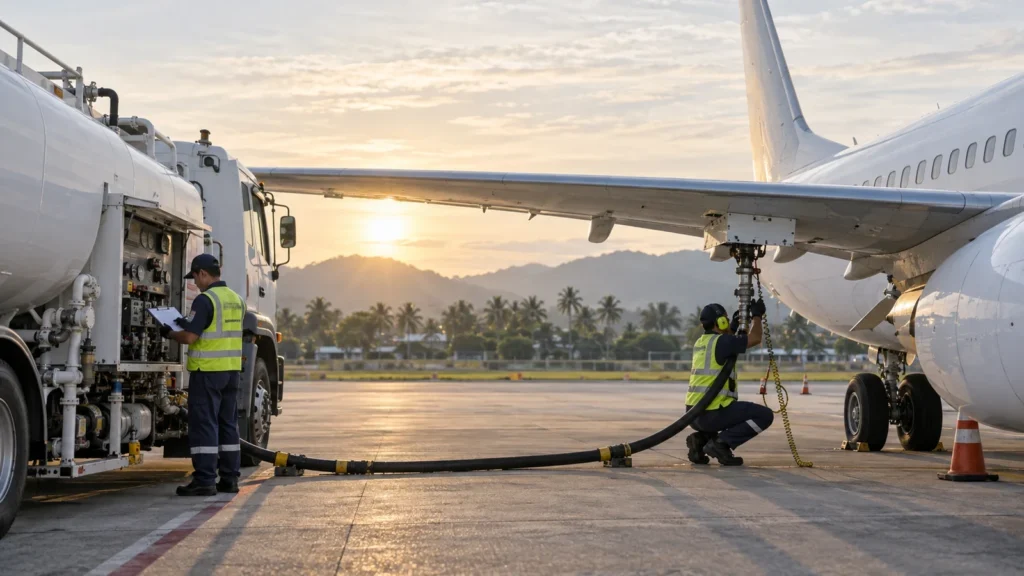
A sustainable aviation fuel certificate represents the environmental attributes associated with one metric ton of unblended, certified sustainable aviation fuel. Consequently, It is issued, transferred and retired on a registry under a book and claim system, which lets the buyer claim a reduction while the physical fuel is blended with conventional jet fuel somewhere else. Therefore, That separation is the whole mechanism, and it is why a buyer can hold a certificate without ever holding fuel. Also, The unit is one metric ton, and the record attached to it carries certified information about the fuel itself.
Before I look at price or project. Specifically, I settle what the document is: a claim to environmental attributes, not a claim to molecules, and not a claim to a seat on any particular flight.
In short
- Unit: One certificate covers the environmental attributes of one metric ton of unblended, certified SAF.
- System: Book and claim separates the attributes from the physical product and moves them separately, in the best case through a dedicated digital registry.
- Numbers on it: The certificate conveys carbon intensity and emission reductions compared with fossil jet fuel, measured against a stated baseline.
- Retirement: The supplier or intermediary retires the certificate in a registry so no one else can claim the same reduction.
- What it is not: It is not a carbon offset outside the aviation sector, and it is not proof that your people flew on the aircraft that used the fuel.
In this article
What one certificate represents
A sustainable aviation fuel certificate represents the environmental attributes associated with one metric ton of unblended, certified sustainable aviation fuel. For example, It conveys certified information about the associated physical SAF, such as its carbon intensity, which I define as the grams of CO2 equivalent emitted per megajoule of fuel across its lifecycle, and its emission reductions compared with fossil jet fuel. Meanwhile, The certificate is a record of the attributes of SAF that has already entered into the aviation fuel system.
Buying it does not mean my people fly on the plane that used the fuel. By contrast, The fuel itself goes into the supply where it is delivered, blends with conventional jet fuel, and powers aircraft generally. Therefore, What I acquire is the benefit attached to it, transferred to me separately from the product, along with an independently verified record.
That distinction is why the unit matters. Meanwhile, One metric ton of unblended certified fuel is the base of the accounting, and every figure I later report scales from it.
What this means for you: Ask what the document certifies before asking what it costs, because the answer is attributes of one metric ton, not possession of fuel.
Book and claim in four steps
The published methodology has four steps. Therefore, Book: the buyer purchases sustainable fuel from a supplier. Meanwhile, Supply: the fuel goes into a tank at a fuel station, airport or port. In fact, Delivery: the fuel goes into a truck, aircraft or ship. Also, Claim: the buyer claims the benefits and can pass them on to customers. Instead, Book and claim, in plain words, is the accounting model that lets the benefit travel without the molecules travelling with it.
The system de-couples specific attributes from the physical product, such as reduced greenhouse gas emissions, and transfers them separately to another party, in the best case through a dedicated digital registry, which is a database that records issuance, transfer and retirement of certificates. In fact, The buyer and seller do not need to be connected through a physical supply chain. Consequently, The buyer books a specific quantity of sustainable fuel at the time of purchase, then claims the emissions reduction toward sustainability targets while owning the environmental benefits without physically possessing the fuel, and receives an independently verified certificate.
Because sustainable aviation fuel moves along existing supply chains and often blended with fossil fuels. Specifically, There is no way to track how much goes into one individual vehicle.
What this means for you: Confirm the four steps in writing with your supplier, because the claim step is the only one you will ever be audited on.
The baseline behind the number
SAF typically cuts lifecycle emissions by around 80% compared with fossil jet fuel, but costs more. In addition, That 80% is not a fixed property of the certificate. Consequently, The reduction depends on two inputs: the fuel’s certified carbon intensity and the fossil baseline it is measured against.
uses 89 gCO2e/MJ as its baseline, and the EU’s RED II, which ReFuelEU Aviation relies on, uses 94 gCO2e/MJ. Meanwhile, At the same carbon intensity, the reduction looks larger against the EU baseline than against the CORSIA baseline, because the denominator differs. Two certificates covering the same tonne of identical fuel can therefore report different reductions because they are measured against different fossil reference points.
Carbon intensities themselves vary depending on the underpinning certification scheme methodology, which creates a risky accounting mismatch across certificates. Also, In the absence of clear indications from the Science Based Targets initiative on how to resolve that mismatch, being conservative is the best option. Therefore, I treat the lower reported figure as the one I plan around.
What this means for you: Read the baseline line on every offer, because the percentage you report depends on which fossil reference the seller chose.
What makes a certificate credible
SAFc is used by companies to claim reductions in direct (Scope 1) and indirect (Scope 3) aviation-related emissions through a book and claim system. Meanwhile, the physical SAF is blended with conventional jet fuel to power aircraft. Meanwhile, That is the claim structure, and it only holds if the record behind it is durable.
A SAF registry is often needed for book-and-claim systems to work as intended, ensuring consistency and transparency, thus avoiding double-claiming and double-counting. However, Published examples include the RSB Registry created by the Roundtable on Sustainable Biomaterials, the SAFc Registry created by the Sustainable Aviation Buyers Alliance, and the ISCC Credit Transfer System. Furthermore, The SAFc Registry is a standardized secure electronic database that enables issuance, transfer and retirement of SAFc. Specifically, Behind those registries sits the certification scheme. Also, i check it against the sustainability criteria the fuel has to meet before I accept the record.
That registry reports more than eight fuel providers, five airlines and more than 30 corporate customers onboarded, facilitating the issuance of over 31,000 metric tons of SAFc representing more than 140,000 metric tons of abated aviation-related emissions. Therefore, No registry currently holds recognition under the Science Based Targets initiative, which has said it will develop criteria for recognizing third-party frameworks.
What this means for you: Treat registry participation as a floor, not a ceiling, and ask which scheme generated the carbon intensity behind the record.
What a certificate costs
In 2025 SAF output should reach 1.9 million tonnes. Consequently, This is only 0.6% of total jet fuel consumption, rising to 0.8% the following year. At current price levels, the SAF premium translates into an additional USD 3.6 billion in fuel costs for the industry in 2025. That is the physical market I am buying attributes from.
SAF prices exceed fossil-based jet fuel by a factor of two, and by up to a factor of five in mandated markets. Airlines paid a premium of USD 2.9 billion for the limited 1.9 Mt of SAF available in 2025, of which USD 1.4 billion reflects the standard SAF price premium over conventional fuel. The rest reflects conditions specific to how that fuel was procured and documented.
The benefit of book-and-claim is that it spreads the SAF premium across a wider range of stakeholders. Therefore, a corporate buyer can fund SAF without buying the whole physical volume.
What this means for you: Price certificates and carbon credits against the same budget line before the budget is set, because they compete for the same money.
Where certificates fail
To prevent double counting, the SAFc system follows strict accounting rules: according to book-and-claim registry standards and best practice. The Scope 1 claim must be retired before the Scope 3 retirement. Therefore, the aviation operator’s claim closes before the corporate claim opens. The supplier or the SAFc intermediary then retires the certificate on behalf of the buyer on a registry. Therefore, no one else can claim the same Scope 1 or Scope 3 reduction.
A buyer must confirm before purchase that the SAF did not serve meet a compliance mandate, because fuel already counted against a regulatory obligation cannot carry a second voluntary claim. The buyer must also retire certificates in the company’s own name with a documented record, rather than leaving retirement with the supplier alone.
Integrity criteria add the remaining checks. Certificates must match the fuel in your inventory, come from a relevant fuel system, be quantified conservatively, relate to activity within 12 months unless a longer period is justified, never exceed your activity volume, and be serialized and retired in a secure registry. Those conditions are the same discipline I apply to carbon intensity compliance on the fuel side of the file.
What this means for you: Ask for the retirement record in your company’s name before payment, because a certificate that nobody retired is only an invoice.
Not all certificates are equal
A certificate can carry the airline’s Scope 1 claim, the end user’s Scope 3 claim, or both. Also, many airline programs and intermediaries sell the Scope 3 part only. Certificates for the same volume of SAF can carry different claims and different reduction figures, because the reduction depends on the certified carbon intensity and the fossil baseline used.
This is where I separate two things that are often confused. Book and claim is a carbon inset, meaning that companies invest in a project that reduces the carbon emissions of the aviation sector directly. Carbon offsets fund projects outside the value chain, such as afforestation. Buying certificates tied to certified SAF keeps the money inside the sector I am trying to change. This is a different proposition from offsetting a flight after the fact.
Because the claim type differs by seller, I never assume a certificate covers both scopes. I read which claim is on it, and I price only the claim I can use.
What this means for you: Match the claim type to the emission category you report, then buy that claim and no wider one.
The checks I run before I accept a certificate
I ask for the registry record of issuance, transfer and retirement, the claim type, the certification scheme behind the carbon intensity, the baseline used, and the retirement date. Therefore, I check that the activity sits within the 12 month window and that the volume never exceeds the buyer’s activity. I check that the fuel was not already counted under a compliance mandate.
I also confirm which baseline produced the reported reduction, whether it is the CORSIA reference or the RED II reference. Also, i record which one I am quoting in my own reporting. I verify that the certificate is serialized and retired in a secure registry, and that the retirement is in my company’s name with a documented record.
Then I keep the certificate only if every one of those answers is written down. If any answer is verbal, incomplete, or pending, I hold the purchase until it is documented, because the claim I make later is only as good as the file I keep now.
What this means for you: Build the checklist before you open the market. Therefore, the first offer you receive is already measured against it.
Sources
- RMI, 8 May 2025.
- Sylvera, 9 October 2026.
- DHL, updated July 2026.
- IATA, 9 December 2025.
- World Economic Forum with Kearney, February 2025.
Frequently asked questions
What does one SAF certificate represent?
One SAF certificate represents the environmental attributes associated with one metric ton of unblended, certified sustainable aviation fuel, and it conveys certified information about carbon intensity and emission reductions compared with fossil jet fuel.
Can the same certificate be claimed twice?
No, the supplier or the SAFc intermediary retires the certificate on behalf of the buyer on a registry so no one else can claim the same reduction, and the strict accounting rule is that the Scope 1 claim is retired prior to the Scope 3 retirement.
Do I have to fly on the flight that used the SAF?
No, the fuel goes into the aviation fuel supply where it is delivered and the buyer claims the reduction toward sustainability targets while holding an independently verified certificate instead of the fuel.
What should I check before buying a certificate?
Check the claim type, the carbon intensity and fossil baseline, the certification scheme, whether the fuel was used to meet a compliance mandate, and that the certificate is serialized and retired in a secure registry in the company’s name.
Not sure your project would survive a credit conversation?
A short call is usually enough to see where your project stands.
If you want a structured review of certificates against these checks, I can walk an offtaker or developer through the criteria I apply before a claim is accepted.
I do not provide investment advice or arrange investments. I act as a strategic advisor and facilitator.
Alex, Founder of WeConnect Asia
I help low-carbon fuel and carbon removal project developers in Southeast Asia secure the commercial and financial partners needed to reach FID.
Related articles

Pitching a Climate Tech Company to Strategic Investors: What the Corporate Has to Believe Before It Writes a Cheque
How to pitch a climate tech company to strategic investors: the metric cluster, the readiness evidence and the ask that corporates fund.
Biomethane: What It Is, How It Is Made and Who Buys It
Biomethane is biogas cleaned to pipeline quality. I explain how it is made, how it differs from biogas and who buys it in Southeast Asia.
CO2 Sourcing for e-SAF Projects: What the Rules Allow and What the Contract Must Say
Biogenic CO2, direct air capture or industrial flue gas: which sources an e-SAF plant may use, what they cost and which contract terms make the fuel certifiable.
Operating Performance Guarantees for SAF Plants: What Lenders Ask For
Minimum guarantees, performance damages, retesting and who stands behind them: the operating guarantees a SAF plant needs to keep debt and offtake intact.
EPC and Construction Risk in SAF Plants: What a Lender Actually Tests
FEED scope, convertible EPC, performance guarantees and damages caps: the construction risk questions a SAF project must answer before financial close.

Matching Feedstock and Offtake Risk Back-to-Back in a SAF Project: How Lenders Read the Chain
Lenders do not buy a feedstock plan and an offtake plan separately. They buy the link between the two, and the link is where most SAF files break.