
Home » SAF Policy in Asia Pacific: Five Calendars, One Fuel Market
SAF Policy in Asia Pacific: Five Calendars, One Fuel Market
10 min read · Nov 2, 2026 · By Alex
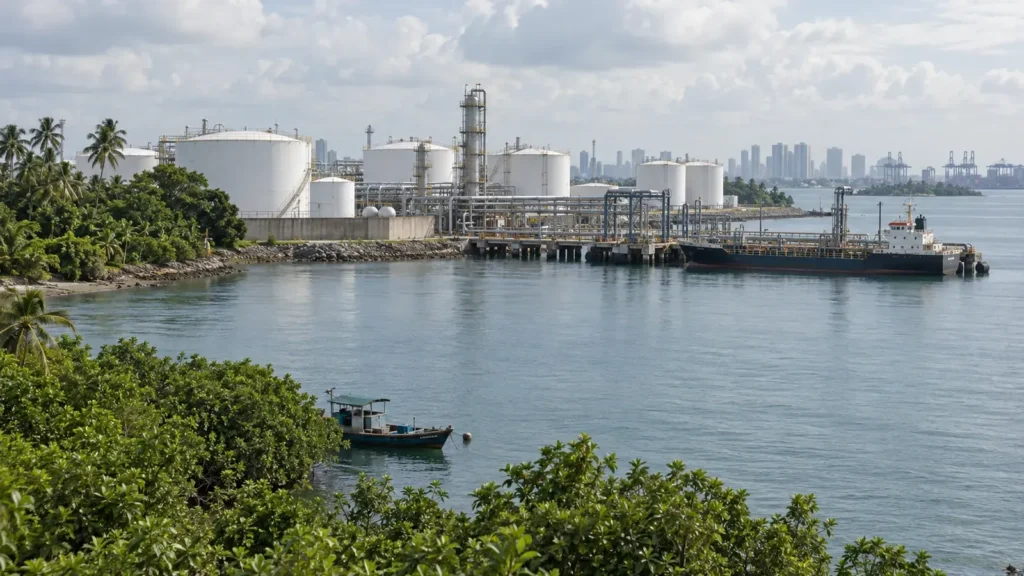
Japan is finalising a 10% sustainable aviation fuel mandate by 2030. South Korea has introduced a 1% SAF blend for all international flights from 2027. Singapore requires at least 1% from 2026, rising to between 3% and 5% by 2030. India has set targets starting in 2027, and Australia announced a ten-year A$1.1 billion programme in September 2025. The map of blending obligations I work from is five calendars that do not overlap. Also, my file follows the date that applies where the fuel is bought. For me, SAF policy Asia Pacific is a sequencing problem first and a ranking of markets second.
Those dates are not interchangeable, and none of them is a regional rule. A mandate here is a published requirement carrying a percentage, a date. Also, an enforcing office, while a blending requirement is that same obligation written into fuel rules. I treat each one as a separate instrument.
In short
- Singapore: at least 1% SAF from 2026, rising to between 3% and 5% by 2030, funded partly by a passenger levy.
- South Korea: 1% for all international flights from 2027, with tax incentives for SAF investment.
- Japan: a 10% target for 2030, still described as finalising, with subsidies and tax incentives.
- Australia: a ten-year A$1.1 billion Cleaner Fuels programme announced in September 2025, which is not a mandate.
- Thailand and Vietnam: a fuel standard path from 1% to 8% by 2036, and a draft Circular starting at 1% in 2030.
In this article
What the region has actually published
Since 2024, multiple Asia Pacific governments have moved from tentative goals to concrete blending targets and mandates. Japan is finalising a 10% SAF mandate by 2030, India has set targets starting in 2027. Also, several Southeast Asian nations including Indonesia, Malaysia and Thailand have introduced SAF blending roadmaps beginning around 2027. Singapore stands out with a confirmed near-term goal of 1% SAF by 2026, potentially rising to between 3% and 5% by 2030. Sustainable Aviation Futures calls 2025 the year the region moved from aspiration to action on SAF policy. That groundwork was largely missing in 2024. The first concrete mandates are now on the horizon, most starting latest by 2027. The five calendars I track hardest sit under Japan, South Korea, India, China and Australia. Also, each carries a different instrument behind the date, so I never average them into a regional rule.
What this means for you: I do not choose the market with the highest percentage. I choose the market whose instrument, date and enforcing authority I can evidence on a single page.
The calendars that do not overlap
From 2026, all flights departing Singapore must use at least 1% SAF blended with conventional jet fuel, set to rise to between 3% and 5% by 2030. A passenger-based SAF levy supports the requirement. The levy sits at approximately SGD 3 for short-haul flights, SGD 6 for medium-haul and SGD 16 for long-haul. Its revenue funds bulk SAF procurement. South Korea has introduced a mandate of a 1% SAF blend for all international flights from 2027. The Petroleum and Petroleum Alternative Fuel Business Act 2024 backs it with tax incentives for SAF investment. Domestic supplies are not enough to meet the demand of SAF production. Japan has a target to replace 10% of conventional jet fuel use with SAF by 2030, with subsidies and tax incentives.
White & Case records that no mandate has been announced in Japan. Signalling suggests a possible 10% SAF blend by 2030 with at least 50% lower lifetime greenhouse gas emissions. The same note records India as considering a similar but non-binding target. In the Southeast Asian half of the region, the Southeast Asia SAF picture is the one I read first, because that is where the feedstock sits.
What this means for you: I write the start date, the percentage and the instrument type next to each market. I keep them apart, because a plan target and a requirement in force do not fund the same way.
What CORSIA and certification do in the middle
SAF must pass the specific requirements under ASTM D7566 before a blender can mix it with conventional jet fuel. Aircraft operators may certify SAF under the ISCC or RSB certification schemes. These are the rule sets an auditor checks. CORSIA eligibility requires an ICAO-approved scheme and a feedstock that does not come from converted ecosystems or protected areas. The fuel must also cut lifecycle greenhouse gas emissions by at least 10% against conventional jet fuel. Certification standards can vary significantly between schemes. Participants cannot use palm oil derivative feedstocks under RSB CORSIA without prior approval. Periodic re-recertification then introduces what Norton Rose Fulbright describes as a quasi change-in-law risk.
IATA adds that governments should support the development and recognition of global SAF book-and-claim systems, consistent with the purchase-based claiming approach allowed under CORSIA. Book and claim is the arrangement in which the physical fuel. Also, the claim on its benefit travel separately, so a market that lacks feedstock can still buy the claim. This is the layer that turns a national percentage into something an auditor accepts. Also, it sits in the CORSIA framework rather than in any single ministry’s plan.
What this means for you: I name the certification scheme in my model before I count any volume. A percentage without a scheme name is a number an auditor cannot follow.
The programmes that are not mandates
Europe’s SAF blending mandate kicked in on 1 January 2025, starting at 2%. Also, the United States’ tax credit incentives under the 2022 IRA are spurring dozens of new SAF projects. Australia announced in September 2025 a A$1.1 billion (US$735 million) ten-year Cleaner Fuels programme. It is the first major APAC government subsidy programme for SAF, aimed at projects producing fuel by 2029. One project in Queensland aims to produce around 100 million litres per year from ethanol, with output targeted in 2026 to 2027, backed by Qantas, Airbus and government funding. In China, state-owned producers achieved initial SAF outputs and the government set a 50,000-tonne SAF production target by 2025.
Thailand’s route runs through fuel standards, with a published path from 1% on 1 January 2026 to 8% by 2036. Vietnam’s route is a draft Circular, with a schedule from 1% in 2030 to 10% from 2040. These are the low carbon fuel programmes I compare when a mandate alone will not close a funding gap.
What this means for you: I keep grants, tax credits and subsidy programmes on a separate line from any compliance percentage. They change my cost assumption, but they do not create a buyer.
Where the fuel goes and how it is bought
Over the past year, SAF produced in Asia has tended to flow to Europe, where mandates create a price premium. That raises concerns that APAC could face local shortages or higher costs if the region lags behind in policy. IATA reports that most SAF supply in 2025 is headed to Europe. It warns that Europe’s approach has driven SAF prices to five times that of conventional jet fuel. The region is home to one of the world’s largest SAF production hubs, Neste’s expanded Singapore refinery. Airlines are signing long-term supply agreements: Japan Airlines agreed to a 10-year SAF supply MOU with Raven SR. This starts starte with 50,000 tonnes in 2025 and scaling to 200,000 tonnes per year within a decade.
Qantas and Airbus’s Sustainable Aviation Fuel Financing Alliance had around US$200 million committed by mid-2024. Hong Kong then saw its first large corporate SAF purchase of 3,400 tonnes by HSBC and Cathay Pacific. Norton Rose Fulbright records Singapore Airlines Group acquiring 1,000 tonnes of CORSIA-eligible Neste SAF. The airline also purchased 2,000 tonnes of SAF from World Energy using a book and claim system in May 2025. It targets replacing 5% of total fuel requirements with SAF by 2030. I read that as the practical answer sitting inside the export question: the fuel. Also, the claim can travel separately.
What this means for you: I check whether my volume is a physical delivery or a claim against a certificate. I price those two positions differently in the same model.
Where the risk sits today
SAF currently represents less than 1% of global aviation fuel use. Also, it is several times more expensive than conventional aviation fuel. In a separate IATA release, global SAF production should reach around 2.4 million tonnes in 2026. That represents just 0.8% of aviation fuel use, at a cost to airlines of $4.3 billion. That release also notes that the EU and the UK have mandated e-SAF production of around 0.6 million tonnes by 2030. Global e-SAF capacity now operating and under construction stands at around 0.02 million tonnes. Only one single production site is in operation, and it would take approximately 20 commercial-scale refineries to achieve the mandated volume. No new final investment decisions for e-SAF facilities have been made over the past year.
Sustainable Aviation Futures lists the region’s familiar hurdles as high SAF costs, limited near-term supply, feedstock logistics. Also, the need for broader infrastructure. The policy risk I watch is not a country dropping a target. It is a calendar that moves after a party signs an offtake against it.
What this means for you: I date every calendar entry with its publication date, so I can show a lender which assumption changed and when it changed.
What I would ask before signing
I ask four questions in writing, and they are the same questions in every market in this region. First, which instrument carries the percentage, because a target in a plan, a fuel standard, a draft circular. Also, an enacted mandate are four different forces. Second, which authority issues it and which one enforces it, because the ministry that announces the calendar and the regulator that tests the fuel are rarely the same office. Third, what the current first compliance date is. Also, I record it with the publication date, because several of these dates have already moved once. Fourth, where the seller trades the fuel and the certificate. Also, I take that answer from signed contracts and from the certification scheme named in them, not from the trajectory. I keep every calendar with its source instead of averaging them into a regional view.
What this means for you: I send those four answers as a short note before any term sheet. A missing instrument type is cheaper to fix at concept stage than after the parties agree a price.
How I would model it if it were my file
I keep three rows. The mandate row carries the percentage, the first compliance year and the instrument behind it. The programme row carries grants, tax credits and subsidy programmes, because they change the cost line without creating demand. The offtake row carries signed volumes, the certification scheme and the book and claim treatment if any. Bankability, in plain words, is the point at which a lender will count that third row. Therefore, I run the model twice, once with the mandate landing on its published date and once with the date moving. I show the lender the difference in one line. My last row is the contracted volume, because that is the only row a lender will count. Also, a regional calendar does not belong in it.
What this means for you: I hand over two versions of the same file. The version that survives is the one whose contracted volume does not depend on an unpublished percentage.
Sources
- Sustainable Aviation Futures, 2025.
- Norton Rose Fulbright, October 2025.
- White & Case, consulted 16 November 2026.
- IATA, June 2026.
- IATA, 6 June 2026.
- ASAFA, 17 September 2026.
- The Nation, 22 October 2025.
Frequently asked questions
Which Asia Pacific countries have a SAF mandate?
Singapore requires at least 1% SAF from 2026, South Korea has introduced a 1% blend for all international flights from 2027, Japan is finalising a 10% mandate by 2030, India has set targets starting in 2027, Indonesia, Malaysia and Thailand have introduced blending roadmaps beginning around 2027, and Vietnam’s schedule sits in a draft Circular. I read these as separate instruments, because a target, a roadmap and an enacted requirement carry different weight in a credit file.
When do the main SAF mandates in the region start?
Singapore starts at 1% in 2026, South Korea at 1% in 2027, Japan’s 10% target is set for 2030, and the Southeast Asian roadmaps begin around 2027, with most of the first concrete mandates starting latest by 2027. Thailand’s published path begins at 1% on 1 January 2026 and rises to 8% by 2036, while Vietnam’s schedule begins at 1% in 2030. I record each of these with the source that printed it.
Why does SAF produced in Asia end up in Europe?
Because mandates in Europe create a price premium: IATA reports most SAF supply in 2025 headed to Europe, and warns that Europe’s approach has driven SAF prices to five times that of conventional jet fuel, while Asian markets are still building their own obligations. I treat that flow as a signal of how fast a published percentage moves barrels across borders.
Does an Asia Pacific SAF mandate make a project bankable?
It helps demand and it gives a date to plan against, but a mandate is one input. The wholesale market for SAF still has no predictable and discoverable market price, and long-term, stable offtake terms from airlines and jet fuel providers remain critical to raising capital. Certification differences between schemes and periodic re-recertification add a further layer before a lender counts a volume.
Not sure your project would survive a credit conversation?
A short call is usually enough to see where your project stands.
When I have the calendar, the instrument and the enforcing office on one page, the next question is what volume is actually contracted and under which certification scheme, and that is the work I do through offtake agreements with airlines and fuel providers.
I do not provide investment advice or arrange investments. I act as a strategic advisor and facilitator.

Alex, Founder of WeConnect Asia
I help low-carbon fuel and carbon removal project developers in Southeast Asia secure the commercial and financial partners needed to reach FID.
Related articles

Pitching a Climate Tech Company to Strategic Investors: What the Corporate Has to Believe Before It Writes a Cheque
How to pitch a climate tech company to strategic investors: the metric cluster, the readiness evidence and the ask that corporates fund.

Biomethane: What It Is, How It Is Made and Who Buys It
Biomethane is biogas cleaned to pipeline quality. I explain how it is made, how it differs from biogas and who buys it in Southeast Asia.

CO2 Sourcing for e-SAF Projects: What the Rules Allow and What the Contract Must Say
Biogenic CO2, direct air capture or industrial flue gas: which sources an e-SAF plant may use, what they cost and which contract terms make the fuel certifiable.

Operating Performance Guarantees for SAF Plants: What Lenders Ask For
Minimum guarantees, performance damages, retesting and who stands behind them: the operating guarantees a SAF plant needs to keep debt and offtake intact.

EPC and Construction Risk in SAF Plants: What a Lender Actually Tests
FEED scope, convertible EPC, performance guarantees and damages caps: the construction risk questions a SAF project must answer before financial close.

Matching Feedstock and Offtake Risk Back-to-Back in a SAF Project: How Lenders Read the Chain
Lenders do not buy a feedstock plan and an offtake plan separately. They buy the link between the two, and the link is where most SAF files break.