
Home » Energy Transition: Where Private Capital Actually Moves Projects
Energy Transition:
Where Private Capital Actually Moves Projects
10 min read · Sep 2, 2025 · By Alex
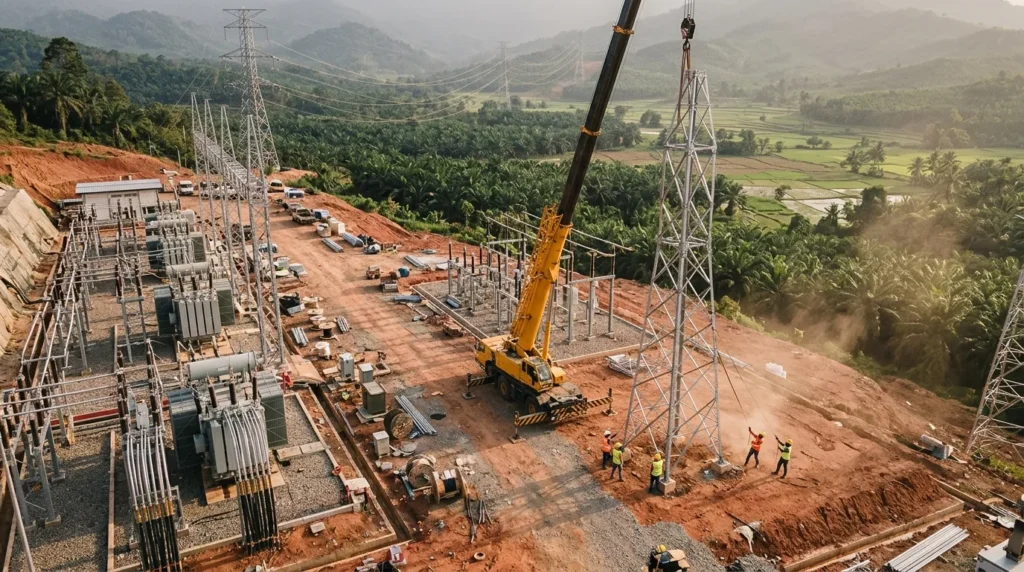
The energy transition is a capital allocation problem before it is a technology problem. First of all, the technologies exist. Investors, lenders, buyers and suppliers must all say yes at the same time before a plant moves forward. So instead of defining the term, this article follows the money across Southeast Asia. In practice, capital moves where contracts and risk allocation allow it, and it stalls where they break down.
In short
- Energy transition projects attract funding once buyers sign contracts and risks sit with clear parties, not on technology appeal.
- In Southeast Asia, capital comes from a mix of development institutions, regional banks, infrastructure funds and strategic investors.
- Most projects stall before final investment decision, not at construction.
- A project that has answered what investors and lenders will ask has a far better chance of moving.
In this article
Energy transition in one paragraph, from the capital side
In short, the energy transition is the shift from fossil fuels to low-carbon energy and fuels. In practice, it means building many assets: renewable power, grids, storage, clean fuels plants, waste-to-energy and industrial decarbonisation. Each of those assets needs capital before it earns anything. Clean energy investment in Southeast Asia grew by more than half in a decade (IEA). However, it still trails the level the region needs by 2035 (IEA).
First, this means long timelines. In practice, a plant takes years to develop, build and ramp up. Second, it means large sums for projects that are often new in their market. As a result, investors rarely ask whether the technology is good. In other words, they ask what has to be true to get their money back.
So that question is the whole subject of this article. I read the transition through it, because it decides which projects investors choose to build.
Where energy transition money is flowing in Southeast Asia
In practice, capital reaches projects through several channels. Each has its own appetite.
- Development institutions. They lend for long tenors and take risks that commercial banks avoid. I explain how they decide in the DFI article.
- Regional and international banks. They lend once contracts are in place.
- Infrastructure and energy funds. They invest equity in projects with predictable revenue.
- Strategic investors. Energy, industrial and shipping companies invest to secure supply or technology.
- Governments and programmes. They provide grants, guarantees and policy support. For example, country partnerships such as the Just Energy Transition Partnerships in Indonesia and Vietnam channel public and private money into power-sector change. Viet Nam’s Resource Mobilisation Plan details USD 15.8 billion committed to the JETP (European Commission). Public partners provide USD 8.08 billion, and private finance provides USD 7.75 billion (European Commission). Grants, concessional loans and risk-sharing instruments carry it over three to five years (European Commission). Across the four partner countries, commitments reach nearly USD 50 billion (IEA). Yet disbursements stand below USD 7 billion, and grants make up less than 3% of the total (IEA).
Moreover, capital concentrates rather than spreading evenly. For example, solar and wind projects attract most of it, because buyers contract that revenue and the technology already works. By contrast, newer segments such as clean fuels attract less, because buyers and markets are still forming. I describe one slice of this in the green hydrogen investment landscape.
The energy transition capital gap in Southeast Asia
In practice, the region is shifting, and the numbers show where. Fossil fuel investment fell from USD 70 billion in 2015 to USD 50 billion in 2025 (IEA). Over the same period, clean energy investment reached USD 47 billion, up from USD 30 billion (IEA). Moreover, fossil fuels still made up 60% of total energy investment over the past decade (IEA). For example, coal alone drew USD 110 billion since 2015, concentrated in Indonesia and Viet Nam (IEA).
So the next decade asks for more. As a result, annual clean energy investment nearly doubles by 2035, to about USD 95 billion (IEA). At the same time, annual fossil fuel investment declines by USD 20 billion (IEA). In other words, renewables, grids and storage, and end use sectors all double. Investment in transport rises by nearly 200% (IEA).
Policy points the same way. For example, eight out of ten countries have announced target dates for carbon neutrality (IEA). Brunei, Cambodia, Lao PDR, Malaysia, Singapore and Viet Nam aim for 2050 (IEA). Indonesia aims for 2060, and Thailand for 2065 (IEA). However, a target date does not finance a plant. Therefore, the gap between a target and a signed loan is the subject of the rest of this article.
Where energy transition capital comes from
Historically, Southeast Asia’s capital markets have relied on domestic commercial lending. In practice, domestic finance averaged 75% of clean energy investment in 2024 (IEA). Commercial finance sits above 75% of clean energy investment (IEA). Moreover, it reaches over 85% in clean power, clean fuels and battery storage (IEA). However, grids are the exception: commercial funding is around 55%, and public finance provides 40% (IEA).
Moreover, sustainable finance is growing. Sustainable debt in the region increased from USD 17 billion to USD 60 billion between 2020 and 2024 (IEA). Frameworks such as the ASEAN Taxonomy for Sustainable Finance support that growth (IEA). In practice, feed-in tariff programmes in Viet Nam and Thailand ushered in private sector involvement (IEA). Corporate clean energy power purchase agreements also keep gaining ground (IEA).
Development finance plays a smaller but important role. In practice, DFIs have historically held a small share of investment. For example, a USD 692 million financing package backed the 600 MW Monsoon Wind Power project in Lao PDR (IEA). The package used concessional blended finance from DFIs and export credit agencies. It mitigated curtailment risk and brought in private capital (IEA). Therefore, DFIs proved catalytic wherever they joined a deal.
So the pattern is clear. Commercial lenders fund projects that carry contracts and a track record. Development institutions and blended finance step in where a risk blocks the deal.
The cost of capital behind energy transition projects
Money costs more in emerging markets, and that changes which projects work. In practice, macroeconomic and currency risks are a principal barrier for international investors (IEA). As a result, capital costs two to three times more in emerging market and developing economies other than China (IEA). In other words, developed countries pay far less for the same plants.
For a developer, this is not an abstract point. A plant that pays more for debt needs a higher price or a longer contract to reach the same return. So a project that is cheap to build on paper can still fail the lenders’ test. In practice, I ask the model to show the financing cost first. It also has to show the currency of the revenue and the currency of the debt.
Moreover, efforts to reduce the cost of capital are also a policy priority. The Baku to Belem Roadmap, launched at COP29, aims to mobilise at least USD 1.3 trillion for low-emissions projects (IEA). It targets developing economies by 2035 (IEA). For a developer, the practical reading is simple: blended finance and guarantees keep growing. Therefore, projects that prepare for them win the early advantage.
Energy transition supply chains in Southeast Asia
Southeast Asia is not only a buyer of clean energy equipment. For example, in 2023, Viet Nam, Thailand and Malaysia were the world’s largest solar PV manufacturers after China (IEA). Indonesia produces over 60% of the world’s nickel (IEA). Moreover, energy demand in the region grew by over 35% over the past ten years (IEA). Electricity demand grew by over 60% over the same period (IEA).
So the region has demand, industrial capacity and resources. However, the deployment of emerging technologies lags other regions (IEA). That is the opening for clean fuels and waste-to-energy. The supply chain exists and the buyers exist. Capital now has to find projects with contracts.
Why energy transition projects stall before FID
Most energy transition projects do not fail in construction. Instead, they stall earlier, between the idea and the final investment decision. The reasons repeat across sectors.
- No contracted buyer. The project has a plan but no binding offtake.
- Unclear feedstock or power supply. Inputs are available but not secured for the debt tenor.
- Policy uncertainty. The revenue relies on a rule that may change.
- Currency and tenor mismatch. The revenue is in local currency, while the debt is in dollars or euros.
- First-of-a-kind doubt. Lenders have few comparable plants to look at.
- Fragmented stakeholders. Investors, lenders and buyers wait for each other.
In fact, the last point blocks more projects than any other. Capital alone rarely unlocks financing. Instead, alignment among investors, lenders, offtakers, suppliers and strategic partners unlocks it. Therefore, the real job is to align those parties, and it starts well before the lenders’ term sheets.
Energy transition financing: who funds which stage
However, the funding changes with the stage of the project.
First, the early stage. Developers fund feasibility, site work and permits with their own money, grants or development equity. However, this stage is risky and short of capital. Second, the pre-FID stage. Equity investors and strategic partners commit while the team negotiates offtake and supply contracts. Third, financial close. Senior debt comes in once the contracts are in place, and commercial banks or development institutions provide it. Finally, operation. As a result, refinancing and new investors can come in once the plant has a track record.
Venture capital funds technology companies, while project capital funds assets that run on contracts. For the equity investors who back companies rather than plants, see climate tech investors.
In other words, each stage asks different questions and each unlocks the next. So a developer who understands the sequence can plan the financing instead of reacting to it. For one fuel, read how to finance a hydrogen project and how to finance a SAF project. For the general structure, see infrastructure project finance.
Why bankability decides energy transition capital
Policy inconsistency is a financing risk. For example, retroactive changes to subsidy rules in Viet Nam could affect over USD 13 billion of investment (IEA). The same report names policy and political inconsistencies as a challenge to bankability (IEA). Therefore, a lender prices that risk, or walks away from it.
So a developer reads the policy as part of the credit. Which rule supports the revenue? How long does it stay fixed? What happens to the project if it changes? I ask for the answer in writing, with the document that sets the rule. In practice, lenders finance a project with contracted revenue and a stable rule first. As a result, a project that waits for a rule still under discussion comes later.
This is also why aligned parties matter. Investors, lenders and offtakers read the same project differently. Moreover, they decide in a sequence. As a result, a project that shows each party the answer it needs moves faster. It answers in the order those parties ask, instead of waiting for one party to go first.
Energy transition venture capital and project capital
However, climate tech funding fell 29% by late 2024 (PwC). I explain the fall, and the boundary with project capital, in energy transition venture capital.
What I look at before I introduce a project to investors
When a project reaches me, I check the same short list.
- Is the pathway defined? Not an idea, but a technology that exists.
- Are the sponsors serious? Experience, capital at risk and commitment.
- Has the early work been done? Site, permits in progress, a first technical view.
- Is there a clear financing need? Amount, instrument and timeline.
- Is there a buyer conversation? Even verbal interest counts at this stage.
Then, if these are in place, I open conversations with investors, lenders and buyers. In practice, I use investor introductions and project finance for that. If they are not, I say so, because a premature introduction hurts the project. Finally, for the broader checklist, see the bankability roadmap.
Checklist
- The project has a defined technology pathway.
- Buyers have signed the offtake or reached term-sheet stage.
- The sponsors secure inputs such as feedstock or power for the debt tenor.
- You know which policy supports the revenue and how stable it is.
- You have mapped the stages of financing and who funds each.
- The sponsors have committed capital.
- You have a calendar that aligns the contracts.
I also opened the regional outlook. The IEA expects Southeast Asia to contribute more than 25% of global energy demand growth to 2035 (IEA). Moreover, it names the Just Energy Transition Partnerships and the Asia Zero Emission Community as frameworks that bring stakeholders together (IEA). Those frameworks accelerate policy action and financing support. In other words, the ASEAN Centre for Energy presents itself in three parts: regional catalyst, knowledge hub and think tank (ASEAN Centre for Energy).
Next step
Finally, if your energy transition project stalls between idea and FID, book a 30-minute call or send me your project brief. I tell you early what is missing.
Sources
FAQ
What is the energy transition?
It is the shift from fossil fuels to low-carbon energy and fuels, which requires building many new assets.
Why is capital the bottleneck?
In practice, projects are large and long-lived, so investors and lenders need contracts and risk allocation before they commit.
Who funds energy transition projects in Southeast Asia?
Development institutions, regional and international banks, infrastructure funds, strategic investors and governments.
Why do projects stall before FID?
Usually because buyers, supply or equity stay unsecured. In other words, the parties wait for each other.
Which sectors attract the most capital?
For example, renewable power attracts most, because buyers contract the revenue and the technology works at scale. Clean fuels attract less so far.
How can a developer improve its chances?
Contract the buyer and the inputs first, define the financing sequence and engage the right investors in the right order.
Not sure your project would survive a credit conversation?
A short call is usually enough to see where your project stands.

Alex, Founder of WeConnect Asia
I help low-carbon fuel and carbon removal project developers in Southeast Asia secure the commercial and financial partners needed to reach FID.
Related articles

Biomethane: What It Is, How It Is Made and Who Buys It
Biomethane is biogas cleaned to pipeline quality. I explain how it is made, how it differs from biogas and who buys it in Southeast Asia.

Southeast Asia SAF: Policies, Demand and Project Status
Southeast Asia SAF policy is moving country by country. Here is where demand is forming, who the buyers are and what a developer can rely on today.

e-SAF Project Finance: Why the Sub-Mandate Is Not Enough
The synthetic fuel sub-mandate creates demand for e-SAF, but not a bankable project. Here is what e-SAF project finance still needs in Southeast Asia.

SAF Mandates by Country: A Developer’s Comparison
SAF mandates differ by country in scope, target and penalty. Here is a side-by-side comparison and what each one means for project revenue.