
Home » How to Finance a Waste-to-Energy Project: The Sequence I Use
How to Finance a Waste-to-Energy Project: The Sequence I Use
10 min read · Dec 24, 2025 · By Alex
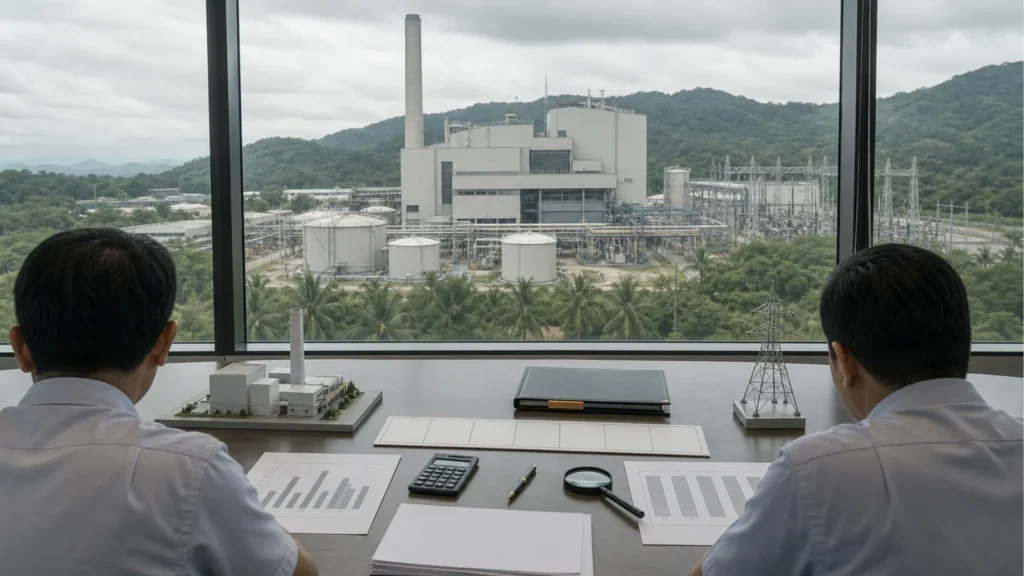
I work on projects in the waste-to-energy industry and I finance a waste-to-energy project in five steps: secure the waste in writing, fix the two revenue lines, a tipping fee, which is the per tonne payment for waste delivered, and the price of power, size the debt against a structure a bank can close, bring equity in behind a public guarantee, and only then run the process. Each step carries a published number that tells me where the structure will break. This is how to finance a waste to energy project: waste-to-energy means treating municipal solid waste by combustion to make electricity. In a 2014 study of Indonesia the two lines had to reach an internal rate of return of about 15 percent, while the fee offered was about 9-10 USD a tonne against about 25-30 USD needed.
I take the same order every time: the revenue first, then the two lines that feed it, then the debt stack, then what the state has to guarantee before equity moves, then the contract models that carry the money. After that I list what I check, the document I ask for first, and the plan I write at the end.
In short
- Sequence: revenue first, then the two lines, the debt stack, the state guarantee, the contract models.
- Revenue: a tipping fee and a feed-in tariff; in 2014 the offer was about 9-10 USD a tonne against about 25-30 USD needed.
- Debt: bundle the plants, one borrower, one sponsor guarantee; in 2015 one structure paired 100 million USD with 100 million USD.
- State: a fixed tariff, a licence clock and a signed volume commitment.
- Check: volume, price, risk allocation, procurement calendar, community record.
In this article
I start with the revenue, not with the debt
A bankable solution has to exist from the early pre-feasibility stage, and it needs three things together: a proven technical solution, an optimal risk allocation and a clear payment mechanism covering gate fees and feed-in tariffs, as set out in the Ramboll interview of January 2025. A feed-in tariff is the fixed price a utility pays for the electricity the plant delivers. In 2025 more green financing came from development banks, but not every country will have a multilateral development bank ready to take the debt or the equity, so the public and private sectors have to work together. The public sector has to guarantee the waste stream, and everything else rests with the private side. Governments pick Design, Build, Own, Operate and Transfer because it keeps one entity in front of them, while split packages are harder to finance in the region because investors prefer one counterparty. Ramboll lists 160 project managers dedicated to waste-to-energy in 2025.
What this means for you: I write the revenue case first, because the debt stack only describes what the revenue already supports.
The two lines that both have to clear
The two major revenue lines are the tipping fee, the per tonne payment the delivering authority makes for waste handed over, and the sale of electricity under a feed-in tariff. That pairing comes from the 2014 Carbon Trust and IESR study of Indonesia. Developers struggled to reach about 15 percent in 2014, a threshold both industry and the state treated as acceptable. Local authorities appeared ready to pay about 9-10 USD per tonne in 2014 against an industry need of about 25-30 USD a tonne for incineration. One tender in 2012 took about 4 years to run on a 20-year contract, with the fee expected as low as 119,000 roupies, or 9.76 USD a tonne. Illegal dumping lets waste be disposed of cheaply and erodes the fee a plant can charge. In 2014 the study recommended aligning the tariff with local tipping fees, charging for dumping, publishing reference costs and standard contract models, and involving the national government in local purchases above a threshold.
What this means for you: I set both lines out before any modelling, with the waste-to-energy figures from 2014 dated beside them.
How the debt is actually stacked
Technology cost and weak interest from international commercial banks held back new plants in 2015, so the Asian Development Bank case story published in October 2015 groups individual projects into one transaction, which is the portfolio approach: one loan request that reaches a minimum loan size and cuts transaction costs. One holding company borrows and pays even if one project defaults, under the full and irrevocable guarantee of the sponsor, and the October 2015 structure paired 100 million USD from the Asian Development Bank with 100 million USD from international banks.
A concession is the long-term right to build and operate the plant, then transfer it: in that 2015 structure it ran exclusively for at least 25 years, the contract guaranteed the contractor against municipal failure to deliver the minimum waste, and the tipping fee was the third clause. One third of revenue came from tipping fees and two thirds from the tariff in 2015, and the portfolio approved in May 2009 and completed in December 2013 added 6,200 tons, 132 MW and 630 GWh a year.
What this means for you: I look for one borrower, one guarantee and a signed waste contract, checked against project finance in Southeast Asia conventions.
What the state has to guarantee before equity arrives
As the August 2026 legal briefing on Indonesia’s new regulation describes, a rule signed on 10 October 2025 fixes a simplified tariff of USD 0.20 per kWh for a 30-year power purchase agreement, which the state electricity company must sign within 10 working days of the pre-construction permits, with no negotiation and no escalation. Under that 2025 rule, environmental licences issue within two months of a complete file and are deemed granted if that lapses. Under the same 2025 rule, local governments must commit 1,000 tonnes of waste a day throughout operations. Coordination sits with the national investment agency, which assesses, selects developers and may invest. Financing is expected in part from an issuance of about IDR 50 trillion of Patriot Bond identified principally for waste-to-energy. In July 2026 the first public-private partnership reached commercial close before ground breaking at about 2,131 tonnes a day and 40.79 MW, with about 200 entities having expressed interest and 85 qualifying in a second selection wave.
What this means for you: I call investor introductions only after the tariff and the volume both sit in writing.
The models that carry the money
I read the Infrastructure Asia overview of waste management in Asia, and it says the sector runs mostly on public-private partnership and build-operate-transfer models, which makes tipping fees, feed-in tariffs and the prices of refuse-derived fuel, recyclables and compost critical. Refuse-derived fuel is municipal waste sorted and processed into a fuel for burning. In a public-private partnership the private developer must be sure of daily deliveries to collect enough tipping fee, and will not carry that risk with the capital at stake. In that same undated overview, a plant in West Java treated 1,500 tonnes a day over a 25-year concession under a build-own-operate-transfer scheme and sold refuse-derived fuel to a cement plant that needs at least 14 MJ/kg. Viet Nam published in 2015 tariffs of 10.05 US cents per kWh for incineration and 7.28 US cents for landfill gas. A Philippine bill would let local governments cluster and sign long-term contracts or joint ventures, so one authority’s waste volume is enough.
What this means for you: I pick the contract model first, then price the revenue it can carry, and I look at grants and incentives where the tariff alone does not clear.
What I check before I sign anything
In an overview with no publication date, a 2005 re-tender introduced take-or-pay, under which the government buys 100 percent of the incineration capacity or pays a penalty; the plant ran from 2009 at 800 tonnes a day for about 22 MW. In that same overview an incineration plant generally needs at least 500 tonnes per day to make economic sense, and about 6 MJ/kg is the rule of thumb for grate combustion. Guidance dated January 2025 calls for a waste characterisation study covering at least one year across the wet and dry seasons. The 1,000 tonnes a day volume commitment written into the 2025 regulation is the clause I ask for first. A tariff without that volume is a number, not a contract. I set all of it against offtake agreements before I sign anything.
What this means for you: I confirm the tonnage, the calorific floor and the study period in writing before I move on the contract.
The document I ask for first
Five items, in this order. The waste supply commitment with the authority’s signature on it: the structure recorded in 2015 guaranteed the contractor against municipal failure to deliver the minimum waste. The payment mechanism with a named payer, a price and a duration: the regulation signed in October 2025 fixes USD 0.20 per kWh for 30 years with a signature within 10 working days. The risk allocation schedule showing who carries quality, availability and demand: in 2015 one third of revenue came from tipping fees and two thirds from the tariff. The procurement calendar with a published award date: one tender in 2012 took about 4 years to run. The environmental and community record with monitoring commitments: public consultation in each municipality as recorded in 2015. If one of the five is missing I stop the process there.
What this means for you: I ask for these five papers before I discuss price or structure with anyone.
How I would write the financing plan
I write the plan as four dated rows, each tied to a document I can hand to a lender.
- 2014: the offer was about 9-10 USD a tonne against about 25-30 USD needed, and the two lines together had to reach about 15 percent.
- 2015: 100 million USD paired with 100 million USD, one third of revenue from tipping fees against two thirds from the tariff.
- October 2025: USD 0.20 per kWh for 30 years, with signature required within 10 working days of the pre-construction permits.
- 2026: commercial close reached before ground breaking in July 2026 at about 2,131 tonnes a day.
What this means for you: I add the debt only once the first two rows are signed documents, then I hand the sequence to the equity.
Sources
- Ramboll, Garbage in, energy out: what you need to know when developing waste-to-energy projects in Southeast Asia, 2025.
- Carbon Trust and Institute for Essential Services Reform, Waste to energy in Indonesia, 2014.
- Asian Development Bank, The People’s Republic of China’s Municipal Waste-to-Energy Project, 2015.
- HFW, Indonesia’s waste-to-energy sector: the next phase of investment and delivery, 2026.
- Infrastructure Asia, Trashing it Out: Waste Management in Asia, n.d.
Frequently asked questions
What are the main sources of finance for a waste-to-energy project?
Two revenue lines come first: a tipping fee paid by the authority that delivers the waste, and electricity sold at a fixed tariff. Debt then comes from development banks and international banks, and equity comes from the sponsors. In one recorded deal in 2015, 100 million USD from a public bank sat beside 100 million USD from international banks.
What does a lender need to see before financial close?
Financial close is the moment debt and equity are committed and the documents are signed. Before that point a lender wants a guaranteed volume of waste with a payer behind it, a payment mechanism that clears the cost, and a risk allocation it can price. In one 2015 structure the contract guaranteed the minimum waste volume, the concession ran at least 25 years, and one third of revenue came from tipping fees.
What makes a waste-to-energy project bankable?
Three things together: a proven technical solution, an optimal risk allocation and a clear payment mechanism covering gate fees and feed-in tariffs. In one 2014 study the two lines had to reach about 15 percent, while the fee offered was about 9-10 USD a tonne against about 25-30 USD needed.
Should I start with debt or with equity?
Start with the revenue. Equity arrives behind a tariff and a volume commitment, which is why a regulation fixing USD 0.20 per kWh for 30 years with a signature within 10 working days changes what investors will underwrite. Debt sits on top of those two contracts.
Not sure your project would survive a credit conversation?
A short call is usually enough to see where your project stands.
If you are at pre-FID and you want this sequence turned into a structure a lender can price, I do that work with you through project finance support for waste-to-energy and circular projects across Southeast Asia.
I do not provide investment advice or arrange investments. I act as a strategic advisor and facilitator.

Alex, Founder of WeConnect Asia
I help low-carbon fuel and carbon removal project developers in Southeast Asia secure the commercial and financial partners needed to reach FID.
Related articles

Pitching a Climate Tech Company to Strategic Investors: What the Corporate Has to Believe Before It Writes a Cheque
How to pitch a climate tech company to strategic investors: the metric cluster, the readiness evidence and the ask that corporates fund.

Biomethane: What It Is, How It Is Made and Who Buys It
Biomethane is biogas cleaned to pipeline quality. I explain how it is made, how it differs from biogas and who buys it in Southeast Asia.

CO2 Sourcing for e-SAF Projects: What the Rules Allow and What the Contract Must Say
Biogenic CO2, direct air capture or industrial flue gas: which sources an e-SAF plant may use, what they cost and which contract terms make the fuel certifiable.

Operating Performance Guarantees for SAF Plants: What Lenders Ask For
Minimum guarantees, performance damages, retesting and who stands behind them: the operating guarantees a SAF plant needs to keep debt and offtake intact.

EPC and Construction Risk in SAF Plants: What a Lender Actually Tests
FEED scope, convertible EPC, performance guarantees and damages caps: the construction risk questions a SAF project must answer before financial close.

Matching Feedstock and Offtake Risk Back-to-Back in a SAF Project: How Lenders Read the Chain
Lenders do not buy a feedstock plan and an offtake plan separately. They buy the link between the two, and the link is where most SAF files break.