
Home » Anchor Offtaker Strategy for Hydrogen Projects: The Buyer That Carries the Debt
Anchor Offtaker Strategy for Hydrogen Projects: The Buyer That Carries the Debt
10 min read · Dec 2, 2025 · By Alex
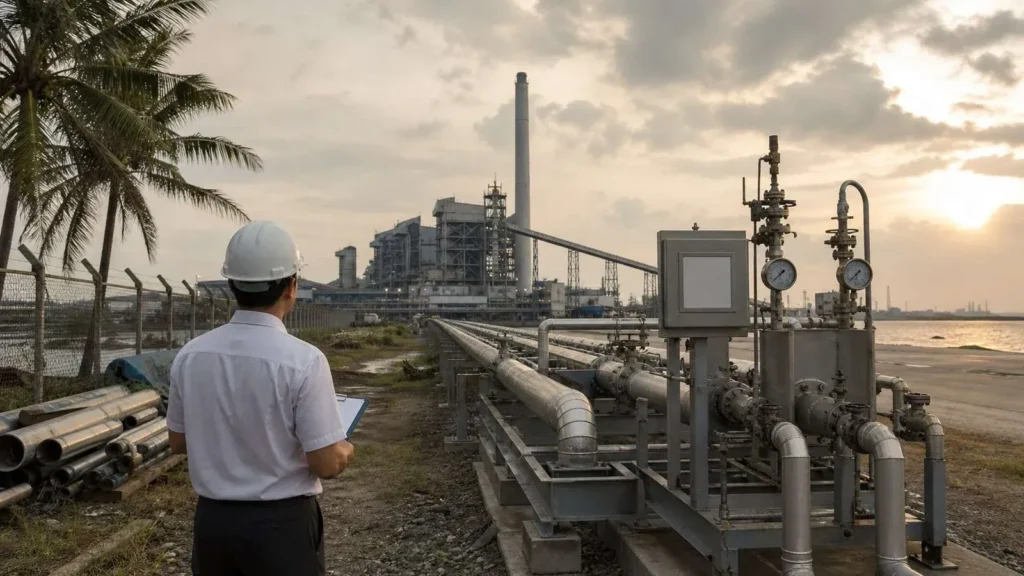
One signature decides whether a hydrogen project at pre-FID stage ever reaches a debt conversation. An anchor offtaker is the single buyer whose signed, long-term, firm-volume commitment carries the revenue line a lender will size debt on, and you win it by matching the buyer’s own decarbonisation obligation to volumes you can actually deliver. That is why anchor offtaker hydrogen work comes first in the hydrogen, power-to-liquid and e-fuels branch I write for, ahead of any term sheet or equipment quote. Announced capacity is not operating capacity, a signed agreement is not a firm contract, and a committed investment is not money already spent. I treat every pipeline number as a claim until a buyer signs for volumes on a tenor a lender will accept, and only then do I start pricing the project.
Below I set out the five moves I make to win the anchor, in order. I define the buyer I need, fix the terms a lender will accept, test the project against the record of signed deals, read the policy meant to create demand, and sequence the search so I close the right counterparty first.
In short
- Define: I fix the anchor offtaker hydrogen buyer profile first: a creditworthy counterparty with a dated decarbonisation obligation and a volume it must move.
- Structure: I write terms around an annual contract quantity, take-or-pay and a tenor a lender will size debt on.
- Test: I check my project against what has been signed, not what has been announced.
- Read: I read roadmaps and strategies as demand schedules, then look for the money behind them.
- Sequence: I approach, qualify and close in one order, so the first signature strengthens the second.
In this article
What an anchor offtaker is
In 2022, 40 countries had announced hydrogen strategies, and if all announced pipeline projects materialise, low-carbon hydrogen production could reach up to 24 Mtpa by 2030 against less than 1 Mtpa in 2021. Supply announces, demand signs. I work with five terms. A firm purchase agreement is a signed contract binding the buyer to pay for agreed volumes over an agreed term. The annual contract quantity is the yearly volume the contract is built around. Take-or-pay means the buyer pays a defined share of that quantity whether or not it takes delivery. First FID is the first final investment decision, when sponsors commit equity and lenders commit against project cash flow. Everything before it is a claim, and a seller with no anchor has a plant, not a project.
What this means for you: write the buyer profile before you write the model, because a volume nobody is obliged to take cannot carry debt.
What makes one buyer the anchor
One buyer becomes the anchor when its signature removes risk from the debt. The Oxford Institute for Energy Studies study of August 2025 reports that hydrogen sale and purchase agreements typically run 10 to 15 years, about half the length of the first international gas and LNG contracts, and that volume provisions are expected to sit at take-or-pay of 60 to 80 percent in low-carbon hydrogen contracts against above 90 percent in gas and LNG. The same study records firm take-or-pay commitments as typically a condition for reaching FID, and emissions intensity and certification schemes as critical for commercial value and access to support regimes. Three things follow: a tenor that covers the debt, a counterparty that is investment grade, meaning a rating band in which the buyer meets obligations through a downturn, and non-recourse project finance, meaning debt repaid only from project cash flow with claims limited to project assets. I follow my guide to securing offtake agreements at this stage.
What this means for you: the anchor is defined by what its signature lets you borrow, not by the number it quotes.
Why so few projects have one
If few projects have an anchor, it is because the money has not arrived. The IEA page of five key questions from 2025 records firm purchase agreements cumulating to less than 2 Mtpa, only 5 percent of the production potential announced for 2030, and 9 percent of announced projects worldwide having secured committed investment against 0.5 percent in emerging economies. The same page records a cost of capital reaching 15 percent in emerging economies in 2025, three times the level in advanced economies, and the electrolyser stack at only 15 to 20 percent of installed investment. I read those numbers as one message: the buyer’s credit is the scarce asset. In 2025 the buyer, not the technology, is what a lender underwrites. I therefore read the anatomy of an offtake agreement before any engineering study.
What this means for you: a project without an anchor is priced as an emerging economy project, whatever its engineering.
What I require from the first signature
I insist on three things in the first signature. On volume, I want an annual contract quantity with take-or-pay at the 60 to 80 percent the 2025 record expects in hydrogen, with capacity-based commitments and hybrid structures available alongside it. On tenor, I match the 10 to 15 years that same record shows for hydrogen sale and purchase agreements to the debt I intend to raise. On credit, I need a counterparty whose support survives a change of law, because change of law clauses come first in the 2025 record, keeping contracts viable while subsidy frameworks and certification regimes move.
What I never concede: take-and-pay, which the 2025 record shows leaves almost all volume risk with me as the seller; a support mechanism with no formula, since public support in 2025 is built into the price through formulas or adjustments that share subsidy value between the parties; and wide reopening rights, because broad reopenings in 2025 are understood to sap bankability.
What this means for you: concede on price mechanics if you must, never on volume obligation, tenor or change of law.
The buyer that policy is meant to create
The buyer I want is often one that policy is meant to create. Singapore’s National Hydrogen Strategy of October 2022 assesses that hydrogen could supply up to 50 percent of the country’s projected electricity demand by 2050, in a 2020 profile where power accounted for 39.8 percent of primary emissions out of 49.7 MtCO2e. The strategy also notes that solar potential peaks at about 8.6 GWc for roughly 10 percent of projected 2050 electricity demand, that electricity imports could cover about 30 percent of projected demand by 2035, and that the port handled close to 50 million tonnes of marine bunker fuel in 2021 as the world’s largest bunkering hub. Those are obligations with dates, and an obligation with a date is a buyer. I test whether that buyer can pay through the way I finance a hydrogen project.
What this means for you: target the buyer whose deadline is written into a national plan, because that buyer must answer for the volume.
Reading a roadmap for signs of a paying buyer
A roadmap tells me whether a paying buyer exists on a schedule. Malaysia’s Hydrogen Economy and Technology Roadmap of 5 October 2023 sets out 5 strategic thrusts, 8 strategies and 29 action plans, projects revenue of up to RM12.1 billion in 2030 contributing between RM49 billion and RM61 billion to GDP, and between 8,000 and almost 45,000 jobs by 2030, rising to more than RM400 billion of revenue and more than 200,000 jobs by 2050. It schedules an export ramp of 0.5 to 1 MTPA by 2030 with a first shipment targeted in the first quarter of 2027, against regional import demand of 3 MTPA for Japan in 2030, 2 MTPA for South Korea and 0.3 MTPA for Singapore. A schedule is not a contract, but it tells me which counterparties are funded to sign. I check the grants and incentives attached to that schedule.
What this means for you: read a roadmap for dates and money, then ask who signs the first shipment.
What a Southeast Asian seller should do with this
Where I sell is Southeast Asia, and the regional numbers set my target list. The IEA briefing of 9 December 2025 records a regional demand of 4 Mt in 2024 with ammonia at 49 percent, announced regional projects equal to 12 percent of current demand while only 6 percent of announced capacity has reached FID, close to 11 Mtpa of potential below 6 USD/kg by 2030 mostly in Indonesia, no certification scheme in place with work under way in three countries, 16.5 Mtpa of export projects to 2030 of which only 4.2 Mtpa have an identified buyer, and 6.6 billion USD of development finance institution lending between 2021 and 2025. The gap between 16.5 and 4.2 is my job. I price against the economics of a green hydrogen plant.
What this means for you: in a region with no certification scheme yet, the buyer you can prove emissions intensity to is the buyer who signs.
How I sequence the anchor search
By 2025, more than 5 million tonnes per year of projects had reached FID in the low-carbon hydrogen trade that is about to expand, while 38 billion USD of public funding had advanced since the previous assessment against 8 billion USD invested in production in 2025. Public money is moving faster than private signatures, so I spend my time on buyers with a funded obligation rather than on projects with a funded subsidy. I do not chase every announced offtake, only the one that carries the debt through the first FID. The order matters because the second buyer prices itself off the first, and sequencing is the difference between one signature and two.
What this means for you: approach the buyer whose obligation is dated and funded first. Qualify that buyer against its credit, its volume need and its certification route. Close the anchor on take-or-pay and an annual contract quantity before the second conversation.
Sources
- Oxford Institute for Energy Studies, Hydrogen Offtake Agreements https://www.oxfordenergy.org/wpcms/wp-content/uploads/2025/08/ET50-Hydrogen-Offtake-Agreements.pdf, August 2025.
- IEA, Global Hydrogen Review 2025, Five key questions about hydrogen https://www.iea.org/reports/global-hydrogen-review-2025/five-key-questions-about-hydrogen, 2025.
- IEA, Global Hydrogen Review 2025, Southeast Asia, 9 December 2025 https://iea.blob.core.windows.net/assets/745a259b-9cb7-4e1d-9ba1-a8b63d1eaae8/GHR2025_SEA_Webinar.pdf, 2025.
- Malaysia, Hydrogen Economy and Technology Roadmap, 5 October 2023 https://www.mosti.gov.my/wp-content/uploads/repository/penerbitan/2023/Hidrogen%20Economy%20&%20Technology%20Roadmap.pdf, 2023.
- Ministry of Trade and Industry Singapore, Singapore’s National Hydrogen Strategy, October 2022 https://isomer-user-content.by.gov.sg/1004/d39b6777-d0c6-4758-93fb-4e4fa3694f22/ebrochure_HPO_Oct_26.pdf, 2022.
Frequently asked questions
What is an anchor offtaker in a hydrogen project?
It is the buyer whose signed long-term commitment on firm volumes carries the revenue line that debt is sized against. Hydrogen sale and purchase agreements typically run 10 to 15 years in 2025, about half the length of the first international gas and LNG contracts, so the anchor sets the tenor and the volume discipline the whole project lives by.
How do I win the first buyer for my project?
By matching your delivered cost and emissions intensity to that buyer’s own obligation, since emissions intensity and certification schemes decide commercial value and access to support regimes in 2025. You also accept the market as it is: firm purchase agreements cumulate to less than 2 Mtpa in 2025, only 5 percent of the production potential announced for 2030, so you are competing for very few signatures.
How much volume should the anchor contract cover?
There is no published rule, so I work from the record: take-or-pay is expected at 60 to 80 percent of the annual contract quantity in hydrogen contracts in 2025, against above 90 percent in gas and LNG. I size the contract so the protected share covers the debt, then leave the remainder negotiable.
Can policy create the anchor buyer for me?
Partly. National roadmaps schedule demand, for instance 0.5 to 1 MTPA of exports by 2030 and a first shipment in the first quarter of 2027 in one market in 2023. But a scheduled demand is not a signed contract: the roadmap tells you who is funded and authorised to sign, and you still have to win that signature on firm terms.
Not sure your project would survive a credit conversation?
A short call is usually enough to see where your project stands.
If you are at pre-FID and need the first buyer structured before the debt conversation, this is the work I take on: offtake structuring from buyer profile to signed take-or-pay on an annual contract quantity, so the revenue line is real when the lenders open the file.
I do not provide investment advice or arrange investments. I act as a strategic advisor and facilitator.

Alex, Founder of WeConnect Asia
I help low-carbon fuel and carbon removal project developers in Southeast Asia secure the commercial and financial partners needed to reach FID.
Related articles

Pitching a Climate Tech Company to Strategic Investors: What the Corporate Has to Believe Before It Writes a Cheque
How to pitch a climate tech company to strategic investors: the metric cluster, the readiness evidence and the ask that corporates fund.

Biomethane: What It Is, How It Is Made and Who Buys It
Biomethane is biogas cleaned to pipeline quality. I explain how it is made, how it differs from biogas and who buys it in Southeast Asia.

CO2 Sourcing for e-SAF Projects: What the Rules Allow and What the Contract Must Say
Biogenic CO2, direct air capture or industrial flue gas: which sources an e-SAF plant may use, what they cost and which contract terms make the fuel certifiable.

Operating Performance Guarantees for SAF Plants: What Lenders Ask For
Minimum guarantees, performance damages, retesting and who stands behind them: the operating guarantees a SAF plant needs to keep debt and offtake intact.

EPC and Construction Risk in SAF Plants: What a Lender Actually Tests
FEED scope, convertible EPC, performance guarantees and damages caps: the construction risk questions a SAF project must answer before financial close.

Matching Feedstock and Offtake Risk Back-to-Back in a SAF Project: How Lenders Read the Chain
Lenders do not buy a feedstock plan and an offtake plan separately. They buy the link between the two, and the link is where most SAF files break.