
Home » Stacking SAF Incentives Across Jurisdictions: What Actually Cumulates
Stacking SAF Incentives Across Jurisdictions: What Actually Cumulates
10 min read · Nov 2, 2026 · By Alex
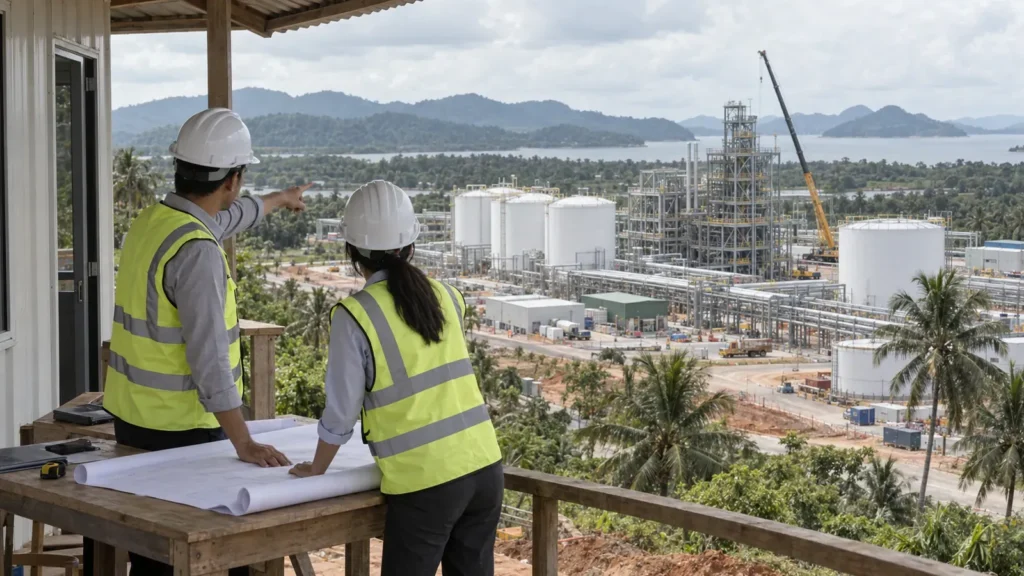
No, not as a simple sum: the published instruments pay different actors and different lines of the same project. An upfront grant covers capital expenditure. A revenue certainty mechanism, a contract fixing a guaranteed price per litre, fixes margin. An obligation, a legal duty to supply a rising share of fuel, creates demand that makes a contract signable. A tax credit, a reduction against tax owed, lands in one jurisdiction only. I test each one against the policy risk picture for sustainable aviation fuel (SAF) before it enters a model. Three countries can fund three different lines of the same plant. The total is therefore still not a sum. The discipline I apply is saf incentive stacking: one instrument per risk, one date per commitment. No euro counts twice.
The two questions that decide
Two questions decide whether two supports can sit in the same file. One asks who receives the payment, and the other asks which line of the model moves. I answer those in order, then I show where I stop. Every figure I use comes from a published instrument.
In short
- Obligation: It buys demand, not revenue; the contract built on it is what a lender underwrites.
- Grant: It buys capital expenditure, and it stops before the margin of year ten.
- Price: A guaranteed strike price buys margin: a contract for difference settles a guaranteed price against a market price.
- Conditions: New capacity rather than displaced power, region, time window and certification decide whether a payment arrives at all.
- Rule: One line of the model, one instrument, one date, and no euro counted twice.
In this article
Why stacking is not addition
Countries now use three different approaches to the same problem: mandatory blending, voluntary blending programmes and an incentive-driven approach. Mandatory blending covers the EU, the UK, Brazil, India, Singapore, South Korea and Thailand. Voluntary blending programmes cover China and the United Arab Emirates. The incentive-driven approach of tax credits and grants covers the United States and Canada (Orrick, 17 August 2026). Those three families do not pay the same party. An obligation lands on fuel suppliers. A tax credit lands on a producer’s tax position. A grant lands on capital expenditure before the plant earns anything. I map every instrument to the line of the model it moves before I add anything. A stack that pays the same line twice is a forecast error, not a financing plan. The same word can also cover two different consequences: the EU has no buyout.
Therefore, a deficit triggers a fine and the missing volume is due again the following year. Meanwhile, a fixed buyout payment in the UK extinguishes the obligation with no carry forward (Orrick, 28 October 2026). What this means for you: ask who pays and which line moves before you add a second support. If it is the same line, you hold one support, not two.
What an obligation buys
I start from the SAF mandates in force, because that is where guaranteed demand comes from. A mandate is a demand instrument first: the UK SAF Mandate secures demand by obligating the supply of an increasing amount of SAF and by incentivising supply through the award of tradeable certificates with a cash value (GOV.UK, 13 July 2026). It starts in 2025 at 2% of total UK jet fuel demand, increasing linearly to 10% in 2030 and then to 22% in 2040, after which the obligation remains at 22% until there is greater certainty regarding SAF supply (GOV.UK, 13 July 2026). The mandate could deliver up to 6.3 megatonnes of carbon savings per year by 2040 (GOV.UK, 13 July 2026). Creating guaranteed demand is what lets a producer sign a long-term contract instead of chasing voluntary buyers.
Also, that contract, not the mandate itself, is what a lender underwrites. What this means for you: count the obligation as an input to a contract, never as revenue. Put the certificate income on its own line.
What a grant buys, and what it stops buying
Grants buy a different line. The United Kingdom has offered more than £200 million in upfront grant funding to second-generation SAF projects. That money runs through its Advanced Fuels Fund. The International Council on Clean Transportation classifies that as technology push (6 October 2025). On 16 June 2026 the UK Government announced a new 219 million pounds low carbon fuels fund, of which 93 million pounds is available now with applications opening in mid-July, building on 198 million pounds already invested through the advanced fuels fund since 2022, and low carbon fuel production could add up to 5 billion pounds to the economy by 2050 (GOV.UK, 16 June 2026). I read them against the low carbon fuel mandates that create the demand they assume.
In the United States, the Fueling Aviation’s Sustainable Transition grant programme carries $244.5 million. It supports SAF production, transportation, storage and blending (National Renewable Energy Laboratory, September 2024). A grant lowers the capital the sponsor must inject. Also, it does nothing for the margin the plant earns in year ten. This is exactly where you read the next instrument. What this means for you: put grants above the line as capital support and date them by announcement. Money available now is not money at final investment decision.
What a guaranteed price buys
I read the price instrument next to the eligibility rules for synthetic fuel, because a guaranteed price only pays for a volume that qualifies. The UK revenue certainty mechanism follows contracts for difference. That structure settles a guaranteed price against a market price. Producers contract with a government-backed counterparty at a guaranteed strike price per litre. The counterparty pays the difference when the market price falls below it. Producers repay the surplus when it rises above it. Demand risk therefore sits with producers, while price risk sits with the counterparty (Orrick, 17 August 2026). The first contracts cover non-HEFA SAF only.
The allocation strategy published on 13 July 2026 puts the first applications in the first quarter of 2027. Applicants expect contracts from the fourth quarter of 2028. A variable levy on suppliers subject to the mandate funds the mechanism (Orrick, 17 August 2026). Producers can enter a 15-year contract at a fixed guaranteed strike price. The mechanism reimburses losses below it and returns profits above it. The mechanism takes effect by the end of 2026 (International Council on Clean Transportation, 6 October 2025). What this means for you: underwrite the contract rather than the mechanism. Date it by the allocation strategy rather than by the announcement.
Where the conditions are attached
In the EU, where I check the instruments for aviation, the conditions are where a stack breaks: renewable electricity used for e-fuels must satisfy additionality rules, meaning newly built capacity rather than displacing existing clean power, together with geographical and temporal correlation, and industrial CO2 from power stations phases out of eligibility in 2036 and fully in 2041 (Orrick, 28 October 2026). The EU answer to cost is a wider policy stack rather than a single payment. It includes an ETS reserve of 20 million free allowances to 2030. That reserve narrows the SAF to kerosene price gap. It also includes reform of the Energy Taxation Directive, Horizon Europe funding and the Innovation Fund for first-of-a-kind plants. InvestEU guarantees and a Commission-led alliance for aviation and maritime fuels complete the list (Orrick, 28 October 2026). Analysts expect further H2Global auctions in 2026 or 2027.
Their timetable decides whether first projects reach final investment decision in time for the 2030 sub-quota. The synthetic sub-quota depends on that timing (Orrick, 28 October 2026). I read each condition as a covenant. An instrument pays only for newly built capacity in the same region and period. That makes it a different instrument from one that pays on delivery. What this means for you: attach each condition to its row. Drop any instrument the project as designed does not qualify for.
What the stack has to overcome
I size the gap in my financing sequence for a SAF project. SAF generally costs between 2 and 5 times more than fossil jet fuel. Average production cost in 2024 ran from 1 461 euros per tonne for biofuels. E-fuels ran to 7 695 euros per tonne. The International Council on Clean Transportation calculates that as a premium of 2.1 to 10.6 times (6 October 2025). It takes up to 5 years to reach final investment decision. Fewer than 30 percent of SAF projects had reached that point in early 2025 (6 October 2025).
Funding support can also move under a project: the revised 45Z tax credit in the United States is the published example of support that fluctuates (6 October 2025); it replaced Section 40B in 2025 and is not available to imported SAF (National Renewable Energy Laboratory, September 2024). The United States runs a target rather than a mandate. The Sustainable Aviation Fuel Grand Challenge announced a target in 2021. It aims at 3 billion gallons in 2030 and 35 billion gallons in 2050. It requires at least a 50% cut in lifecycle emissions (Alternative Fuels Data Center, consulted 16 November 2026). What this means for you: size the gap before you size the support. A stack that closes less than the gap leaves the sponsor short.
Where I draw the line
I build the stack as a table with one row per instrument and four columns. The columns hold who pays, what line the model moves, when it starts and what stops it. Two instruments that pay the same line do not go in the same column. Also, I would rather underwrite one support I understand than three I cannot date. I never carry a consultation into the model before it becomes a contract. Also, I date every commitment by its publication. My rule is that the stack must still work if the instrument with the longest lead time arrives last, because that is what the published timetable shows; that is saf incentive stacking in practice. What this means for you: the table is the test. If you cannot date a row, it is not support yet. It is an option you hold for free.
How I would write it into the investment paper
I show the stack gross and net, with capital support above the line and price support below it. Therefore, that a reader can see which one is carrying the project. I attach the conditions to the row they belong to, capacity, region, time window, certification. The project as designed already meets some of those conditions, and I mark those too. I run the file without the newest instrument. The difference appears in a single line, because that gap is the amount the sponsor must actually trust. My last line is the signature: an obligation creates demand, a contract converts it into revenue. Also, only the contract is in my model. What this means for you: hand over a file where every euro of support is attributable to one row, one date and one condition, so the reader never has to ask where a number came from.
Sources
- Orrick, 17 August 2026.
- Orrick, 28 October 2026.
- GOV.UK, Department for Transport, 13 July 2026.
- National Renewable Energy Laboratory, September 2024.
- Alternative Fuels Data Center, consulted 16 November 2026.
- GOV.UK, Department for Transport, 16 June 2026.
- International Council on Clean Transportation, 6 October 2025.
Frequently asked questions
Can a SAF project receive support from more than one country?
Different countries use different instruments, mandatory blending in some, voluntary programmes in others, and tax credits and grants in others, so support can come from several jurisdictions as long as each instrument is read for the party it pays and the condition it carries (Orrick, 17 August 2026). I read the instrument in the country that pays it, and I do not carry a condition from one jurisdiction into another.
Do grants and price guarantees count as the same support?
No, they pay different lines. A grant such as the Advanced Fuels Fund or the low carbon fuels fund covers capital expenditure, while a revenue certainty mechanism fixes a price per litre under a contract for difference structure, so one moves capital cost and the other moves revenue (GOV.UK, 16 June 2026; Orrick, 17 August 2026; International Council on Clean Transportation, 6 October 2025). I keep them in two different rows of the same table.
What happens if one incentive is withdrawn after FID?
The published record shows that funding support can fluctuate, with revised tax credits given as the example, so the answer is to date every instrument, note its review point, and carry the file without the most recent instrument before committing (International Council on Clean Transportation, 6 October 2025). A project that only works when the newest support arrives is not financeable yet.
How do I model incentive stacking without double counting?
By mapping each instrument to a single line of the model, recording who pays and from when, and excluding any instrument whose condition the project does not meet, such as the additionality and correlation rules that apply to renewable electricity used for e-fuels (Orrick, 28 October 2026). The exclusion is the point: a support the project cannot satisfy is not a support in the model.
Not sure your project would survive a credit conversation?
A short call is usually enough to see where your project stands.
If you want this mapping run on your own file, I offer grant and incentive work that assigns each instrument to a line, a date and a condition before it enters the model, so the reader sees the same table I do. The published instruments are my only starting point.
I do not provide investment advice or arrange investments. I act as a strategic advisor and facilitator.

Alex, Founder of WeConnect Asia
I help low-carbon fuel and carbon removal project developers in Southeast Asia secure the commercial and financial partners needed to reach FID.
Related articles

Pitching a Climate Tech Company to Strategic Investors: What the Corporate Has to Believe Before It Writes a Cheque
How to pitch a climate tech company to strategic investors: the metric cluster, the readiness evidence and the ask that corporates fund.

Biomethane: What It Is, How It Is Made and Who Buys It
Biomethane is biogas cleaned to pipeline quality. I explain how it is made, how it differs from biogas and who buys it in Southeast Asia.

CO2 Sourcing for e-SAF Projects: What the Rules Allow and What the Contract Must Say
Biogenic CO2, direct air capture or industrial flue gas: which sources an e-SAF plant may use, what they cost and which contract terms make the fuel certifiable.

Operating Performance Guarantees for SAF Plants: What Lenders Ask For
Minimum guarantees, performance damages, retesting and who stands behind them: the operating guarantees a SAF plant needs to keep debt and offtake intact.

EPC and Construction Risk in SAF Plants: What a Lender Actually Tests
FEED scope, convertible EPC, performance guarantees and damages caps: the construction risk questions a SAF project must answer before financial close.

Matching Feedstock and Offtake Risk Back-to-Back in a SAF Project: How Lenders Read the Chain
Lenders do not buy a feedstock plan and an offtake plan separately. They buy the link between the two, and the link is where most SAF files break.