
Home » SAF vs Electric and Hydrogen Aircraft: What Reaches a Fleet First
SAF vs Electric and Hydrogen Aircraft: What Reaches a Fleet First
10 min read · Nov 2, 2026 · By Alex
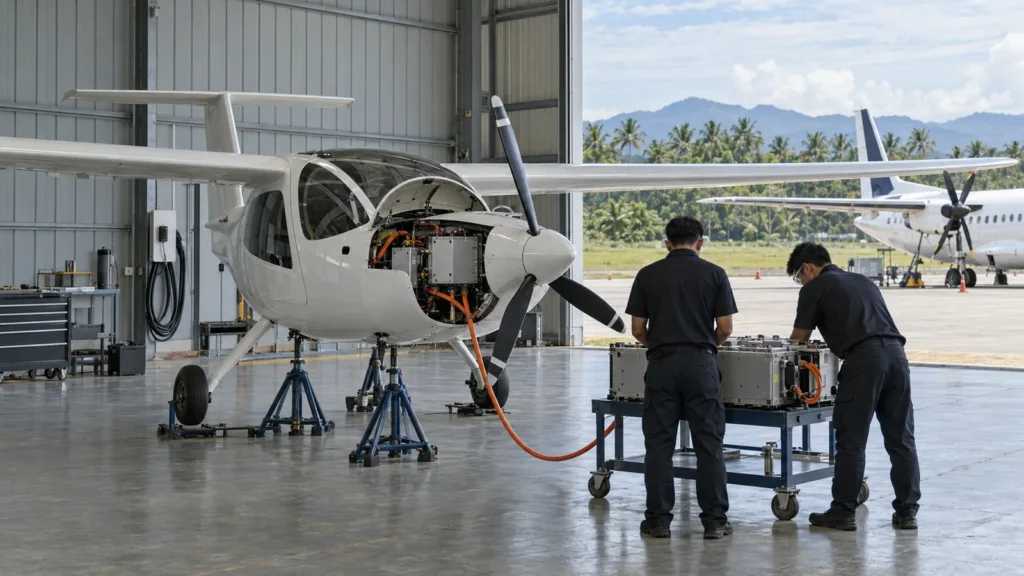
Short answer: not before the loan is repaid, on the routes and the timeline that matter. Battery-electric aircraft remain limited to serving short routes under 500 km, jet fuel still carries about 43 MJ/kg against 0.9 to 1.0 MJ/kg for the most advanced lithium-ion battery, Airbus pushed its hydrogen aircraft goal from 2035 by 5 to 10 years, hydrogen infrastructure is the bigger barrier, and the demand written into rules today is SAF demand. That is the answer I give when someone asks whether a new propulsion type will eat the volume I am underwriting. My reading of SAF vs electric and hydrogen aircraft follows one link: the project has to repay against a sustainable aviation fuel plan, built on a drop-in fuel that replaces fossil jet fuel with minimal changes to aircraft and infrastructure, for aircraft that already exist.
I am not asking which technology is better on a whiteboard. I am asking which change reaches a fleet on a date I can model, so I treat the aircraft as published schedules and the fuel as a certified and priced input.
In short
- Range: Battery-electric aircraft stop under 500 km, which is not where most of the fuel is burned.
- Energy: Jet fuel carries about 43 MJ/kg against 0.9 to 1.0 MJ/kg for the most advanced lithium-ion battery.
- Timing: Airbus moved its hydrogen aircraft goal from 2035 by 5 to 10 years and cut that programme’s budget by 25%.
- Supply: Renewable hydrogen was less than 1% of global hydrogen production in 2024.
- Demand: SAF reaches about 2.4 million tonnes in 2026, about 0.8% of aviation fuel use, at a cost to airlines of $4.3 billion.
In this article
The short answer: not before the loan is repaid
Electric propulsion runs into mass first. Battery-electric aircraft remain limited to serving short routes under 500 km because of severe battery weight limitations (ICCT, May 2025). Jet fuel is still roughly 50 times more energy dense than today’s most advanced lithium battery: jet fuel contains about 43 MJ/kg of energy while the most advanced lithium-ion batteries offer only around 0.9 to 1.0 MJ/kg, roughly 40 to 50 times less energy dense by weight. Energy density is how much energy one kilogram carries, and it sets range before any policy does.
Against that, SAF needs no new aircraft at all: most engines today are certified to use a 50% blend of SAF and fossil jet fuel without modification (ICCT, October 2025).
What this means for you: this is a calendar question, not a technology question, and no electric aircraft removes the fuel I am underwriting on the routes that burn it, so I set the demand case on dates rather than on specifications.
What the battery does to a short-haul route
The penalty compounds rather than cancels: the additional battery weight increases the total mass the aircraft must lift, and thus the energy needed to sustain flight (ICCT, May 2025).
Hydrogen is lighter but not free. Fuel cells, which turn hydrogen into electricity, and hydrogen combustion engines can offer greater range, yet both face engineering hurdles, particularly the need to develop lighter hydrogen storage tanks and more powerful fuel cells to minimize their mass and volume penalty (ICCT, May 2025).
Hybrid-electric solutions have emerged as intermediate alternatives that can be integrated in the medium term, even though they fall short of climate goals, including when combined with SAFs (ICCT, May 2025).
What this means for you: the short leg is where an electric aircraft could be considered first, and that leg is not where most of the fuel is burned, so my volume forecast does not move with it.
Hydrogen is an infrastructure programme
Infrastructure is probably an even bigger barrier: inadequate hydrogen infrastructure, including hydrogen production, distribution and fueling facilities, airport expansion and modification, and new safety protocols, is one of the major roadblocks to Airbus’ hydrogen aircraft programme (ICCT, May 2025).
Green hydrogen, produced using renewable electricity and water electrolysis, comprised less than 1% of global hydrogen production in 2024 (ICCT, May 2025). The green hydrogen page sets out what the supply side would require.
The published schedule moved with it. Airbus pushed back its goal to introduce hydrogen-powered commercial aircraft in 2035, expecting a 5 to 10 year delay and citing infrastructure challenges and slower-than-expected technology development, and it reduced the budget for that programme by 25% (ICCT, May 2025).
Two pioneer firms illustrate the funding question: one shut down a year after flying the largest aircraft ever on hydrogen-electric power when funding did not come through, and another paused its programme and laid off most of its employees (ICCT, May 2025).
What this means for you: this is a construction schedule and a supply chain before it is an aircraft order, so I do not book hydrogen demand inside my repayment period.
The option that shares the fuel, not the aircraft
Power-to-liquid means combining renewable electricity with carbon dioxide, which is how e-kerosene is made (ICCT, October 2025), and the mechanics sit on the power-to-liquid explained page.
A mandate, meaning a legal requirement to produce or blend a set share, then fixes the volume. The EU and the UK have mandated e-SAF production of around 0.6 million tonnes by 2030, while global e-SAF production capacity currently operating and under construction stands at around 0.02 million tonnes with only one single production site in operation, and it would take approximately 20 commercial-scale refineries to achieve the mandated volume (IATA, 6 June 2026). No new final investment decisions for e-SAF facilities have been made over the past year (IATA, 6 June 2026).
E-kerosene still flies in the aircraft and airports that exist today, which is the difference between a fuel programme and an aircraft programme (ICCT, October 2025).
What this means for you: e-SAF competes for my offtake rather than for my route map, so I read its slowness as a supply risk on the fuel I planned, not as demand destruction.
What the rules already require
Rules set the near term. SAF is expected to play a larger role in near-term and medium-term aviation decarbonization than zero-emission aircraft (ICCT, October 2025).
Aviation accounts for 2% of all carbon dioxide and 12% of all carbon dioxide from transportation worldwide, and CORSIA caps net CO2 from aviation at 2020 levels through 2035 (US Department of Energy, consulted 16 November 2026). SAF blended with conventional Jet A can be used in existing aircraft and infrastructure, and SAF presents the best near-term opportunity to meet the goals for SAF usage set by the international aviation industry (US Department of Energy, consulted 16 November 2026).
The sequencing behind SAF mandates matters here, because IATA warns that any SAF mandates should be introduced only where the necessary market conditions, production capacity, infrastructure readiness, and supportive policy measures are sufficiently in place (IATA, June 2026).
Even with optimistic sustainable aviation fuel and fuel efficiency assumptions, the net-zero carbon target could be exceeded as early as 2037 (ICCT, May 2025), which puts more pressure on SAF, technical efficiency improvements and operational optimization to fill the gap.
What this means for you: the demand I underwrite is written into rules years before any new aircraft type reaches the fleet, and the timetable that is slipping is not the one in the rulebook.
What the gap costs
SAF currently costs 2 to 5 times more than conventional jet fuel, driven by high production costs, limited availability, costly feedstocks and complex processes (ICCT, October 2025).
IATA measures the same gap from the demand side: SAF currently represents less than 1% of global aviation fuel use and is several times more expensive than conventional aviation fuel because of more expensive feedstocks, still developing production technologies, lack of physical and market infrastructure, and high upfront investment needs (IATA, June 2026).
Global SAF production is expected to reach around 2.4 million tonnes in 2026, representing just 0.8% of aviation fuel use, at a cost to airlines of $4.3 billion (IATA, 6 June 2026). Production volumes show the same slope, about 1.9 million tonnes in 2025 at around 0.6% of global jet fuel, against about 2.4 million tonnes projected for 2026 (IATA, June 2026). The sustainable aviation fuel price page is where I keep that series.
What this means for you: this is the number a delay in another technology does not improve, and a cheaper fuel that arrives later does not lower what I pay now.
The horizon I finance against
I set the demand case on dates I can point at: a loan tenor of years, an asset life longer than that, and published entry into service dates, meaning the year an aircraft first carries passengers, that keep moving to the right.
The published record gives me a hydrogen goal moved by 5 to 10 years, a programme budget cut by 25%, and renewable hydrogen under 1% of production (ICCT, May 2025), against a fuel that already has a blend certified for today’s engines (ICCT, October 2025).
The how to finance a SAF project page is where I write that horizon down, because a fuel plan and a financing plan have to end on the same date.
What this means for you: I finance a fuel whose demand is dated, and I book every new aircraft programme as upside that has to arrive before the debt does.
How I would run this if it were my file
I draw two timelines on one sheet: the fleet turnover I can observe, and the aircraft programmes I can read about.
On the first I write what flies today with a certified blend, and on the second I write the published date, the published delay and the infrastructure gap. Where the two disagree, I assume the fuel and I treat the aircraft as an option with no strike date.
That is the whole method: nothing exotic, just refusing to move a repayment model for a schedule that has already moved twice in one published year, and holding the fuel volume steady while the propulsion debate runs.
What this means for you: the SAF I finance is the baseline and the new propulsion is the option, so I do not discount fuel demand to make room for an aircraft that has no date.
Sources
- IATA, Sustainable Aviation Fuels Fact Sheet, June 2026.
- IATA, SAF Production Volumes Still Disappointing, 6 June 2026.
- International Council on Clean Transportation (ICCT), 6 October 2025.
- International Council on Clean Transportation (ICCT), 15 May 2025.
- US Department of Energy, Alternative Fuels Data Center, consulted 16 November 2026.
Frequently asked questions
Will electric aircraft reduce SAF demand before 2035?
Not on the distances that carry the fuel. Battery-electric aircraft remain limited to short routes under 500 km because jet fuel carries about 43 MJ/kg against 0.9 to 1.0 MJ/kg for the most advanced lithium-ion battery, and the extra battery weight adds a compounding penalty because the aircraft has to lift it (ICCT, May 2025). That is not where most of the volume sits, so I do not move the demand curve for it.
Is hydrogen aviation dead after the Airbus delay?
Delayed, not dead. The goal of hydrogen-powered commercial aircraft in 2035 was pushed back by 5 to 10 years because of infrastructure challenges and slower-than-expected technology development, and hydrogen infrastructure including production, distribution and fueling facilities, airport modification and safety protocols remains a major roadblock, while green hydrogen was under 1% of global hydrogen production in 2024 (ICCT, May 2025).
Does a hydrogen aircraft use SAF at all?
A hydrogen aircraft does not burn SAF on board, but it changes the airport, the fuel supply and the certification around it, and until it exists at scale the aircraft that are flying are certified for a 50% SAF blend (ICCT, October 2025; ICCT, May 2025). The fleet I underwrite keeps buying liquid fuel either way.
What should I assume in a long demand case?
I assume the fuel that is already certified and priced, at 2 to 5 times fossil jet fuel and less than 1% of global aviation fuel use, and I treat new propulsion as an upside that has to arrive on a published date, because even optimistic SAF and efficiency assumptions put the net-zero target at risk as early as 2037 (ICCT, October 2025; IATA, June 2026; ICCT, May 2025).
Not sure your project would survive a credit conversation?
A short call is usually enough to see where your project stands.
If you are raising for a fuel project and want the other side of the table introduced on the right terms, investor introductions is where I describe how I connect projects with equity investors and what I need from you before I make an approach.
I do not provide investment advice or arrange investments. I act as a strategic advisor and facilitator.

Alex, Founder of WeConnect Asia
I help low-carbon fuel and carbon removal project developers in Southeast Asia secure the commercial and financial partners needed to reach FID.
Related articles

Pitching a Climate Tech Company to Strategic Investors: What the Corporate Has to Believe Before It Writes a Cheque
How to pitch a climate tech company to strategic investors: the metric cluster, the readiness evidence and the ask that corporates fund.

Biomethane: What It Is, How It Is Made and Who Buys It
Biomethane is biogas cleaned to pipeline quality. I explain how it is made, how it differs from biogas and who buys it in Southeast Asia.

CO2 Sourcing for e-SAF Projects: What the Rules Allow and What the Contract Must Say
Biogenic CO2, direct air capture or industrial flue gas: which sources an e-SAF plant may use, what they cost and which contract terms make the fuel certifiable.

Operating Performance Guarantees for SAF Plants: What Lenders Ask For
Minimum guarantees, performance damages, retesting and who stands behind them: the operating guarantees a SAF plant needs to keep debt and offtake intact.

EPC and Construction Risk in SAF Plants: What a Lender Actually Tests
FEED scope, convertible EPC, performance guarantees and damages caps: the construction risk questions a SAF project must answer before financial close.

Matching Feedstock and Offtake Risk Back-to-Back in a SAF Project: How Lenders Read the Chain
Lenders do not buy a feedstock plan and an offtake plan separately. They buy the link between the two, and the link is where most SAF files break.