
Home » Methanol Dual-Fuel Vessels: What the Orderbook Says About Demand for Your Fuel
Methanol Dual-Fuel Vessels: What the Orderbook Says About Demand for Your Fuel
10 min read · Nov 2, 2026 · By Alex
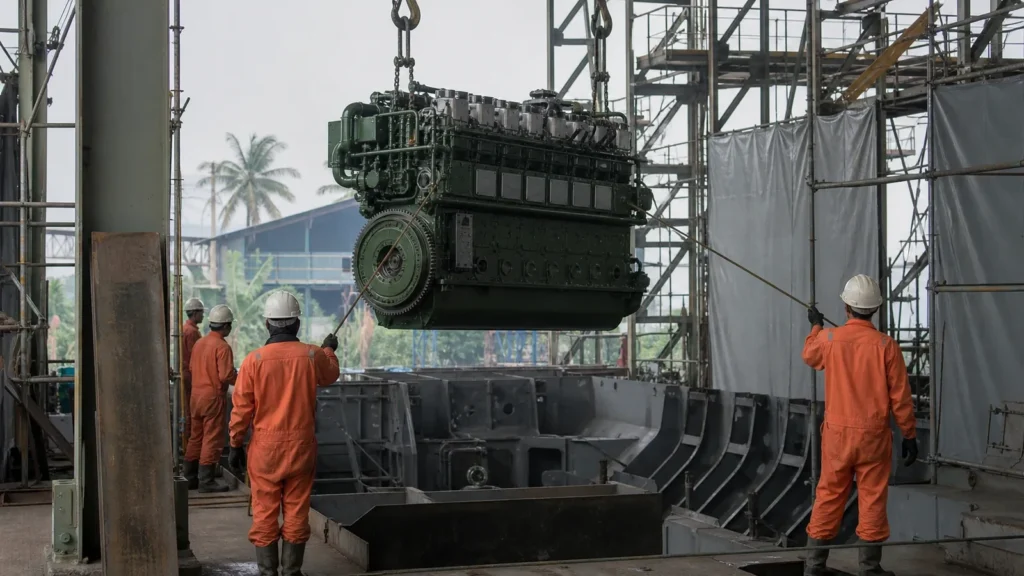
This page follows the sustainable maritime fuels page and counts ships rather than targets. 275 alternative fuelled vessels were ordered in 2025, down 47 percent, and methanol orders fell to 61 from 149 in 2024, per the annual figures of DNV’s platform. At the start of 2025 the milestones report counted 50 methanol dual-fuel ships in service. This means ships whose engine burns methanol with a small quantity of conventional fuel as ignition. Some 350 are on order and nearly 700 are methanol-ready. Methanol-ready means provisioned for the fuel but not fitted to burn it. Deliveries have taken over from ordering. Owners took delivery of 59 methanol dual fuel vessels in 2025 and 38 in the first half of 2026. The demand is real and narrow, and buyers sign it ship by ship.
Three numbers do different work and I keep them separate throughout. Delivered ships exist and burn fuel today. Ordered ships promise a fuel system later, and ready ships promise only the space for one. Therefore, the same fleet reads large or small depending on which of the three I quote.
In short
- Delivered: 59 methanol ships delivered in 2025. Meanwhile, 38 more followed in the first half of 2026, per the November review.
- Ordered: 61 methanol orders in 2025 against 149 in 2024. As a result, alternative fuelled orders fell 47 percent in 2025, per the annual figures.
- Ready: nearly 700 methanol-ready vessels alongside 350 on order at the start of 2025, per the milestones report.
- Supply: 94 million tonnes of methanol in 2024. Buyers purchased only 400,000 to 500,000 tonnes of renewable product.
- Bunkering: three methanol bunkering licences in Singapore from 1 January 2026, valid five years.
In this article
Three numbers, not one
I separate three counts and I never add them together. The first is vessels in service and burning methanol today: 50 at the start of 2025, mostly chemical tankers, per the milestones report. The second is vessels on order with a dual-fuel engine, an engine built to burn methanol, which stood at 350 at the start of 2025. The third category is methanol-ready vessels: they have the class and the space, but no fuel system. Also, the notation reserved, which stood at nearly 700 at the start of 2025. The same report puts more than 1,000 vessels classed for methanol into service within five years of that date. That is a delivery schedule, not a purchase order for your output.
Each count answers a different question. In service tells me what burns today. On order tells me what a yard has committed to build. Ready tells me only what a notation allows, and in the same year the three can move in opposite directions.
What this means for you: I would build the concept case on the first count. Meanwhile, I watch the second as a leading signal. I refuse to count the third as demand until a fuel system and a supply contract appear against it.
What the orderbook says, year by year
I use orderbook in its plain sense: the list of ships contracted at yards and still awaiting delivery. The annual figures record 275 orders for alternative fuelled vessels in 2025, down 47 percent on a year. The newbuild market means ships ordered rather than ships afloat. By contrast, it took 2,403 orders in 2025 against 4,405 in 2024. The alternative share of gross tonnage, the total enclosed volume of a ship rather than its weight, held at 38 percent in 2025. LNG took 188 orders in 2025 for 31 percent of gross tonnage. Methanol orders fell to 61 in 2025 from 149 in 2024. In the same year, container ships ran about 58 percent LNG, 36 percent conventional and 6 percent methanol by tonnage.
Against that flow the milestones report gives the stock at the start of 2025. There were 50 methanol dual-fuel ships in service, 350 on order and nearly 700 methanol-ready. In addition, more than 1,000 vessels classed for methanol fell due within five years. A single year of orders is a reading, the stock is the base I would be selling into.
What this means for you: I read 61 orders in 2025 as a cooling rather than a collapse, and I size the first phase against ships already delivered rather than against the wider green methanol market.
Deliveries have taken over from orders
The November review from Maritime Propulsion records 59 methanol ships delivered in 2025 and 38 in the first half of 2026. It also records Singapore opening commercial methanol bunkering licences on 1 January 2026, a bunkering licence being permission from a port to sell and deliver a fuel. In October 2026 a methanol dual-fuel ship took about 5,000 tonnes of certified bioethanol in Singapore, the ethanol serving as a direct replacement fuel in methanol engines.
The port authority records bunker sales of 56.77 million tonnes in 2025, up 3.4 percent on 2024, of which 1.95 million tonnes were alternative fuels against 1.35 million tonnes in 2024.
The distinction I hold onto is simple: a delivery is a fuel demand that exists today. Meanwhile, a buyer can still cancel or delay an order. That is why I count deliveries before I count anything sitting on a sales list.
What this means for you: I would count delivered ships first, then ask where they bunker, starting from the methanol bunkering picture for the ports that sit on my route.
Ready is not fuelled
Between the 350 methanol vessels on order and the nearly 700 methanol-ready vessels, both counted at the start of 2025, sits the gap that decides my forecast. A ready vessel has the space, the cofferdam and the notation. It does not have the tank, the fuel system or a supply contract.
That is why I read a conversion as an offtake decision rather than a shipyard decision. An offtake agreement is a contract under which a buyer commits to a volume of fuel over a set period. An owner converts when the fuel trades on terms he can pass through. By contrast, a free yard slot alone does not convert him. The structure behind marine fuel offtake contracts is therefore the first document I ask for.
What this means for you: I would treat ready vessels as an option on my fuel, and I would size first-phase capacity against conversions that already carry a signed offtake rather than against notation alone.
Who signs for the molecule
The milestones report from the Methanol Institute puts total methanol supply at 94 million tonnes in 2024. Specifically, buyers took only 400,000 to 500,000 tonnes of renewable product. It counts more than 200 announced renewable and low-carbon projects with a potential 45.8 million tonnes by 2030. Of those, only 20 to 40 percent are likely to proceed, or 7 to 14 million tonnes. For example, the report records half of that announced pipeline in China. In February 2025, about 4 million tonnes of low-carbon, blue, bio or e-methanol capacity was in service or under construction.
In 2026 A.P. Moller – Maersk operates about 20 methanol-capable container ships, holds a green methanol offtake of 500,000 tonnes a year with Goldwind and a long-term bio-methanol agreement with LONGi, with the first stem expected in 2026, a stem being a scheduled delivery of a fuel cargo. Hapag-Lloyd ordered eight 4,500 TEU methanol dual-fuel ships in December 2025 for delivery in 2028 to 2029, TEU being the standard container unit.
What this means for you: I model on signed volumes rather than announced capacity, and the way green methanol is made decides whether my certificate holds at the berth.
What I would not read into the orderbook
I keep four traps in front of me. First, counting methanol-ready vessels as demand: nearly 700 ready ships at the start of 2025 are options, not orders for my molecule. Second, reading one year of orders as a trend when alternative fuelled orders fell 47 percent in 2025. Third, never treat announced project capacity as contracted volume. Nobody has signed a cargo against the 45.8 million tonnes announced for 2030. Fourth, assuming a dual-fuel engine runs on green methanol when the ship can burn conventional methanol and does. Each of those four readings flatters the same number, the fleet looking larger than the fuel it will actually burn. The annual figures attribute the 2025 slowdown to regulatory uncertainty. The timing risk therefore sits with policy rather than with engine availability.
What this means for you: before I use a forecast I ask which of the four traps it contains. Therefore, I discount any figure that has not moved from ready to ordered to delivered. Each category keeps its own date, in that order.
What it changes for a Southeast Asian project
The Maritime and Port Authority of Singapore awarded three methanol bunkering licences in November 2025 after a call for applications launched in March 2025, selecting three of thirteen applicants on supply chain reliability, operability, safety systems and certification of the sustainability of the methanol supplied. The licences run five years, from 1 January 2026 to 31 December 2030, and holders must meet the conditions.
The port authority also records nine green and digital shipping corridors by the end of 2025, two of them agreed during 2025 with India and South Korea, and the corridor with China raised to national level.
A licensed port does not create a customer. It removes one excuse, because the terminal can deliver the fuel and check the certificate at the berth.
What this means for you: for a Southeast Asian project I would treat licensed bunkering as a step that removes risk rather than as demand, and green methanol in Southeast Asia is where I would look for buyers close to those berths.
The four rows I would keep
I keep four rows in one sheet and date every entry. Row one, vessels delivered per year: 59 in 2025 and 38 in the first half of 2026. Row two, vessels on order with a named fuel: 61 methanol orders and 188 LNG orders in 2025 against 149 methanol orders in 2024. Third row, contracted offtake volume with its first stem. It holds the 500,000 tonnes a year green methanol agreement with Goldwind, first stem expected in 2026. Fourth row, licensed bunkering capacity in the ports that matter to the route. Three licences in Singapore run from 1 January 2026 to 31 December 2030. Every row carries the date of its figure, because a 2025 count. Also, a 2024 count cannot sit on the same line. Also, I move a number between rows only when its category changes, never when a headline changes.
What this means for you: with those four rows updated each quarter I can see whether my plant would be selling into deliveries, into orders or into intentions, and only the first two belong in a capacity plan.
Sources
- DNV, LNG-fuelled container ships sustain alternative fuel share of global orderbook, consulted 17 November 2026.
- Methanol Institute, 2025 Milestones, 2025.
- Maritime Propulsion, Methanol-fuelled ships: a delivery story rather than an ordering story in 2026, 3 November 2026.
- Maritime and Port Authority of Singapore, Singapore Posts Record Port Performance in 2025, 13 January 2026.
- Maritime and Port Authority of Singapore, Singapore to Award Licences for Methanol Bunkering, 24 November 2025.
Frequently asked questions
How many methanol dual-fuel ships are in service?
50 at the start of 2025, mostly chemical tankers, per Clarksons Research as reported in the milestones report. The November review then records 59 methanol ships delivered in 2025 and 38 in the first half of 2026, so the in-service fleet grew after that snapshot even though orders did not. The milestones report also puts more than 1,000 vessels classed for methanol into service within five years of that date.
What is a methanol-ready ship?
A vessel with the space, the notation and the structural provisions for methanol, without the tank and the fuel system fitted. That is why nearly 700 ready vessels counted at the start of 2025 are not 700 customers: they are ships that can still take another fuel, so I do not count them as demand for my output.
Are methanol ship orders still growing?
No. Orders fell to 61 in 2025 from 149 in 2024, inside a 47 percent fall in alternative fuelled orders, while LNG took 188 orders in 2025 and 31 percent of gross tonnage. In the same year container ships ran about 58 percent LNG, 36 percent conventional and 6 percent methanol by tonnage, and the annual figures attribute the slowdown to regulatory uncertainty.
Does the orderbook justify a production project?
Not on its own. The milestones report counts only 400,000 to 500,000 tonnes of renewable methanol sold in 2024, and expects 7 to 14 million tonnes of low-carbon supply from the announced pipeline, with only 20 to 40 percent of those announced projects proceeding. Announced capacity is not contracted volume, so a project at concept stage needs a contracted offtake rather than a fleet forecast.
Not sure your project would survive a credit conversation?
A short call is usually enough to see where your project stands.
If your concept case rests on a fleet forecast, I would rather pressure-test the volume you can actually sign. My work on offtake agreements starts from the buyer, because a plant sized on a fleet number alone is sized on hope.
I do not provide investment advice or arrange investments. I act as a strategic advisor and facilitator.

Alex, Founder of WeConnect Asia
I help low-carbon fuel and carbon removal project developers in Southeast Asia secure the commercial and financial partners needed to reach FID.
Related articles

Pitching a Climate Tech Company to Strategic Investors: What the Corporate Has to Believe Before It Writes a Cheque
How to pitch a climate tech company to strategic investors: the metric cluster, the readiness evidence and the ask that corporates fund.

Biomethane: What It Is, How It Is Made and Who Buys It
Biomethane is biogas cleaned to pipeline quality. I explain how it is made, how it differs from biogas and who buys it in Southeast Asia.

CO2 Sourcing for e-SAF Projects: What the Rules Allow and What the Contract Must Say
Biogenic CO2, direct air capture or industrial flue gas: which sources an e-SAF plant may use, what they cost and which contract terms make the fuel certifiable.

Operating Performance Guarantees for SAF Plants: What Lenders Ask For
Minimum guarantees, performance damages, retesting and who stands behind them: the operating guarantees a SAF plant needs to keep debt and offtake intact.

EPC and Construction Risk in SAF Plants: What a Lender Actually Tests
FEED scope, convertible EPC, performance guarantees and damages caps: the construction risk questions a SAF project must answer before financial close.

Matching Feedstock and Offtake Risk Back-to-Back in a SAF Project: How Lenders Read the Chain
Lenders do not buy a feedstock plan and an offtake plan separately. They buy the link between the two, and the link is where most SAF files break.