
Home » Green Hydrogen vs Other Options: When Hydrogen Is the Right Choice
Green Hydrogen vs Other Options: When Hydrogen Is the Right Choice
10 min read · Sep 21, 2025 · By Alex
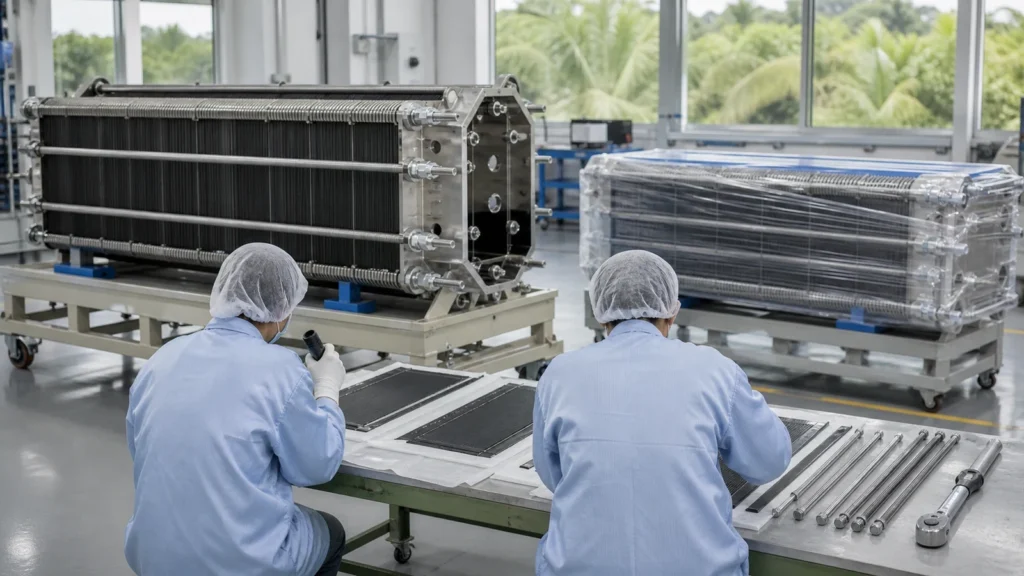
Hydrogen is the right choice only where a molecule is required and no electron can do the job. The list is short: shipping, aviation, long-haul trucking, iron and steel and chemicals, and everywhere else a battery or direct electrification is cheaper and simpler. My green hydrogen comparison of green hydrogen vs alternatives starts from that dividing line rather than a price table, because blue hydrogen offers a lower headline price only in exchange for capture conditions and CO2 infrastructure that has already pushed refinery supply projects to the second half of 2027. Before you defend a route in front of a lender, you need to know which of the four cost logics you are selling, and where each one stops working.
This article orders what is actually on the table, where hydrogen wins, what blue hydrogen costs in conditions, what the market actually pays, what a regulator accepts as green, what buyers in this region choose, and the test I apply before I recommend a route. Three companion pages carry the deep dives: blue hydrogen against green, hydrogen against electrification, and hydrogen myths and hype.
In short
- Molecule first: Hydrogen wins where only a molecule works: shipping, aviation, long-haul trucking, iron and steel and chemicals (2020).
- Electrons first: Batteries and direct electrification are cheaper and simpler wherever an electron does the job (2020).
- Blue conditions: A lower price today comes with capture conditions and shared CO2 infrastructure that has already delayed supply to the second half of 2027 (2026).
- Paid demand: Firm offtake agreements stand at less than 2 Mtpa, about 5 percent of what announced projects could reach by 2030 (2025).
- Regional reality: Committed capacity in the APEC region reached more than 4.2 million tonnes per year in 2024, led by China (2024).
In this article
What is actually on the table
Every route here sells the same energy service: heat, motion, or a molecule delivered at a gate. Green hydrogen splits water with renewable electricity, blue hydrogen makes the same molecule from natural gas with the resulting CO2 captured, and direct electrification replaces the fuel with a heat pump, a motor or an electric furnace. I compare them on delivered cost, the all-in cost of getting that service to its point of use. A capture rate is the share of produced CO2 captured and held rather than vented. Energy density is the energy held in a given space, which is why hydrogen needs far larger tanks than gasoline. A carrier is the form hydrogen travels in, such as ammonia, and buffer storage is the stock that absorbs the gap between supply and demand. The comparison holds only when the service is identical, which is why the three comparison pages of this silo carry the deep dives.
What this means for you: write the service in one sentence before you argue about price, then compare only routes that deliver that identical service. If the alternative delivers something else, its cheaper number is a different product.
Where hydrogen wins, and where it does not
Batteries and electrolysers are closer cousins than the debate suggests. In Batteries and hydrogen technology (2020) I read that both convert electricity into chemical energy and back, and that they share electrochemistry, materials such as electrolytes and membranes, and manufacturing processes. Lithium-ion battery progress is far more advanced, while electrolyser manufacturing sits at an earlier stage with more room for near-term cost cuts (2020). The lithium-ion battery, the key technology for electrifying transport, has fallen sharply in price and is now used by the power sector to integrate variable renewables such as wind and solar (2020). Clean hydrogen and hydrogen-derived fuels can be decisive where other clean energy technologies cannot be deployed easily: shipping, aviation, long-haul trucks, iron and steel and chemicals (2020). I track where each one stands on my technology maturity and scale up page.
What this means for you: put batteries and direct electrification into your comparison as the default answer, and reject them only with a reason tied to range, temperature, or a molecule the process needs.
What blue hydrogen actually costs you in conditions
The base is still fossil. Global Hydrogen Review 2026 reports that global hydrogen production remains dominated by unabated fossil fuels, while low-emissions production grew by 20 percent in 2025 to reach almost 1 Mt and is expected to pass more than 1 percent of global production for the first time in 2026, concentrated in China, Europe and North America (2026). Price is the first condition: in the near term low-emissions hydrogen will stay more costly than fossil-based hydrogen in most of the world, apart from China where renewable hydrogen could become cost-competitive by 2030, so support remains necessary to close the gap (2026). Infrastructure is the second condition: three large carbon capture projects for hydrogen supply to refineries in the Netherlands were postponed to the second half of 2027 because the shared CO2 infrastructure was delayed (2026). A capture rate resting on shared pipes nobody has finished is a claim your buyer cannot audit. The plumbing sits on my carbon capture and storage page.
What this means for you: before you quote a blue price, name the capture conditions and the shared CO2 route it depends on, and ask who carries the delay if that route slips again.
What the market actually pays
Announcements are not offtake. Global Hydrogen Review 2025 puts the primary barrier to scale-up as the cost gap between low-emissions hydrogen and conventional fossil-based alternatives, in established uses such as refining and in emerging ones such as steel, shipping and aviation (2025). The paid column reads the same way: cumulative firm offtake agreements stand at less than 2 Mtpa, about 5 percent of the production announced projects could reach by 2030 (2025). Supply is concentrating as well, since China holds nearly 60 percent of global electrolyser manufacturing capacity and can produce renewable hydrogen 40 to 45 percent cheaper than Europe or the United States, while the stack is only 15 to 20 percent of the investment cost of an installed electrolyser (2025). That tells me where equipment cost sits, not what hydrogen sells for elsewhere. My green hydrogen cost note for Southeast Asia carries the regional numbers.
What this means for you: separate announced capacity from signed offtake inside your model, because the paid column is the part a lender will actually underwrite.
What a regulator accepts as green
Standards are still moving. International standards for zero and low-carbon hydrogen are under development while some economies, including Canada and the Republic of Korea, have set domestic standards to run their policies (2024). Certification is what lets a buyer tell one molecule from another, which is the only way a green claim survives an audit (2024). Targets are not deliveries, and I read them that way: the European Union targets 40 GW of domestic electrolyser capacity by 2030 and backs renewable hydrogen with delegated acts, Japan offers certainty through contracts lasting 15 years and targets 3 Mtpa of consumption by 2030, India targets 5 Mtpa by 2030 with guaranteed offtake, and China targets 100 to 200 kt of green hydrogen in 2025 (2025). A policy target is not a delivered volume, and a conditional contract is not a firm offtake. The certification route sits on my renewable fuels of non-biological origin page.
What this means for you: list the certification scheme your buyer will audit against, and treat every policy target in your deck as a target rather than as revenue.
What buyers in this region are choosing
The APEC region reached more than 4.2 million tonnes per year of committed production capacity in 2024, a 68 percent growth led by renewable hydrogen in China and natural gas with carbon capture in North America, according to the APERC Hydrogen Report 2024. Inside that total, China holds the largest share of renewable hydrogen projects in APEC at 1.8 million tonnes per year committed as of 2024, while the United States shows progress with natural gas based projects at about 1.6 million tonnes per year of committed capacity (2024). Hubs carry the model: hydrogen technology hubs pursued by Australia, Canada and the United States have played a critical role in accelerating projects and securing investment, while demand uncertainty remains the primary barrier to market maturity (2024). Committed is not available, and announced is not delivered. I follow how those buyers become specifications on my hydrogen PtX and e-fuels page.
What this means for you: read regional committed capacity as a direction of travel, then check which demand in your own market is signed rather than described.
The test I apply before I recommend a route
Comparison is genuinely hard. The Future of Hydrogen found that comparing future hydrogen prices with alternatives such as solid-state batteries, pumped-storage hydropower, electric vehicles, biofuels and electrification of high-temperature heat is difficult, because several of those options have a head start and can reap the benefits of path dependency (2019). So I split vehicle classes rather than fuels: heavy-duty fuel cell vehicles tend to become competitive against battery vehicles sooner in trucks than in cars, because long range and high power favour them, while direct electrification of long-distance freight faces larger battery capacity, long charging times, high power, payload loss and recharging infrastructure costs (2019). Existing demand does not wait: refineries consume 38 Mt of hydrogen per year, a third of global demand in 2019, whatever happens to the routes ahead. My rule fits in two sentences: buy electrons where electrons work, buy molecules where only a molecule works, and never pay for both.
What this means for you: run the identical-service test on each use case before you defend hydrogen, and keep existing refinery demand in view as the demand that does not depend on your argument.
The four lines I write in the screening note
Four lines, in this order. First, the energy service and the identical-service test, written in one sentence so nobody compares a molecule with a kilowatt hour (2019). Second, the cost gap that has to be closed before offtake, since that gap between low-emissions hydrogen and fossil alternatives is what stops a bankable contract (2025). Third, the infrastructure that decides whether a blue route is real, because shared CO2 handling has already pushed supply projects to the second half of 2027 (2026). Fourth, the committed demand that carries the project, where committed means signed terms rather than announced capacity (2024). For a developer the rule I extract is short: name the service, price the delivered cost of every route that can serve it, then choose the route whose conditions you can actually satisfy. If two routes serve it, buy the electrons.
What this means for you: put those four lines into the screening note before any deck, and let the route fall out of them instead of defending a route you already chose.
Sources
- IEA, The Future of Hydrogen https://iea.blob.core.windows.net/assets/9e3a3493-b9a6-4b7d-b499-7ca48e357561/The_Future_of_Hydrogen.pdf, 2019.
- IEA, Global Hydrogen Review 2026 https://iea.blob.core.windows.net/assets/af4b6218-0311-4963-91ab-903cb18ca0ca/GlobalHydrogenReview2026.pdf, 2026.
- IEA, Global Hydrogen Review 2025, Five key questions about hydrogen https://www.iea.org/reports/global-hydrogen-review-2025/five-key-questions-about-hydrogen, 2025.
- IEA, Batteries and hydrogen technology: keys for a clean energy future https://www.iea.org/articles/batteries-and-hydrogen-technology-keys-for-a-clean-energy-future, 2020.
- Asia Pacific Energy Research Centre, APERC Hydrogen Report 2024 https://aperc.or.jp/file/2025/3/18/APERC_Hydrogen_Report_2024_final.pdf, 2025.
Frequently asked questions
When is green hydrogen the wrong choice?
When an electron can do the job. For space heating, light transport and short-duration storage, direct electrification and batteries are simpler to build and cheaper to run, and they need no storage tank, no carrier and no reconversion step (2020). Hydrogen earns its place in shipping, aviation, long-haul trucking, iron and steel and chemicals, where other clean energy technologies cannot be deployed easily (2020).
Is blue hydrogen cheaper than green hydrogen?
In the near term, yes, in most of the world, since fossil-based production stays less costly than low-emissions hydrogen (2026). The exception is China, where renewable hydrogen could become cost-competitive by 2030 (2026). The capture side carries its own conditions, because large CO2 infrastructure delays have already pushed hydrogen supply projects to the second half of 2027 (2026).
Can a battery do the same job as a hydrogen buffer?
Only for part of it. Batteries are increasingly used by the power sector to integrate variable renewables such as wind and solar, so they cover the short-duration part of the job (2020). Seasonal and large-volume storage still needs geological capacity, where salt caverns typically cost less than 0.6 USD per kg of H2 (2019). My working rule is that tanks cover hours and geology covers seasons.
Which alternative do industrial buyers actually pay for?
The uses that already exist pay first: refineries consume 38 Mt of hydrogen per year, a third of global hydrogen demand (2019). The emerging buyers are steel, shipping and aviation, where the cost gap with conventional fossil alternatives remains the barrier to a signed contract (2025).
Not sure your project would survive a credit conversation?
A short call is usually enough to see where your project stands.
If you are at the concept stage and need the route tested before it reaches a lender, I offer strategic partnership support to pressure-test the comparison, the conditions and the committed demand behind your choice.
I do not provide investment advice or arrange investments. I act as a strategic advisor and facilitator.

Alex, Founder of WeConnect Asia
I help low-carbon fuel and carbon removal project developers in Southeast Asia secure the commercial and financial partners needed to reach FID.
Related articles

Pitching a Climate Tech Company to Strategic Investors: What the Corporate Has to Believe Before It Writes a Cheque
How to pitch a climate tech company to strategic investors: the metric cluster, the readiness evidence and the ask that corporates fund.

Biomethane: What It Is, How It Is Made and Who Buys It
Biomethane is biogas cleaned to pipeline quality. I explain how it is made, how it differs from biogas and who buys it in Southeast Asia.

CO2 Sourcing for e-SAF Projects: What the Rules Allow and What the Contract Must Say
Biogenic CO2, direct air capture or industrial flue gas: which sources an e-SAF plant may use, what they cost and which contract terms make the fuel certifiable.

Operating Performance Guarantees for SAF Plants: What Lenders Ask For
Minimum guarantees, performance damages, retesting and who stands behind them: the operating guarantees a SAF plant needs to keep debt and offtake intact.

EPC and Construction Risk in SAF Plants: What a Lender Actually Tests
FEED scope, convertible EPC, performance guarantees and damages caps: the construction risk questions a SAF project must answer before financial close.

Matching Feedstock and Offtake Risk Back-to-Back in a SAF Project: How Lenders Read the Chain
Lenders do not buy a feedstock plan and an offtake plan separately. They buy the link between the two, and the link is where most SAF files break.