
Home » Airline Equity in SAF Projects: What the Airline Buys, What It Costs, and How to Structure It
Airline Equity in SAF Projects: What the Airline Buys, What It Costs, and How to Structure It
10 min read · Nov 2, 2026 · By Alex
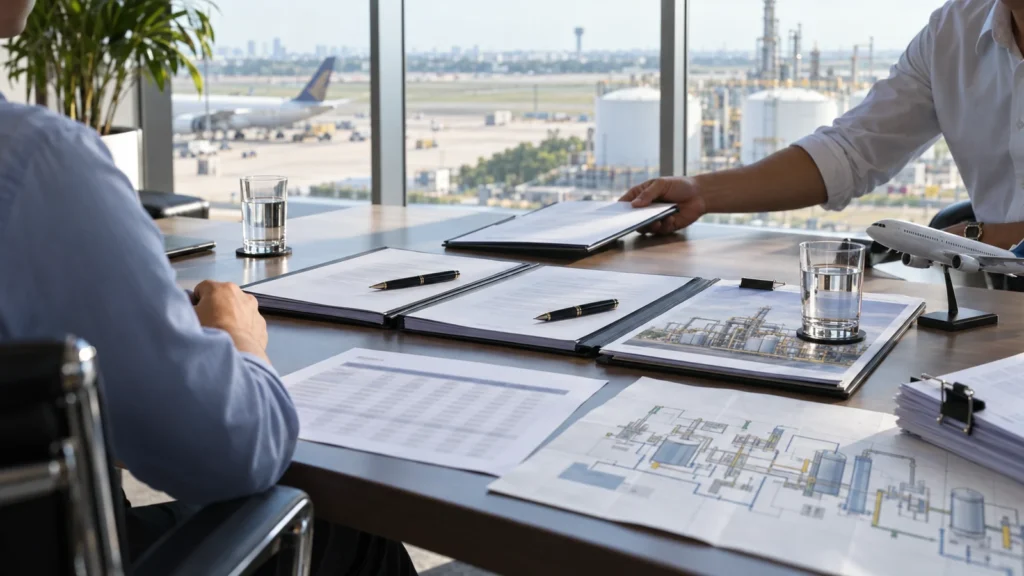
An airline can buy shares in a sustainable aviation fuel plant. That is the short answer, and the deals on the record confirm it. I have read every disclosed transaction I can find. Also, the share purchase sits beside a long-term fuel contract rather than replacing it. In airline equity SAF projects the question is never permission but structure. Also, the wider regional picture is described in the regional page on sustainable aviation fuel in Southeast Asia.
This is a commercial and governance question, not a chemical one. I write for a developer or a finance lead in Southeast Asia. The question is whether to open a slice of the equity to a carrier that wants the fuel. I want to show what changes hands, what it costs, and where the two contracts meet.
In short
- Direct answer: Yes, an airline can and does take equity in a SAF project. The share purchase sits beside a fuel contract rather than replacing it.
- What it buys: A position in production capacity, plus governance rights and a claim on output.
- What it gives up: Cash and board attention, in an industry already known for slim margins.
- Two contracts: Equity is a claim on the company. Offtake is a claim on volume: it is the contract under which a buyer takes the plant’s output. Each needs its own documents.
- The catch: With more than one airline in the room, competition law becomes a condition precedent.
In this article
What an airline buys when it buys shares in a SAF producer
An airline can and does take equity in a SAF project. Also, the honest reading of the deals on the record is simple. The share purchase sits beside a long-term fuel contract rather than replacing it. Forward-leaning aviation players use a combination of strategies to source SAF. Equity investment is one of the instruments in that combination. In airline equity SAF projects, the question is never permission but structure.
What the airline buys is a position in production capacity. Therefore, that it moves from being a pure consumer of fuel to a partner in the plant that makes it. That is the framing Turkish Airlines used for its own deal. Three things change hands at once: money, governance rights over the asset, and a claim on output. A deal that moves only one of the three is a different transaction wearing the same name.
The funding side of the same file usually comes first. I have set it out in how to finance a SAF project.
What this means for you: treat the share purchase as a wrapper around a commercial relationship. Then check that money, governance and output all appear in the document.
Why the arithmetic pushes airlines toward equity
SAF will make the biggest contribution to airline abatement, up to 50 percent depending on the airline. In fact, certified sustainable fuels produce about 80 percent less greenhouse gas emissions than fossil kerosene. In 2024 production capacity does not exceed 1.5 million metric tons. By IATA estimate, that is barely 0.5 percent of total jet fuel needs. Estimated global demand from mandated SAF is around 4.5 million metric tons in 2030. By contrast, announcements from the largest airlines would accumulate to more than 20 million metric tons in 2030.
SAF currently costs around 3 times more than fossil kerosene. Also, jet fuel has historically accounted for 20 to 30 percent of airline operational costs. An airline adopting a 10 percent SAF blend target by 2030 would need to pass on cost. The increase would be 4 to 6 percent of total cost. That comes in an industry known for volatility, intense global competition and slim margins. Demand could outpace supply by 2030 without a significant increase in capacity. Also, the industry target is net-zero emissions by 2050.
My reading is that buying shares attacks price and volume at the same time, which few instruments do. I have not found a cheaper one that does both.
What this means for you: a volume contract alone does not close the spread between SAF and kerosene. If that spread is the problem, equity is the instrument on the record that touches both sides.
Four structures that already exist on the record
One, a dedicated platform. Southwest launched Southwest Airlines Renewable Ventures to invest in SAF technologies. It took a 30 million USD stake in LanzaJet, having already invested in SAFFiRE Renewables. Southwest will be the anchor SAF offtaker of the LanzaJet plant. Its stated target is 10 percent SAF by 2030. It serves 121 destinations in the US and 10 other countries with almost 850 Boeing 737s. Almost 500 new aircraft are on order. GreenAir News has ceased publication, so that page is an archive.
Two, a direct stake. Turkish Airlines approved a 40 percent equity stake in DB Tarımsal Enerji ve Ticaret. The investment could total around 42 million USD. The aim is to become an equity partner in production capacity, beyond just buying SAF. That page carries no date and reports a secondary source.
Three, equity beside a long supply deal. Jet2 invested an equity stake in the Fulcrum NorthPoint waste-to-fuels plant. It expects over 200 million litres of SAF across 15 years. That is about 400,000 tonnes of CO2 net reductions. Production is due to commence in 2027. The note on this deal dates from May 2023, over two years ago.
Four, a pooled vehicle. One example is a private equity fund built around the Sustainable Aviation Fuel Financing Alliance. That alliance is a joint venture with major airline carriers. Its stated goal is to fund mature and commercially viable projects. It made its first investment in April 2024.
What this means for you: the pattern across all four is the same, a stake plus an offtake. Ask first which of the two is actually on offer.
Equity and offtake are two different contracts
An offtake agreement is an arrangement between a producer. Also, a buyer to purchase or sell portions of the producer’s upcoming goods. Meanwhile, equity is a claim on the company. In the pooled fund, each investor signed an offtake agreement with the project refinery for aviation fuel supply. The two instruments sat in separate documents, and the parties signed both.
In the Jet2 transaction, one law firm acted on the fuel offtake aspects. Also, a different firm acted on the equity investment aspects, which tells you how separate the workstreams are. In the Southwest structure the equity stake and the anchor offtaker role sit in the same announcement. However, they are two commitments with different remedies behind them.
I cover the contracting mechanics in how to secure SAF offtake agreements.
What this means for you: keep the share documents and the fuel documents in separate files with separate remedies. Never let a single press release stand in for either.
When your co-investor is your competitor
Airline investors in a shared fund are competitors in every other part of their business. Therefore, the documents have to survive competition law. In the SAF fund case study, the investors were airline competitors. Also, the review covered the limited partnership agreement and the off-take allocation agreement. Therefore, the agreements had to stay within the exceptions to those provisions. That is how they avoided breaching the cartel conduct provisions of the Competition and Consumer Act. They then obtained a successful collective bargaining notification from the ACCC. The parties made the investment only after they had successfully resolved all competition law risks.
The practical consequence for a developer is that bringing two airlines into the cap table can slow the legal file. The remedy is early counsel and a clean allocation agreement, not a faster signature.
What this means for you: treat competition clearance as a workstream with its own timetable. Do not let it sit behind the commercial negotiation.
Where the airline cheque sits in the wider funding stack
An airline’s equity cheque is still equity: it does not size the debt. Also, it does not replace the readiness work that a final investment decision (FID) requires. The airline’s own economics cap what it can write, because slim margins, volatile fuel costs. Also, fuel already accounts for 20 to 30 percent of operational costs. A single carrier rarely carries a first-of-a-kind plant alone. That is precisely why the pooled fund structure exists.
Mission-driven money and public support therefore stay in the frame alongside strategic equity. Also, the CapEx (capital expenditure) plan has to clear the same test. The same readiness file decides whether this capital can move. I describe it in how to reach FID for a SAF project. For the debt and guarantee side, see where development finance institutions fit.
What this means for you: size the airline cheque inside the stack rather than against the whole requirement. Then confirm who funds the FID readiness work before you ask a carrier for shares.
What I would put in the term sheet
My list, in the order I would negotiate it, runs as follows. First, write the volume commitment next to the share purchase so the two can stand alone. Second, take the board or observer seat and the information rights as evidence gates rather than as control. Third, insist on a stated percentage and a stated amount: the deals on the record disclose both or neither. A silent percentage becomes a diligence question later. Fourth, ask for a right of first refusal on offtake expansion. Fifth, make competition-law clearance a condition precedent when more than one airline is in the room.
If the asset is a power-to-liquid plant, the equity conversation starts from a different risk file. I set that out in e-SAF project finance.
What this means for you: take these five points into the room in this order. Let the airline push back on them one at a time.
How I would run the conversation if it were my file
I would open with the offtake, not the shares. A buyer who has committed volume has already done the commercial diligence. Equity asked for at that moment is a considered step rather than a fundraising signal. I would price the stake against the offtake tenor. Therefore, the airline does not have to lock capital for longer than it has locked fuel. I would ask for the airline’s own approval path in writing. A strategic investment is usually a board decision rather than a procurement decision. That clock runs slower than the fuel contract.
I would keep the alternative structures visible. They are a dedicated platform, a direct minority stake, a pooled fund, or no equity and a longer offtake. And I would treat a memorandum of understanding (MOU) on either side as a conversation, not a commitment.
What this means for you: put both term sheets on the same table, in that order. The volume term sheet comes before the share term sheet. Then let the airline choose which one it signs first.
Sources
- GreenAir News, 29 February 2024, archived page.
- Biofuels Digest, undated page, consulted 14 Nov 2026, reporting a secondary source.
- Norton Rose Fulbright, May 2023, older than two years.
- Piper Alderman, undated case study page, consulted 14 Nov 2026.
- McKinsey, July 2024.
Frequently asked questions
How much equity does an airline typically take in a SAF project?
The disclosed cases differ: a 40 percent stake for an investment expected to total around 42 million USD in one case, a 30 million USD stake with no percentage disclosed in another, and a stake of undisclosed size in a UK waste-to-fuels plant. The range on the record is therefore strategic minority to significant minority, and the percentage is whatever the parties choose to publish.
Does an equity stake replace an offtake contract?
No. In the pooled fund each investor entered into an offtake agreement from the project refinery in addition to investing; the UK deal paired an equity stake with an expectation of more than 200 million litres over a 15-year period; the Southwest structure pairs the platform’s stakes with an anchor offtaker commitment. The equity gives a position, the offtake gives volume and a remedy.
Can two airlines invest in the same project?
Yes, through a fund structure, but the documents must fit inside the competition law exceptions. The limited partnership and off-take allocation agreements were reviewed against the cartel conduct provisions, a collective bargaining notification was obtained from the ACCC, and the investment was made only after those risks were addressed.
What does an airline gain from holding shares instead of only signing a contract?
On the record, a position in production capacity rather than only a purchase contract, and the stated aim of moving from consumer to equity partner in production capacity. On the fuel side the argument is access to volume and the ability to participate in a market where demand could outpace supply by 2030.
Not sure your project would survive a credit conversation?
A short call is usually enough to see where your project stands.
If you are building a SAF project in Southeast Asia and an airline has asked for a stake, I can help you test the structure before you commit to it. My work puts developers in front of the right capital through investor introductions, and I keep the commercial and equity conversations on the same timetable.
I do not provide investment advice or arrange investments. I act as a strategic advisor and facilitator.

Alex, Founder of WeConnect Asia
I help low-carbon fuel and carbon removal project developers in Southeast Asia secure the commercial and financial partners needed to reach FID.
Related articles

Pitching a Climate Tech Company to Strategic Investors: What the Corporate Has to Believe Before It Writes a Cheque
How to pitch a climate tech company to strategic investors: the metric cluster, the readiness evidence and the ask that corporates fund.

Biomethane: What It Is, How It Is Made and Who Buys It
Biomethane is biogas cleaned to pipeline quality. I explain how it is made, how it differs from biogas and who buys it in Southeast Asia.

CO2 Sourcing for e-SAF Projects: What the Rules Allow and What the Contract Must Say
Biogenic CO2, direct air capture or industrial flue gas: which sources an e-SAF plant may use, what they cost and which contract terms make the fuel certifiable.

Operating Performance Guarantees for SAF Plants: What Lenders Ask For
Minimum guarantees, performance damages, retesting and who stands behind them: the operating guarantees a SAF plant needs to keep debt and offtake intact.

EPC and Construction Risk in SAF Plants: What a Lender Actually Tests
FEED scope, convertible EPC, performance guarantees and damages caps: the construction risk questions a SAF project must answer before financial close.

Matching Feedstock and Offtake Risk Back-to-Back in a SAF Project: How Lenders Read the Chain
Lenders do not buy a feedstock plan and an offtake plan separately. They buy the link between the two, and the link is where most SAF files break.