
Home » Who Invests Equity in Hydrogen Projects? The Five Pools I Approach
Who Invests Equity in Hydrogen Projects? The Five Pools I Approach
10 min read · Jan 2, 2026 · By Alex
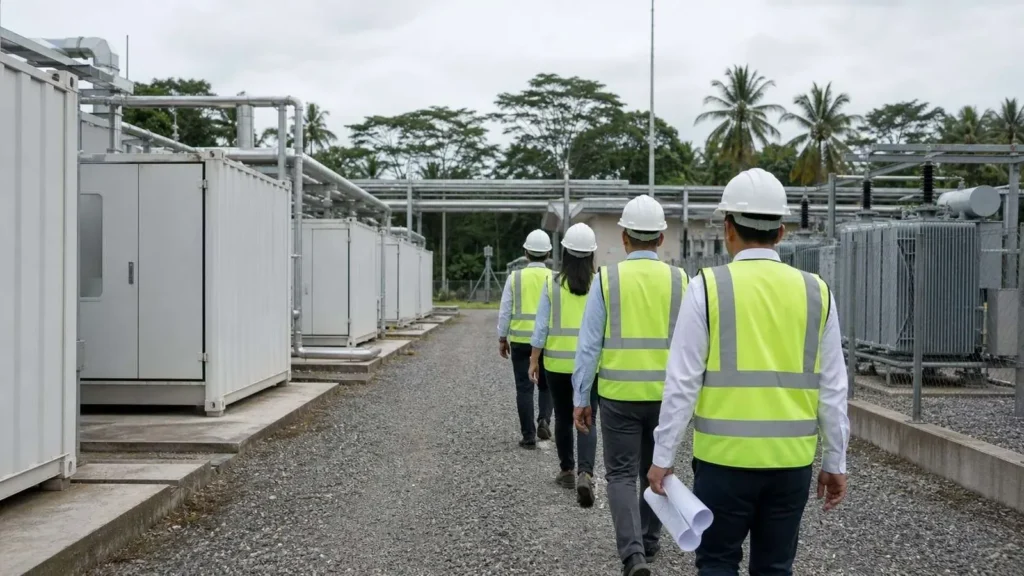
A hydrogen project raises equity, the developer’s own capital, sitting last in the repayment queue and absorbing the first loss, the first money written down.
Also, Five pools provide that capital. However, The sponsor comes first. Meanwhile, It develops and owns the project, with strategic partners that join the ownership. In addition, Development finance institutions follow, as public or multilateral lenders, and other public players come after them. For example, Institutional investors and infrastructure funds, which buy long life assets, come next. Moreover, Equipment makers and offtakers come last, and they put money in alongside their contracts. By contrast, I rank hydrogen equity investors in that order. Meanwhile, In 2025 only 9 percent of announced projects had secured committed investment, against 0.5 percent in emerging economies. Specifically, Sequencing is the whole job. Therefore, i read how to finance a hydrogen project as one system before I open a single door.
In what follows I order those pools the way I work them: who writes the first cheque, what each one insists on seeing. In addition, the moment each becomes reachable. However, The order follows the risk each pool will carry, not the size of the cheque.
In short
- Sponsors: the developer’s own equity, first in and last out of the risk.
- Strategic partners: companies joining the ownership with offtake, technology or a site.
- Development finance institutions and public players: first loss, guarantees, blended structures.
- Institutional investors and infrastructure funds: patient money arriving after the contract.
- Equipment makers and offtakers: capital that follows the contract rather than replacing it.
In this article
The five pools, briefly
By 2030, hydrogen supply and use need 1 200 billion USD of investment (2023). However, In 2025 only 9 percent of announced projects had secured committed investment, against 0.5 percent in emerging economies (2025). For example, So I keep one glossary on the table. In addition, Equity is the sponsor’s own capital, last in the repayment queue. In addition, The sponsor develops and owns the project; a strategic partner joins with offtake, technology or a site. Meanwhile, A development finance institution is a public or multilateral lender. By contrast, Blended finance mixes public and private money so public capital absorbs early losses. Consequently, First loss absorbs the earliest write-downs. Meanwhile, Quasi-equity behaves like equity without voting control.
Senior debt ranks ahead of equity, and limited or non-recourse project finance repays lenders from project revenue alone. Specifically, A take-or-pay contract makes the buyer pay anyway, investment grade is BBB- or higher (2024). In addition, an infrastructure fund buys long life assets.
What this means for you: write these definitions into your data room before the first meeting. As a result, the lender and I argue about terms instead of words.
Pool one: sponsors and public money first
The sponsor writes the first cheque, a strategic partner joins where one exists, and public money follows close behind. The 2023 Green Hydrogen Organisation report records a tripling of public and development finance flows within five years. It also says emerging economies outside China need 1 000 billion USD a year of external climate finance by 2030 (2023). In its financing example, equity comes from the project developer, the offtakers, the equipment makers. In addition, the institutional investors, senior debt from commercial banks and project bonds, and large commercial banks often cannot lend beyond 15 years in those countries unless the loans are backed by guarantees (2023).
The arithmetic is what I quote most often. Donors put up 0.15 USD in cash per 1 USD of guarantees, plus 0.85 USD if loans go unpaid. Every 1 USD of quasi-equity through IFFEd lets the development banks add 4 USD of financing (2023). In addition, the development finance institutions that write these mandates decide my calendar.
What this means for you: approach whoever carries first loss before you approach anyone else, because nothing else prices up without them.
Pool two: development finance institutions and blended structures
These institutions entered this market early and they set the pattern. Between 2021 and 2025 they lent 6.6 billion USD. Meanwhile, 8 billion USD went into production in 2025 and 38 billion USD of public funding progressed (December 2025). The European Bank for Reconstruction and Development lent 80 million USD to Egypt Green to develop the country’s first green hydrogen facility (2023). I ask each institution for three things in one order: first loss, then guarantees, then co-investment. First loss covers the earliest write-downs, guarantees let commercial banks lend on terms they would otherwise refuse, and co-investment puts public capital beside mine at the same moment. Where the first tranche is unavailable I bring a guarantee instead. This is the logic behind the Southeast Asia project finance route.
What this means for you: ask in that order every time, and be ready to show which risk each request is covering.
Pool three: institutional and infrastructure capital
Institutional money reads the structure before it reads the story. The Oxford Institute for Energy Studies review of January 2026 explains its finding. Blended finance, concessional and subordinated tranches and guarantees absorb the first losses and lower the overall cost of capital. However, they do not in themselves remove the underlying market or offtake risk, and in a public private partnership the lenders look at the government’s equity stake. The presence of a revenue support mechanism such as a contract for difference, and the risk sharing clauses (January 2026).
Two details guide my timing: the presence of investment grade offtakers or substantial credit enhancements is a consistent feature of financed projects (January 2026), and as risk falls over the life of a project, initial sponsors can sell parts of their equity at a premium to investors with a lower risk and return appetite (2023). The NEOM capital stack is the clearest reference I have for that sequence.
What this means for you: treat every guarantee, subordinated tranche and concession as a way to reach the contract, never as a substitute for it.
Pool four: offtakers and equipment makers who invest alongside their contract
Money from this pool only makes sense when it rides on a contract. Meanwhile, The Green Hydrogen Organisation paper of 2024 reports that only 10 percent of announced projects have identified a buyer. Specifically, Of the contracted volume, only 13 percent is contractually binding. Also, Another 7 percent stays pre-contractual and 80 percent remains as memorandums or unspecified (2024). By contrast, the NEOM project reached financial close in May 2023, oversubscribed more than two times. For example, Twenty-three banks and investment firms financed it on a non-recourse basis for a total of 8.4 billion USD (2023). Also, Demand side pull is visible too. Specifically, The first subsidy auction of the European Hydrogen Bank had its 800 million EUR budget exhausted several times over (February 2024). Moreover, The same test governs capital that moves into low carbon fuels.
What this means for you: no contract, no equity from this pool, and a memorandum is not a contract.
What each pool demands
Each pool prices the same risks differently. The December 2024 H2Global Foundation report puts the investment to align hydrogen with net zero at 1 000 billion USD worldwide by 2030. Of that, 335 billion USD has yet to be allocated. Infrastructure is the largest part of the gap, at 190 billion USD. The report also evaluates four support instruments. Also, the capital expenditure support, the fixed premium, the contracts for difference and the anchor capacity bookings (December 2024). A donor survey in the same report ranks market, regulatory and permitting risks as the most critical barriers. Public equity carries exactly that risk first (December 2024).
The scale on the other side of the table is easy to picture: the pool of 47 GW of renewable energy and 24 GW of electrolysers announced in Egypt in a first phase carries a total cost of 85 billion USD (2023).
What this means for you: decide which instrument your project is asking for, capex support or a premium or a contract for difference, before any investor asks you.
What this means for a Southeast Asian developer
In this region the public side is already moving, and green hydrogen investment in Southeast Asia has to be read against that flow. The IEA briefing of 9 December 2025 records 6.6 billion USD of development finance institution loans between 2021 and 2025, 8 billion USD invested in production in 2025 and 38 billion USD of public funding progressed (9 December 2025). Regional demand reached 4 Mt in 2024: ammonia took 49 percent, refining 31 percent and methanol 20 percent. The IEA names a high cost of capital as the first regional barrier (9 December 2025). Announced regional projects equal 12 percent of current regional demand. Meanwhile, only 6 percent of announced capacity has reached FID (December 2025). So I talk to lenders already active in the region before I talk to funds that are not.
What this means for you: the constraint here is the cost of capital, so public money first and patient equity second.
The order I approach them in
The order is not a preference, it is the price of waiting. Also, the IEA page of five key questions from 2025 gives that price: cost of capital can reach 15 percent in emerging economies. Only 9 percent of announced projects worldwide have secured committed investment, against 0.5 percent in emerging economies (2025). That is three times the level in advanced economies. Firm purchase agreements cumulate to less than 2 Mtpa (2025).<\/p>
What this means for you: I open with the sponsor’s own capital and public money. Development finance institutions follow, carrying first loss and guarantees. Infrastructure funds and other institutional money wait until the contract is firm and the risk has fallen.<\/p>
Sources<\/strong><\/p>\n
- \n
- Green Hydrogen Organisation, Getting the right blend: Innovative development finance for the large-scale renewable and green hydrogen economy https:\/\/gh2.org\/sites\/default\/files\/2023-09\/GH2_Getting%20the%20Right%20Blend_2023_0.pdf<\/a>, 2023.<\/li>\n
- Oxford Institute for Energy Studies, Bankability of Hydrogen Projects: Key Risks, Financing Challenges and Mitigation Solutions https:\/\/www.oxfordenergy.org\/wpcms\/wp-content\/uploads\/2026\/01\/ET52-Bankability-of-Hydrogen-Projects.pdf<\/a>, January 2026.<\/li>\n
- Green Hydrogen Organisation, Key considerations for green hydrogen offtake agreements https:\/\/gh2.org\/sites\/default\/files\/2024-05\/GH2_Considerations%20for%20Hydrogen%20Offtake%20Agreements_2024.pdf<\/a>, 2024.<\/li>\n
- H2Global Foundation, Bridging the gap: Mobilizing investments in hydrogen infrastructure https:\/\/h2-global.org\/wp-content\/uploads\/2025\/06\/h2global-report-wg-1-bridging-the-gap-mobilizing-investments-in-hydrogen-infrastructure-v12-high-res.pdf<\/a>, December 2024.<\/li>\n
- IEA, Global Hydrogen Review 2025, Southeast Asia, 9 December 2025 https:\/\/iea.blob.core.windows.net\/assets\/745a259b-9cb7-4e1d-9ba1-a8b63d1eaae8\/GHR2025_SEA_Webinar.pdf<\/a>, 2025.<\/li>\n
- IEA, Global Hydrogen Review 2025, Five key questions about hydrogen https:\/\/www.iea.org\/reports\/global-hydrogen-review-2025\/five-key-questions-about-hydrogen<\/a>, 2025.<\/li>\n<\/ul>
- Oxford Institute for Energy Studies, Bankability of Hydrogen Projects: Key Risks, Financing Challenges and Mitigation Solutions https:\/\/www.oxfordenergy.org\/wpcms\/wp-content\/uploads\/2026\/01\/ET52-Bankability-of-Hydrogen-Projects.pdf<\/a>, January 2026.<\/li>\n
Frequently asked questions
Who provides equity in a hydrogen project?
The project developer, the offtakers, the equipment makers and the institutional investors, with senior debt coming from commercial banks and project bonds (2023). In practice I see the sponsor’s own money first and a strategic partner’s stake alongside it, and the rest of the pool only after those two are placed.
How much equity does a hydrogen project need?
No figure is published as a rule, so I use the record: some European projects reached FID with contracts of 5 to 7 years, which required an equity contribution of around 50 percent to compensate for the shorter revenue certainty (2026). The shorter the revenue line, the more of the capital stack has to sit in equity.
What do development finance institutions ask for?
First loss and guarantees before anything else: for every 1 USD of guarantees the donors put up 0.15 USD in cash and 0.85 USD as a commitment to disburse if the loans are not repaid (2023). Co-investment comes third, and only once the guarantee structure has been agreed.
When should I approach institutional investors?
Once the risk has fallen and the contract is firm: only 13 percent of contracted volume is contractually binding against 80 percent left as memorandums or unspecified (2024), and only 6 percent of announced regional capacity has reached FID (December 2025). Before that point I ask them to watch the file rather than to write into it.
Not sure your project would survive a credit conversation?
A short call is usually enough to see where your project stands.
If you are at pre-FID structuration. In addition, you need to know which pool to call first, investor introductions matched to the risk your project actually carries will keep you from opening doors that were never going to open.
I do not provide investment advice or arrange investments. I act as a strategic advisor and facilitator.

Alex, Founder of WeConnect Asia
I help low-carbon fuel and carbon removal project developers in Southeast Asia secure the commercial and financial partners needed to reach FID.
Related articles

Pitching a Climate Tech Company to Strategic Investors: What the Corporate Has to Believe Before It Writes a Cheque
How to pitch a climate tech company to strategic investors: the metric cluster, the readiness evidence and the ask that corporates fund.

Biomethane: What It Is, How It Is Made and Who Buys It
Biomethane is biogas cleaned to pipeline quality. I explain how it is made, how it differs from biogas and who buys it in Southeast Asia.

CO2 Sourcing for e-SAF Projects: What the Rules Allow and What the Contract Must Say
Biogenic CO2, direct air capture or industrial flue gas: which sources an e-SAF plant may use, what they cost and which contract terms make the fuel certifiable.

Operating Performance Guarantees for SAF Plants: What Lenders Ask For
Minimum guarantees, performance damages, retesting and who stands behind them: the operating guarantees a SAF plant needs to keep debt and offtake intact.

EPC and Construction Risk in SAF Plants: What a Lender Actually Tests
FEED scope, convertible EPC, performance guarantees and damages caps: the construction risk questions a SAF project must answer before financial close.

Matching Feedstock and Offtake Risk Back-to-Back in a SAF Project: How Lenders Read the Chain
Lenders do not buy a feedstock plan and an offtake plan separately. They buy the link between the two, and the link is where most SAF files break.