
Home » Hydrogen Pipelines and Gas Blending: What the Existing Gas Network Can Carry
Hydrogen Pipelines and Gas Blending: What the Existing Gas Network Can Carry
10 min read · Sep 7, 2025 · By Alex
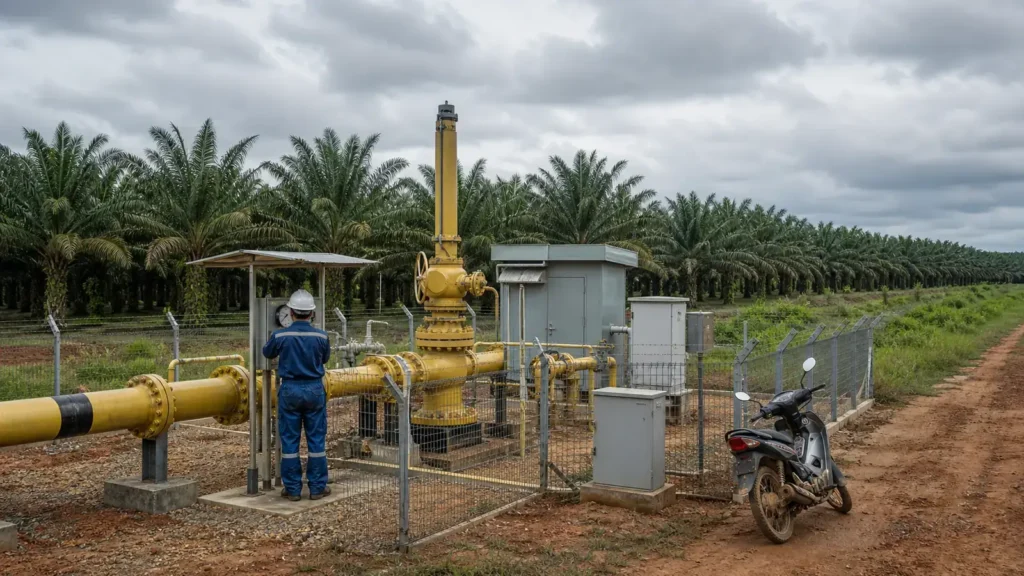
Most gas networks already accept hydrogen in the pipe. However, the share they allow is low and regulated. Many regions cap it at 2 percent, a few allow 4 percent to 6 percent, and one country specifies 10 percent. Another tests up to 20 percent on part of its network (2019). A 3 percent blend means hydrogen put into the gas stream at a regulated share. It cuts the energy the pipe delivers by around 2 percent (2019). Hydrogen pipelines and blending are two different answers to one question. Also, I separate them before the logistics section of the model is frozen. A blend rides the existing network. Pure hydrogen moves by pipeline where the route exists and utilisation is high, at around 1 USD per kg (2019). I start from where the molecule is made, at green hydrogen.
I order the rest of this piece in seven steps. It covers what a hydrogen line is and is not, then why the route decides the cost. Next comes what a blend does to the gas you sell and what is actually being built. From there it covers what the region has committed and what a lender checks before it funds. It closes with the five lines I write in the annex. Hydrogen pipelines and blending run through all of them, because the two routes answer different questions for the same molecule.
Hydrogen pipelines and blending: seven steps I work through
In short
- Answer: Most networks take a hydrogen blend, at a regulated share of 2 percent or a little above (2019).
- Cost: Gas pipeline transport sits near 1 USD per kg of H2 over about 1 500 km, capital and operating costs included (2019).
- Trade: A 3 percent blend removes around 2 percent of the energy a transmission line carries (2019).
- Build: Announced pipelines exceed 40 000 km by 2035, but only 9 percent is operational, under construction or committed (2026).
- Deal: Firm offtake stands at less than 2 Mtpa, about 5 percent of what announced projects could produce by 2030 (2025).
In this article
What a hydrogen pipeline is, and what it is not
Repurposing means taking a gas line that already exists, changing its pressure regime. Hydrogen then flows where natural gas used to flow. A blend, or hydrogen blend, means putting hydrogen into the gas stream at a share the regulator allows. Therefore, the pipe stays a gas pipe and nothing downstream changes. A compressor station is the machinery that re-pressurises the molecule as pressure drops along the route. A load factor is the share of a line’s capacity actually used across a year. A capacity booking is the contract that reserves a share of that line for one shipper. Delivered energy content is what your buyer receives at the far end, and it is what he pays for. The final investment decision is the point at which money is committed.
A repurposed line, a new hydrogen line and a blend are three different assets with three different contracts. The molecule does not change while the paperwork does. Hydrogen can ride as a blended share. It can also ride as a pure stream on a converted line or on a new line. Each route carries its own tariff, capacity terms and liability. I keep the three apart, because the cost of one never describes the cost of another.
What this means for you: name the asset you are modelling before you price it. The contract follows the asset and not the molecule.
Why the route decides the cost
Distance sets the answer. In The Future of Hydrogen (2019), taking all capital and operating costs into account. Moving hydrogen as a gas by pipeline costs around 1 USD per kg of H2 for about 1 500 km. Below that distance the gas pipeline is the cheapest delivery option (2019). Ammonia is the rival: converting hydrogen into it costs around 1 USD per kg of H2. Therefore, transmitting ammonia over 1 500 km lands near 1.5 USD per kg of H2 (2019). At 2 500 km the two routes become broadly similar at around 2 USD per kg of H2. A hydrogen pipeline needs more compressor stations as distance grows (2019). Compression, liquefaction and putting hydrogen into bigger molecules are the ways past its low energy density.
Also, the cheapest varies with geography, distance, scale and end use (2019). I settle that choice together with the end use in my technology maturity assessment.
What this means for you: if your buyer sits within about 1 500 km of production, I price the gas pipeline first. Then I check it against ammonia (2019).
What a blend does to the gas you sell
A blend is not free energy. Hydrogen carries about a third of the energy density of natural gas. Therefore, a 3 percent blend cuts the energy a transmission pipeline carries by around 2 percent. Users then burn more gas for the same need (2019). The allowed share is a regulatory number. Many regions cap blending at 2 percent, a few allow 4 percent to 6 percent, and one country specifies 10 percent. Another tests up to 20 percent on part of its network (2019). In scale, a 3 percent blend of global gas demand of about 3 900 bcm in 2018 would need close to 12 Mt of hydrogen. That is around 100 GW of electrolysers at a 50 percent load factor (2019). Blending also avoids the capital cost of new transmission and distribution assets (2019).
The upside is demand. The analysis in Batteries and hydrogen technology (2020) looks at a 5 percent blend by volume across all European Union gas use. That would raise low-carbon hydrogen demand by 2.5 million tonnes per year. It needs almost 25 GW of water electrolysis capacity (2020). A blend also creates reliable demand and cuts the emissions intensity of the gas delivered (2020). I set that trade against the regional cost of green hydrogen.
What this means for you: tell your buyer the energy loss first and the regulated share second. Both change what he receives for what he pays.
What is actually being built
Announcements and steel are different things. In the Global Hydrogen Review 2026, announced hydrogen pipeline projects, new and repurposed, exceed 40 000 km by 2035. Only 9 percent of that length is operational, under construction or has reached FID. The operational and committed length has grown by 70 percent since the previous edition (2026). The physical record is short. The first high-pressure hydrogen pipeline was commissioned in 2025 and China started building the world’s longest. Germany completed the largest repurposing to date, 400 km of a northern section finished in December 2025 (2026). In August 2025 work started on repurposing a 53 km cross-border line with commissioning expected in 2027 (2026). I read those facts against the hydrogen PtX and e-fuels demand that would fill them.
What this means for you: when someone quotes you a length, ask which part is operating. Then ask which part is under construction and which has reached its final investment decision (2026).
What Southeast Asia has actually committed
In November 2024 three parties signed a joint development framework agreement for a hydrogen pipeline linking Sumatra, the Riau Islands and Singapore. It carries a capacity of 100 000 tonnes of hydrogen per year, feeding a 600 MW hydrogen-ready gas turbine on Jurong Island. That complements a 340 MW open-cycle gas turbine announced in 2023, as the APERC Hydrogen Report 2024 records (2024). The same analysis notes a 600 MW hydrogen-ready plant on that island. It will start on a blend of natural gas and 30 percent hydrogen, with a move to 100 percent planned (2024). Demand uncertainty remains the primary barrier to market maturity and creates risks for long-term investment (2024).
That sequence matters. A pipeline gets priced on committed demand before it gets priced on a committed length. The length only earns once molecules flow through it under contract. I therefore ask for the offtake that covers the line before I read the routing. Also, an agreement signed in November 2024 is a framework, not capacity.
What this means for you: match every kilometre you plan against a signed volume, or treat the line as uncommitted.
What a lender checks before funding a line
A project must secure an offtake and reach access to support that closes the cost gap with unabated fossil production. It also needs a workable regulatory environment, with hydrogen infrastructure connecting producers to users. Enabling infrastructure such as electric grids and carbon dioxide networks must be available (2026). Those are the conditions I put in front of any line before it goes to a lender.
I then test announced against committed. Announced capacity is not operating capacity. Therefore, I ask which share of the line I rely on has reached FID (2026). The same test applies to storage that would balance the line. Only 7 percent of more than 11 TWh of announced underground storage by 2035 has reached FID (2026). Where those shares are thin I restructure the sequence rather than the story. Also, that work sits in the contracting and risk work.
What this means for you: bring the offtake, the support mechanism and the committed share of the line. A lender asks for those before he asks about the route.
The utility question I answer before the line
A utility buys molecules, not projects. The Global Hydrogen Review 2025 lists the challenges that remain: high production costs, demand and regulatory uncertainty, and infrastructure gaps (2025). Against that, cumulative firm offtake agreements stand at less than 2 Mtpa. That is about 5 percent of what announced projects could produce by 2030. A line sized on announcements is a line sized on hope (2025). Hubs aggregate demand and cut the risk carried by each individual commitment. This is why I prefer a hub route when a single buyer is thin (2025).
Utilisation rate is the number that decides whether the pipeline pays for itself. A pipe earns on the share of its capacity booked and moved, not on the share it could carry. I compute it from committed volume over committed capacity, and I date the commitment. The financing route behind that number is written out in how to finance a hydrogen project.
What this means for you: size the line on firm offtake and a realistic load factor. Leave the announcements outside the model.
The five lines I write in the pipeline annex
- Blend share: the blend share your regulator allows and the share of the pipe that limits it (2019).
- Energy loss: the energy a 3 percent blend takes out of the gas (2019).
- Committed length: the committed share of the announced length you depend on (2026).
- Conversion cost: the conversion and compression cost you carry on top of the line (2019).
- Covering demand: the demand that covers the line (2025).
The rule I extract for a developer is simple: the pipe is the cheap part. Also, the paperwork is the expensive part. I put the blend share, the energy loss, the committed share, the conversion cost. Also, the covering demand on one page, and I refuse to model a line that is missing most of them. Where one is absent, I mark the annex as conditional and I date the gap.
What this means for you: carry these five lines into the logistics section before it is frozen. Everything after them inherits their numbers.
Sources
- IEA, The Future of Hydrogen https://iea.blob.core.windows.net/assets/9e3a3493-b9a6-4b7d-b499-7ca48e357561/The_Future_of_Hydrogen.pdf, 2019.
- IEA, Global Hydrogen Review 2026 https://iea.blob.core.windows.net/assets/af4b6218-0311-4963-91ab-903cb18ca0ca/GlobalHydrogenReview2026.pdf, 2026.
- IEA, Global Hydrogen Review 2025, Five key questions about hydrogen https://www.iea.org/reports/global-hydrogen-review-2025/five-key-questions-about-hydrogen, 2025.
- IEA, Batteries and hydrogen technology: keys for a clean energy future https://www.iea.org/articles/batteries-and-hydrogen-technology-keys-for-a-clean-energy-future, 2020.
- Asia Pacific Energy Research Centre, APERC Hydrogen Report 2024 https://aperc.or.jp/file/2025/3/18/APERC_Hydrogen_Report_2024_final.pdf, 2025.
Frequently asked questions
Can hydrogen be blended into existing gas pipelines?
Yes, in most networks, at a regulated share, and it avoids the capital cost of building new transmission and distribution assets (2019). The maximum share is set region by region rather than by the pipeline operator (2019), and the blend is put into the gas stream without changing the equipment your buyer already owns (2019).
What percentage of hydrogen can a gas network take?
Many regions specify a maximum of 2 percent, a few specify 4 percent to 6 percent, one country specifies 10 percent while allowing less where filling stations are connected, and one country tests up to 20 percent on part of its network (2019). A 3 percent blend already cuts the energy carried by around 2 percent, because hydrogen holds about a third of the energy density of natural gas (2019).
Are hydrogen pipelines cheaper than shipping hydrogen as ammonia?
Below about 1 500 km the gas pipeline is the cheapest delivery option at around 1 USD per kg of H2 including capital and operating costs, while conversion to ammonia costs around 1 USD per kg of H2 on top of transmission (2019). At 2 500 km the two routes are broadly similar at around 2 USD per kg of H2, since a hydrogen pipeline needs more compressor stations as distance grows (2019).
How much hydrogen pipeline capacity is actually operating?
Announced projects exceed 40 000 km by 2035, but only 9 percent of that length is operational, under construction or has reached FID, with the first high-pressure hydrogen pipeline commissioned in 2025 (2026). The operational and committed length has grown by 70 percent since the previous edition, close to 1 500 km added (2026).
Not sure your project would survive a credit conversation?
A short call is usually enough to see where your project stands.
If you want the annex built for your own route, I offer technology maturity and scale-up support, and I write the five lines above into a model your lender can read.
I do not provide investment advice or arrange investments. In addition, I act as a strategic advisor and facilitator.

Alex, Founder of WeConnect Asia
I help low-carbon fuel and carbon removal project developers in Southeast Asia secure the commercial and financial partners needed to reach FID.
Related articles

Pitching a Climate Tech Company to Strategic Investors: What the Corporate Has to Believe Before It Writes a Cheque
How to pitch a climate tech company to strategic investors: the metric cluster, the readiness evidence and the ask that corporates fund.

Biomethane: What It Is, How It Is Made and Who Buys It
Biomethane is biogas cleaned to pipeline quality. I explain how it is made, how it differs from biogas and who buys it in Southeast Asia.

CO2 Sourcing for e-SAF Projects: What the Rules Allow and What the Contract Must Say
Biogenic CO2, direct air capture or industrial flue gas: which sources an e-SAF plant may use, what they cost and which contract terms make the fuel certifiable.

Operating Performance Guarantees for SAF Plants: What Lenders Ask For
Minimum guarantees, performance damages, retesting and who stands behind them: the operating guarantees a SAF plant needs to keep debt and offtake intact.

EPC and Construction Risk in SAF Plants: What a Lender Actually Tests
FEED scope, convertible EPC, performance guarantees and damages caps: the construction risk questions a SAF project must answer before financial close.

Matching Feedstock and Offtake Risk Back-to-Back in a SAF Project: How Lenders Read the Chain
Lenders do not buy a feedstock plan and an offtake plan separately. They buy the link between the two, and the link is where most SAF files break.