
Home » Why Hydrogen Projects Get Cancelled Before FID: The Four Reasons, in Order
Why Hydrogen Projects Get Cancelled Before FID: The Four Reasons, in Order
10 min read · Dec 2, 2025 · By Alex
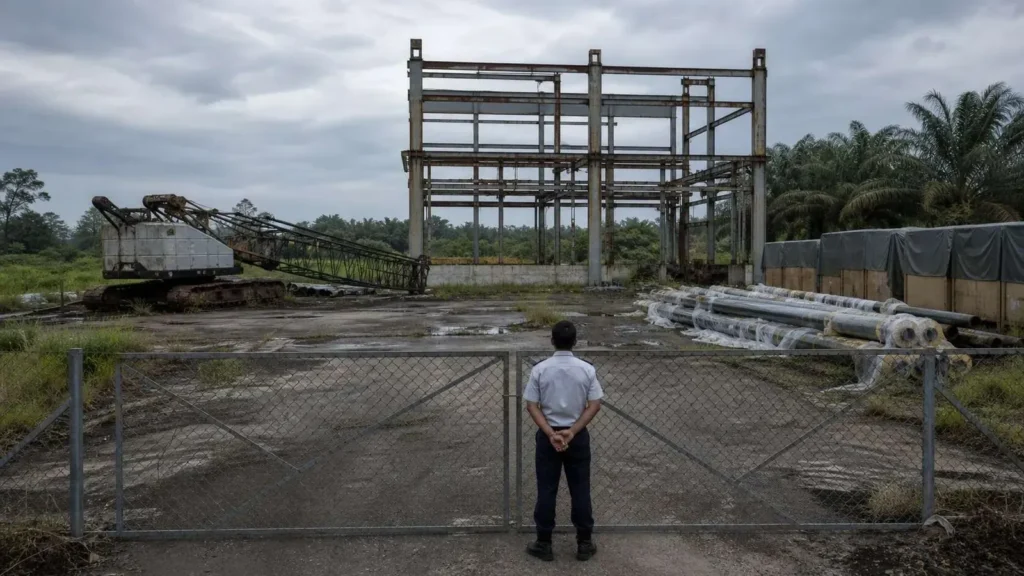
Hydrogen projects disappear between announcement and final investment decision, and the published record of the first wave now shows what killed them. Cancellations sort into four recorded reasons, published in October 2025, in this order: regulatory and permitting issues at 44 percent, economic challenges at 28 percent, technical difficulties at 13 percent and lack of prospective clients at 9 percent. A further 31 percent of the cancellations recorded in October 2025 were projects abandoned at an early stage, often on overoptimistic cost reduction assumptions or premature expectations of market development. So the answer to why hydrogen projects fail sits in that record, and none of the four reasons is a technology verdict. I keep the October 2025 record beside the hydrogen, PtX and e-fuels hub.
I separate four things in what follows: the recorded reasons for cancellation, the money that never arrived, the buyer that never signed, and what the 2026 numbers added. All of it comes from the International Energy Agency’s annual hydrogen reviews.
In short
- The four reasons: 44 percent regulatory and permitting issues, 28 percent economic challenges, 13 percent technical difficulties and 9 percent lack of prospective clients, recorded in October 2025.
- The early stage: 31 percent of those October 2025 cancellations were projects abandoned before they were real.
- The capital gate: 9 percent of announced projects had secured committed investment in 2025, against 0.5 percent in emerging economies where capital costs can reach 15 percent.
- The buyer gate: firm offtake agreements totalled less than 2 Mtpa in 2025, 5 percent of what announced projects could produce by 2030.
- The deadline: 22 Mt of announced production for 2030 needs an investment decision by early 2027.
In this article
What the record actually says
The four reasons come from cancelled projects that were asked why they stopped, and the 2025 report’s chapter on production published them in October 2025: regulatory and permitting issues at 44 percent, economic challenges at 28 percent, technical difficulties at 13 percent and lack of prospective clients at 9 percent. A further 31 percent of those cancellations, in the same October 2025 record, were projects abandoned at an early stage. The list describes paperwork, money, engineering and buyers, in that order.
Vocabulary keeps this honest. A pipeline is what has been announced, not what has been built. A final investment decision, written FID, is the moment capital is committed, while an investment stage is an earlier step and is not the same thing. Permitting is the administrative authorisation a project must obtain. An offtake is the contract under which a buyer takes the molecule. Cost of capital is the return a project must promise those who fund it.
What this means for you: check your file against those six terms before you read any commentary, because each one maps to a recorded reason.
The decision that never arrives
The 2025 review recorded a fall for the first time: the production that announced projects could reach by 2030 fell to 37 Mtpa in 2025 against 49 Mtpa a year earlier. Electrolysis projects were responsible for more than 80 percent of that drop, and the delays and cancellations hit early-stage projects across Africa, the Americas, Europe and Australia in 2025. Over the same period the number of projects that took a final investment decision grew by almost 20 percent and now stands at 9 percent of the total pipeline to 2030.
Projects already operational or at final investment decision are set to reach 4.2 Mtpa by 2030, a fivefold rise on 2024, taking low-emissions hydrogen from less than 1 percent of production in 2025 to around 4 percent in 2030, with a further 6 Mt of strong potential if demand policy lands. More than 200 projects have taken a final investment decision since 2020.
The gate is capital, and the file has to be ready before the gate moves; I set out that sequencing in how a hydrogen project is financed.
What this means for you: treat the final investment decision as a date you prepare for now, not as an outcome you wait for.
What the cost of money does before anything is built
The five key questions section of that review put the capital gate in numbers published in 2025: 9 percent of announced projects worldwide have secured committed investment, against 0.5 percent in emerging economies. Committed investment means money a funder has signed for, not money a funder has discussed. In that same 2025 assessment, only 5 percent of projects in those regions show moderate potential for operation in 2030, 80 percent of them are export-oriented, meaning built to sell their output abroad, and capital costs can reach 15 percent, three times higher than in advanced economies.
As of 2025, Africa, Latin America and Southeast Asia together could produce over 9 Mtpa by 2030, around 25 percent of announced global production, if every announcement materialises. Three barriers sit behind those numbers: heavy reliance on uncertain export markets, slower renewable deployment and financing difficulty.
I follow that arithmetic through in green hydrogen project finance in Southeast Asia.
What this means for you: price the cost of capital your region actually offers before you model anything, because 15 percent in 2025 changes every answer downstream.
The buyer that was never there
Cumulative firm offtake agreements, meaning contracts that bind the buyer rather than announce an intention, total less than 2 Mtpa as of 2025, merely 5 percent of what announced projects could produce by 2030. Producers need reliable buyers to justify large investment, and a stated intention is not that.
Nearly 45 percent of the hydrogen from announced production projects is intended for export, more than 16 Mtpa equivalent by 2030 if all of them are built, yet only 5 percent of export-oriented projects have reached the investment stage, an earlier step than a final investment decision, recorded in 2025.
The December 2025 Southeast Asia briefing gives the flow behind those shares: 7 Mtpa of offtake announced across 2021 to 2025 of which only 1.6 Mtpa is firm, and 16.5 Mtpa of export projects for 2030 of which only 4.2 Mtpa has an identified buyer.
That gap is why I read what an offtake agreement has to contain as the document that decides survival.
What this means for you: if your file carries no firm offtake in 2025 terms, you have a marketing plan rather than a project.
What the 2026 numbers changed
The 2026 review shows the announced pipeline has shrunk to 27 Mt by 2030, mostly through delays beyond 2030 and cancellations. Since the previous assessment, 300 ktpa of additional production has reached a final investment decision, but investment momentum slowed in 2025. The barriers named in 2026 are high costs, uncertain demand, slow or complex regulation and insufficient infrastructure.
By 2026, projects committed or with strong potential for 2030 had fallen from 10 Mt to just above 6 Mt, and 22 Mt of potential production could lose any chance of starting up by 2030 if investment decisions are not taken by early 2027, two thirds of it in Europe, North America and Latin America. Meanwhile demand passed 100 Mt in 2025 and low-emissions production grew 20 percent to almost 1 Mt in 2025.
For what that means for money already looking at the region, I use green hydrogen investment in Southeast Asia.
What this means for you: if your investment decision is not taken before early 2027, your 2030 slot is likely gone.
What I stop reading in a cancellation list
Five readings I refuse. First, a cancellation at an early stage is a failed assumption, not a failed technology, and 31 percent of the record published in October 2025 is exactly that. Second, an announced project is not a project: in Southeast Asia announced capacity equals 12 percent of current regional demand and only 6 percent has reached a final investment decision, as of December 2025.
Third, a national announcement is not a support scheme in force. Fourth, an export destination is not a customer: 4.2 Mtpa of 16.5 Mtpa of export projects for 2030 carry an identified buyer, as of December 2025. Fifth, a cost gap, meaning the difference between what low-emissions hydrogen costs and the fossil solution it replaces, is not permanent: renewable hydrogen in China is expected to become cost-competitive by 2030 while the gap stays wider where gas is cheap.
What this means for you: the four recorded reasons are a checklist rather than a verdict, so I run them as an audit of my own file before anyone else runs it.
What a project still alive should do differently
The recommendations published in 2025 point at shovel-ready projects targeting existing applications, faster policy implementation to create demand through regulations and support schemes, support for production with stability and long-term visibility, expedited infrastructure through efficient permitting and co-ordination between authorities, and expanded guarantees from export credit agencies and public finance institutions for first-of-a-kind projects. A guarantee is a promise by a public body to cover part of the loss if a project fails, and first-of-a-kind means a project with no proven performance record.
The later numbers add that governments should review their 2030 targets against market reality and concentrate infrastructure on industrial and port clusters. That is the same list a lender will test a file against. The same gate sits on every pathway, including power-to-liquid, so I read power-to-liquid projects that took their investment decision as the parallel case.
What this means for you: build a file that a guarantee programme, a permitting authority and an offtake buyer can each say yes to in 2026.
The four lines I would put in front of a lender
I would put four dated lines on the first page and nothing else. None of them is an opinion, and each one dates itself, so a lender can check it in a single search.
- The recorded reasons, October 2025: 44 percent regulatory and permitting issues, 28 percent economic challenges, 13 percent technical difficulties, 9 percent lack of prospective clients, with 31 percent abandoned at an early stage.
- The capital gate, 2025: 9 percent of announced projects committed against 0.5 percent in emerging economies, capital costs at 15 percent.
- The buyer gate, 2025: less than 2 Mtpa of firm offtake against 5 percent of announced production, and 1.6 Mtpa firm out of 7 Mtpa announced across 2021 to 2025.
- The deadline, 2026: 22 Mt at risk without an investment decision by early 2027.
I would then say plainly what is already signed and what is not.
What this means for you: if a lender asks why this file now, those four dated lines are the answer I would hand over.
Sources
- IEA, Global Hydrogen Review 2025 https://iea.blob.core.windows.net/assets/a6c466dd-b6f0-44bd-a60a-6940eccfb1c3/GlobalHydrogenReview2025.pdf, October 2025.
- IEA, Global Hydrogen Review 2025, Executive summary https://www.iea.org/reports/global-hydrogen-review-2025/executive-summary, 2025.
- IEA, Global Hydrogen Review 2025, Five key questions about hydrogen https://www.iea.org/reports/global-hydrogen-review-2025/five-key-questions-about-hydrogen, 2025.
- IEA, Global Hydrogen Review 2026, Executive summary https://www.iea.org/reports/global-hydrogen-review-2026/executive-summary, 2026.
- IEA, Global Hydrogen Review 2025: Southeast Asia briefing, 9 December 2025 https://iea.blob.core.windows.net/assets/745a259b-9cb7-4e1d-9ba1-a8b63d1eaae8/GHR2025_SEA_Webinar.pdf, 9 December 2025.
Frequently asked questions
Why do hydrogen projects get cancelled before FID?
Four recorded reasons, in order: regulatory and permitting issues at 44 percent, economic challenges at 28 percent, technical difficulties at 13 percent and lack of prospective clients at 9 percent, all recorded in October 2025. A further 31 percent of those cancellations were projects abandoned at an early stage on overoptimistic cost reduction assumptions or premature expectations of market development, which is why the paperwork and the money come first in any diagnosis of a dead file.
Are most cancellations technical failures?
No. Technical difficulties account for 13 percent of the October 2025 record, behind regulatory and permitting issues at 44 percent and economic challenges at 28 percent, and the largest single recorded barrier is permitting. The engineering part of a project is the smallest of the four recorded reasons, and it is the paperwork, the economics and the missing buyer that end most files.
Does a cancelled project mean the technology failed?
No. 31 percent of the cancellations recorded in October 2025 were early-stage projects whose cost reduction assumptions or market expectations did not hold, and low-emissions production still grew 20 percent in 2025 to almost 1 Mt. A first wave that stops early is a signal about assumptions, sequencing and timing, not about the chemistry or the equipment inside the plant.
What is the deadline that decides a 2030 project?
Early 2027. 22 Mt of announced production could lose any chance of operating by 2030 if investment decisions are not taken by then, and committed or strong-potential capacity for 2030 has already fallen from 10 Mt to just above 6 Mt as of 2026. That is the hard date in the 2026 numbers, and it applies to any file that still needs its capital committed.
Not sure your project would survive a credit conversation?
A short call is usually enough to see where your project stands.
If you want a second set of eyes on the file before the gate, I provide contracting and risk management support for promoters at the structuring stage, working through the four recorded reasons and the two gates above.
I do not provide investment advice or arrange investments. I act as a strategic advisor and facilitator.

Alex, Founder of WeConnect Asia
I help low-carbon fuel and carbon removal project developers in Southeast Asia secure the commercial and financial partners needed to reach FID.
Related articles

Pitching a Climate Tech Company to Strategic Investors: What the Corporate Has to Believe Before It Writes a Cheque
How to pitch a climate tech company to strategic investors: the metric cluster, the readiness evidence and the ask that corporates fund.

Biomethane: What It Is, How It Is Made and Who Buys It
Biomethane is biogas cleaned to pipeline quality. I explain how it is made, how it differs from biogas and who buys it in Southeast Asia.

CO2 Sourcing for e-SAF Projects: What the Rules Allow and What the Contract Must Say
Biogenic CO2, direct air capture or industrial flue gas: which sources an e-SAF plant may use, what they cost and which contract terms make the fuel certifiable.

Operating Performance Guarantees for SAF Plants: What Lenders Ask For
Minimum guarantees, performance damages, retesting and who stands behind them: the operating guarantees a SAF plant needs to keep debt and offtake intact.

EPC and Construction Risk in SAF Plants: What a Lender Actually Tests
FEED scope, convertible EPC, performance guarantees and damages caps: the construction risk questions a SAF project must answer before financial close.

Matching Feedstock and Offtake Risk Back-to-Back in a SAF Project: How Lenders Read the Chain
Lenders do not buy a feedstock plan and an offtake plan separately. They buy the link between the two, and the link is where most SAF files break.