
Home » Why Waste-to-Energy Projects Stall Before FID
Why Waste-to-Energy Projects Stall Before FID
10 min read · Dec 19, 2025 · By Alex
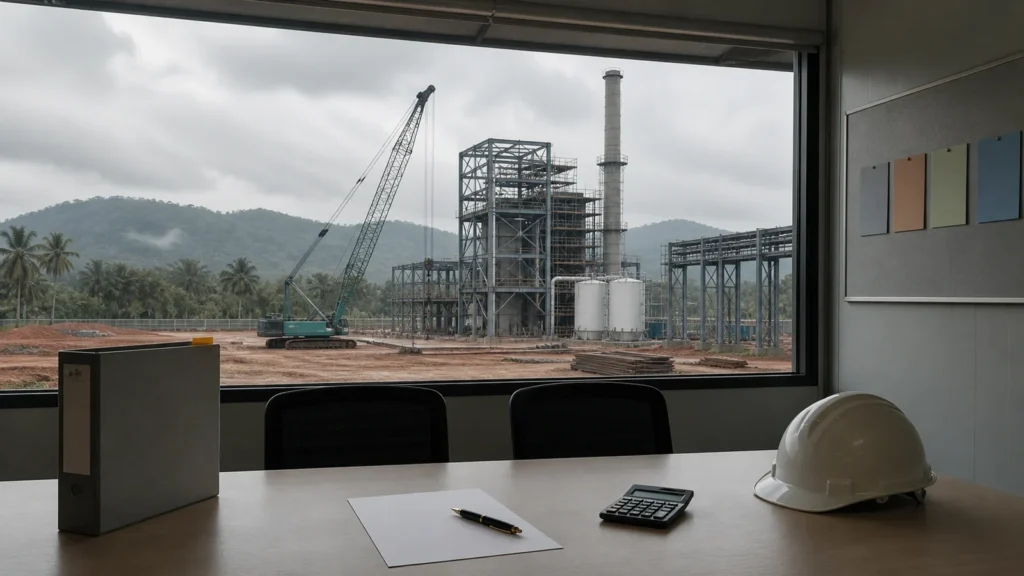
A waste-to-energy plant (waste burned to make power) can stop before FID, when lenders and sponsors commit. The stop is rarely mechanical. Five dated reasons explain why waste to energy projects fail: a waste stream no one guarantees (a 2001 tender drew one bid), a payer that will not carry the treatment cost (9-10 USD per tonne asked against about 25-30 USD needed in a 2014 study), a risk allocation no lender will price, a procurement that drags (about 4 years for one 2012 tender), and a community not carried (emissions and health concerns reported in August 2026). I name each one and show the document that closes it.
I work them in a fixed order: the waste, the risk nobody prices, waste quality, the payer, the community, then what a completed close looks like and how I fix each. Each fix buys the next one. I read the record in that order so a stalled file can be named, not argued about.
In short
- The waste: nobody guarantees the tonnage or its composition, and the plant has nothing reliable to burn.
- The risk: one bid answered a 2001 tender that transferred every risk to the developer.
- The quality: wet, unsorted waste lowers energy content, burning performance and plant availability.
- The payer: 9-10 USD per tonne asked against about 25-30 USD needed in 2014.
- The community: emissions, air quality and health concerns raised in 2026 can stop siting.
In this article
The waste that never arrives
The line I keep in mind comes from the Ramboll interview of January 2025: garbage in, energy out. The guarantee of waste composition drives the whole project. Governments expect a type or amount of waste and assume wrongly how composition changes over time, and the result is a plant run inefficiently. The public sector guarantees the waste stream; everything else generally rests with the private sector. The answer is a waste characterisation study, a measurement of what the waste actually is, across all seasons for at least one year, wet and dry, with top-down projections and bottom-up sampling where the waste lands. Contract form follows the risk: Design, Build, Own, Operate and Transfer is the most common because the government balances risk in one single model.
What this means for you: order the study before you release anything, and hold the tender until it covers a full wet and dry cycle. On an assumed mix, bidders price what nobody measured.
When the market refuses the risk allocation
The Infrastructure Asia overview of waste management in Asia records Singapore’s 2001 tender for a fifth waste-to-energy plant: one bid, because the buyer asked the developer to carry finance, design, operational and demand risk. That is a market refusal of an allocation, not of a plant. A study was commissioned, and in 2005 the project returned with take-or-pay: buy 100 percent of the incineration capacity or pay a penalty, so demand risk sits with the buyer through a capacity payment whatever the utilisation. It drew responses, was awarded in 2005 and ran from 2009 at 800 tonnes a day and about 22 MW.
Two floors also kill a bid: at least 500 tonnes per day to make an incineration plant economic, and about 6 MJ/kg for grate combustion, a level regional municipal solid waste often sits below. It belongs to waste-to-energy inside the circular industries.
What this means for you: write down which risks the buyer keeps before bidding starts. An empty list invites the 2001 answer again.
Waste quality is an investment risk, not an operating detail
Feedstock variability remains the key technical factor, according to the August 2026 legal briefing on Indonesia’s new regulation, because municipal solid waste there is typically wetter and less segregated than in mature markets, which affects calorific value, the energy released per kilogram when the waste burns, combustion efficiency and plant availability. Quality and consistency of supply is therefore a key investment and financing consideration, not merely an operational issue. Developers, contractors and operators must set waste acceptance criteria, fuel specifications, testing regimes and contractual relief where supplied waste falls outside agreed parameters; the solid fuel in question may be refuse-derived fuel, waste processed into a solid form. Earlier proposals, including one in Jakarta, encountered financing and affordability challenges. Parts of the payment mechanism are still being finalised through derivative regulations and project agreements. The plant planning guide lists these specifications.
What this means for you: put acceptance criteria, fuel specification and a testing regime in the contract before bidding starts, with the relief that applies when the waste fails them.
The payer who will not carry the cost
The 2014 Carbon Trust and IESR study of Indonesia sets out the two revenue lines: the tipping fee, the payment per tonne for taking the waste, and the sale of electricity under a feed-in tariff, a fixed price for the contract term. Local authorities appeared ready to pay about 9-10 USD per tonne while the industry said it needed about 25-30 USD per tonne for incineration. Developers struggled to assemble a revenue package reaching an internal rate of return of about 15 percent. One 2012 tender ran about 4 years, was judged not transparent and drew political pressure for lower tipping fees even after award. Illegal dumping keeps disposal cheap and erodes what controlled sites and plants can charge. The national infrastructure guarantee mechanism had not yet been applied to waste-to-energy.
Both lines belong in the offtake arrangements I fix first.
What this means for you: name the payer and the price for each line before you model returns. A package short of the cost is one nobody signs.
The community that can stop a plant
The regional roundup of August 2026 records communities near waste-to-energy plants expressing concerns about emissions, air quality and health. Without transparent regulation, rigorous monitoring and genuine community consultation, the projects risk repeating the environmental injustices seen elsewhere, so the cure could be worse than the disease. The consultation must be genuine and early: a plant sited without it carries a delay risk no model prices. In the Bali case the location was chosen in part to protect the island’s tourism economy, which shows how siting is settled before any contract is signed.
The same record shows 31 million tonnes of plastic waste a year generated by six of ten ASEAN countries in 2026, the pressure that sits behind those siting decisions. Siting and delivery are one question, so I read waste supply arrangements together with the neighbourhood file.
What this means for you: write the monitoring commitments and the consultation record before ground breaking, not after the first complaint.
What a close actually looks like
Two plants already run commercially in Indonesia: one in Surabaya at 11-12 MW with up to 1,600 tonnes a day, one in Surakarta, both under a 2018 decree that named twelve cities. One landfill gas plant used only about two thirds of its 6 MW installed capacity for technical reasons; it was built for 700 billion roupies (70 million USD) at a tipping fee of 114,000 roupies a tonne (9.3 USD). A regulation signed on 10 October 2025 fixes a 30-year contract at USD 0.20 per kWh, requires the state electricity company to sign within 10 working days and obliges local governments to commit 1,000 tonnes a day. A first public-private partnership reached financial close, when contracts and financing are signed, before ground breaking in July 2026 at about 2,131 tonnes a day and 40.79 MW. Project finance in Southeast Asia rewards exactly that shape.
What this means for you: check your file against these dated milestones: a signed volume, a fixed price, a signing deadline, a close before excavation.
The order I fix them in
I work five fixes in sequence. First, a written volume guarantee from the authority that owns the waste: the regulation of 10 October 2025 obliges local governments to commit 1,000 tonnes a day for the whole operating life. Second, a payment mechanism with a named payer and a price that clears the cost, tested against the 2014 gap between about 9-10 USD and about 25-30 USD per tonne. Third, a risk allocation a lender can price, with relief where the waste falls outside specification, the acceptance criteria and testing regimes still being finalised in 2026. Fourth, a procurement calendar with a published award date, the discipline that let a 2005 award happen after a study. Fifth, a community record of monitoring commitments made before construction, written while the 2026 emissions and health concerns can still be answered.
What this means for you: run these five in order and stop the moment one is missing, because each later fix rests on the one before it.
How I would write a stall post-mortem
I write a post-mortem as dated rows, because the argument belongs in the next tender, not in the file. Each row names the year, the figure and the document that was missing.
- 2001: one bid against a full risk transfer of finance, design, operational and demand risk.
- 2012: a tender that ran about 4 years before award, judged not transparent.
- 2014: about 9-10 USD per tonne asked against about 25-30 USD needed for incineration.
- 2025: a 1,000 tonnes a day volume commitment written into the regulation of 10 October 2025.
The four rows are enough to restart a process: each one names the document that was missing, not the technology that was wrong. The newest row is also the strongest precedent, because a written volume duty changes how a buyer prices the whole file.
What this means for you: read the four rows against your own file, keep the row that matches, and restart the process with that one reason named first.
Sources
- Ramboll, Garbage in, energy out: what you need to know when developing waste-to-energy projects in Southeast Asia, 2025.
- Infrastructure Asia, Trashing it Out: Waste Management in Asia, n.d.
- HFW, Indonesia’s waste-to-energy sector: the next phase of investment and delivery, 2026.
- Carbon Trust and Institute for Essential Services Reform, Waste to energy in Indonesia, 2014.
- The Southeast Asia Desk, Waste-to-Energy Plants Surge Across Southeast Asia, 2026.
Frequently asked questions
Why do waste-to-energy projects stall before FID?
Five recurring reasons: waste that nobody guarantees, a payer below the needed cost, a risk allocation nobody will price, a procurement that drifts and a community that has not been carried. In 2001 one bid answered a tender that asked the developer to carry finance, design, operational and demand risk. The stop precedes the money because the terms are unsettled while the machinery is ready.
How long does a waste-to-energy procurement take?
It depends on the terms. The 2005 version of one tender moved quickly enough to be awarded that year after a 2001 attempt drew a single bid, while one 2012 tender ran about 4 years before award. A published award date on the calendar is the cheapest discipline a buyer has, because it tells bidders when their price must hold.
Is waste quality or waste price the bigger problem for a project?
Both, and they are linked. Waste in the region is wetter and less segregated, which drags calorific value, combustion efficiency and availability, while the fee offered in 2014 was about 9-10 USD a tonne against about 25-30 USD needed. A plant can be technically sound and still not be paid; a high fee cannot rescue a fuel that will not burn as specified.
Can community opposition stop a waste-to-energy plant?
Yes. Concerns about emissions, air quality and health have been raised by communities near these plants, and without transparent regulation, monitoring and genuine consultation a project can lose its support before construction, which is why siting is decided early. The 2026 record of 31 million tonnes of plastic waste a year from six of ten ASEAN countries shows why the pressure keeps rising.
Not sure your project would survive a credit conversation?
A short call is usually enough to see where your project stands.
If your project is slowing down, I can name which of the five reasons is live in your file and what document closes it. I work on contracting and risk management for developers between announcement and financial close, starting from the record you already have rather than a new process.
I do not provide investment advice or arrange investments. I act as a strategic advisor and facilitator.

Alex, Founder of WeConnect Asia
I help low-carbon fuel and carbon removal project developers in Southeast Asia secure the commercial and financial partners needed to reach FID.
Related articles

Pitching a Climate Tech Company to Strategic Investors: What the Corporate Has to Believe Before It Writes a Cheque
How to pitch a climate tech company to strategic investors: the metric cluster, the readiness evidence and the ask that corporates fund.

Biomethane: What It Is, How It Is Made and Who Buys It
Biomethane is biogas cleaned to pipeline quality. I explain how it is made, how it differs from biogas and who buys it in Southeast Asia.

CO2 Sourcing for e-SAF Projects: What the Rules Allow and What the Contract Must Say
Biogenic CO2, direct air capture or industrial flue gas: which sources an e-SAF plant may use, what they cost and which contract terms make the fuel certifiable.

Operating Performance Guarantees for SAF Plants: What Lenders Ask For
Minimum guarantees, performance damages, retesting and who stands behind them: the operating guarantees a SAF plant needs to keep debt and offtake intact.

EPC and Construction Risk in SAF Plants: What a Lender Actually Tests
FEED scope, convertible EPC, performance guarantees and damages caps: the construction risk questions a SAF project must answer before financial close.

Matching Feedstock and Offtake Risk Back-to-Back in a SAF Project: How Lenders Read the Chain
Lenders do not buy a feedstock plan and an offtake plan separately. They buy the link between the two, and the link is where most SAF files break.