
Home » Who Invests Equity in Waste-to-Energy Projects in Southeast Asia?
Who Invests Equity in Waste-to-Energy Projects in Southeast Asia?
10 min read · Jan 2, 2026 · By Alex
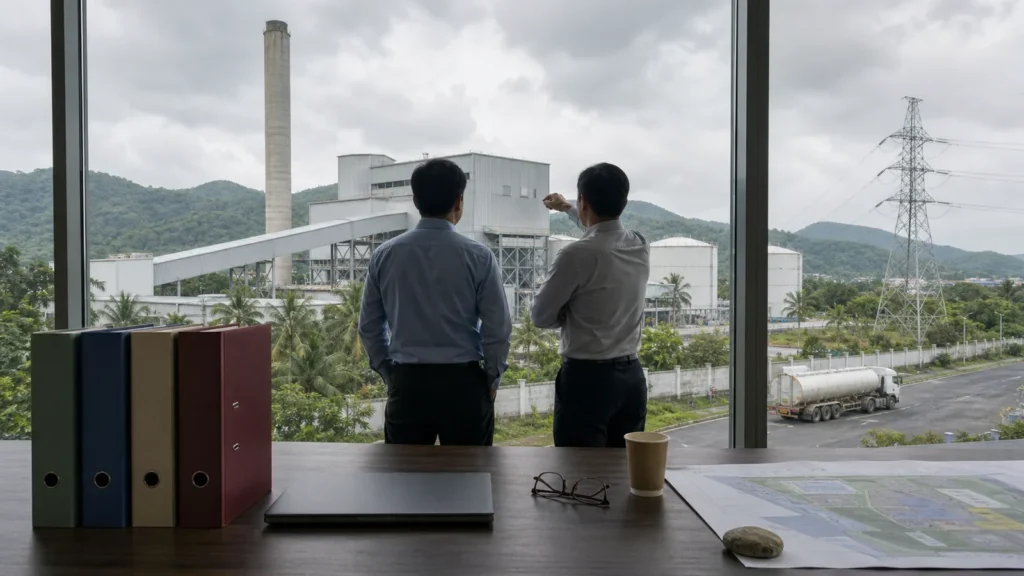
Four kinds of money actually buy equity in a waste-to-energy plant. This means the burning of municipal or industrial waste to make electricity. In Southeast Asia, the pools are the sponsor’s capital, climate and impact funds, and regional funds fed by institutional money. In addition, strategic industrial partners sit alongside them. Equity is the owners’ capital that sits under the debt. Therefore, these four pools arrive in a fixed order rather than all at once. I write for a developer at pre-FID stage who must know which cheque to chase first. Therefore, I set out the order in which waste to energy equity investors commit, against the published record of the waste-to-energy industry.
Two dated deals frame the range. In July 2025 one fund put 9 million USD into a Singapore company. That cheque sat inside a 23 million USD commitment from managed funds. In July 2024 a development bank approved up to 5 million USD into a fund targeted at 175 million USD.
The order I chase waste to energy equity investors in
I take the four pools in the order I would chase them, then the diligence each one runs before it commits, then the sponsor’s own contribution and the precedent I quote when a fund asks if this is financeable. After that come the sequence of the money, the five questions for a second meeting. Also, the plan I would write.
In short
- Four pools: the sponsor’s own capital, climate and impact funds, regional funds, strategic industrial partners.
- Order of entry: each pool signs at a different stage, so the cheque I chase changes with the stage.
- Dated evidence: July 2025 put 9 million USD inside a 23 million USD commitment; July 2024 approved up to 5 million USD into a 175 million USD fund.
- Sequence: volume first, revenue second, equity third, debt last.
- Diligence: a proven technical solution, an optimal risk allocation and a clear payment mechanism, all set at pre-feasibility.
In this article
The four kinds of money that actually buy equity here
The July 2025 GCPF announcement on KIS Group is the clearest window I have on pool two. GCPF is a climate-focused blended finance fund. This means public and private money pooled in one vehicle so private capital takes a smaller risk, run by a Swiss impact asset manager. On 2 July 2025 it put 9 million USD into a Singapore company inside a commitment of 23 million USD from managed funds.
That company brings more than 18 years in waste treatment and more than 60 client projects. Its clients include Unilever, Cargill, LG and SIPEF. The funding supports bio-energy plants in Indonesia built under BOOT, meaning build, own, operate, transfer. Its founder set six BioCNG projects by 2026, 25 projects by 2027 and 100 projects by 2029, with Unilever as anchor offtaker for the first two plants commissioned in Indonesia. An anchor offtaker is the buyer who signs first and makes the rest of the stack possible.
What this means for you: I chase sponsor capital and the climate fund cheque before any strategic partner. A partner with an offtake contract only joins once the plant has a record.
What each pool wants to see before it wires anything
The Ramboll interview of January 2025 puts it plainly. There is a strong government and public mandate across South East Asia. Plots of land are already allocated in Indonesia. It will take private investment to get projects developed. Both public and private money are needed. Therefore, I treat a climate tech investor and a public body as one package rather than two alternatives.
In January 2025 the same reading says more green financing is coming from development banks. However, not every country will have a multilateral bank ready to take on the debt or equity. Therefore, the public and private sectors have to work together. Bankability has to exist from early pre-feasibility: a proven technical solution, an optimal risk allocation. Also, a clear payment mechanism covering gate fees and feed-in tariffs.
What this means for you: I ask for the gate fee and the tariff in writing before I price equity, because a strong mandate without a payment mechanism at pre-feasibility buys nothing.
The funds that institutional money feeds
The July 2024 Asian Development Bank fund approval shows how institutional money reaches a small sponsor. The bank invested up to 5 million USD into a regional private equity fund targeted at 175 million USD. That fund backs early-stage infrastructure companies using scalable business models and proven low carbon technologies in South East Asia. That is the development finance institution route I map for a sponsor.
The concept was cleared on 23 April 2024 and approved at the credit committee on 22 July 2024. A faster approach report followed in July 2024 and a preliminary poverty and social analysis in June 2024. The operation carries the number 58152-001. An equity cheque of that size is a commitment to a fund, not to a single plant. Therefore, the money lands with the manager first and reaches your project on the manager’s timetable.
What this means for you: if my plan depends on a fund ticket, I open that relationship at pre-feasibility, because 5 million USD out of a 175 million USD vehicle moves on fund timing.
What the sponsor still has to put in
The August 2026 HFW briefing on Indonesia’s new regulation gives the sponsor’s share of the work. A first public-private partnership reached commercial close, which I read as financial close. That is the day the financing agreements are signed and the money becomes available, before ground breaking in July 2026. The project runs at about 2,131 tonnes of waste a day and about 40.79 MW. Its sponsors are led by Sumitomo Corporation, Hitachi Zosen and PT Energia Prima Nusantara.
Perpres 109/2025, signed on 10 October 2025, sets eligibility at 1,000 tonnes of waste a day, fixes a tariff of 0.20 USD/kWh for a 30-year agreement signed within 10 working days, expects licences within two months, and counts on financing in part from about IDR 50 trillion of Patriot Bond. About 200 entities had expressed interest in the programme and 85 qualified in a second selection wave.
What this means for you: I check the project finance guide for this stage first, because the six municipalities behind the first partnership show that volume commitments and sponsor equity arrive together.
The precedent I use when an investor asks whether this is financeable
The ADB case story of October 2015 is what I quote: a loan of 100 million USD from the development bank sat beside a loan of 100 million USD from international banks, and that pairing is what a waste-to-energy sponsor shows when a fund asks whether the structure carries both layers.
Individual projects were grouped into one transaction to reach the minimum loan size, with a single holding company paying even if one project defaults under the sponsor’s full and irrevocable guarantee. The concession was exclusive for at least 25 years with a guaranteed minimum waste volume. On average, one third of revenue came from tipping fees and two thirds from the tariff. The portfolio added 6,200 tons of capacity, 132 MW and 630 GWh a year, approved in May 2009 and completed in December 2013, including 190 GWh from a 36 MW plant running on 2,000 tons of waste.
What this means for you: the sponsor guarantee is the line an equity investor reads first, so I put it on page one of the equity memo, before any discussion of return.
The order I put the money in
I put the money in one order: volume first, revenue second, equity third, debt last. Volume is the July 2026 partnership that closed commercially before ground breaking at about 2,131 tonnes a day, backed by six municipalities.
Revenue comes next: the 0.20 USD/kWh fixed on 10 October 2025 for a 30-year agreement plus the gate fee, and in the 2015 structure two thirds of revenue came from the tariff. Equity follows: the July 2025 round that set six BioCNG projects by 2026, then 25 by 2027 and 100 by 2029, plus the July 2024 approval of up to 5 million USD into a 175 million USD vehicle. Debt sits last: in January 2025 the reading was that development banks bring green financing but cannot carry every project.
What this means for you: I use strategic partnerships to lock the volume and the buyer before I ask an equity investor for a term sheet.
The five questions I ask an equity investor before the second meeting
I put these five questions in writing before the second meeting, in this order:
- Which stage do you enter, pre-construction or after commercial close?
- Do you take construction risk or only operating risk?
- What return threshold do you underwrite?
- Do you require an anchor offtaker before you commit?
- What happens to your stake if the tariff is renegotiated?
The last two carry the money: the tariff set on 10 October 2025 at 0.20 USD/kWh runs through the 30-year agreement with no renegotiation, while in the 2015 structure two thirds of revenue came from the tariff, so a change there touches most of the cash.
What this means for you: I send the five answers on one page before the second meeting, because a fund that cannot answer the stage question will answer it later, at a worse price for you.
How I would write the equity plan
I write the plan as four dated rows, so a sponsor can see where each cheque came from and when it arrived:
- July 2024: an investment of up to 5 million USD into a fund targeted at 175 million USD.
- July 2025: 9 million USD inside a 23 million USD commitment from managed funds.
- July 2026: commercial close before ground breaking at about 2,131 tonnes a day.
- October 2025: 0.20 USD/kWh fixed for a 30-year agreement.
Those four rows are the whole plan in one view: a fund ticket, a company round, a commercial close and a fixed tariff, each one dated and each one checkable.
What this means for you: I rebuild those four dates against my own schedule and send them with the memo, because an investor trusts a plan that shows its own chronology.
Sources
- GCPF, GCPF to Invest in KIS Group to Scale Waste-to-Energy Infrastructure in Southeast Asia, 2025.
- Asian Development Bank, 58152-001: Southeast Asia Clean Energy Fund II, L.P., 2024.
- Ramboll, Garbage in, energy out: what you need to know when developing waste-to-energy projects in Southeast Asia, 2025.
- HFW, Indonesia’s waste-to-energy sector: the next phase of investment and delivery, 2026.
- Asian Development Bank, The People’s Republic of China’s Municipal Waste-to-Energy Project, 2015.
Frequently asked questions
Who provides equity for a waste-to-energy project?
The sponsor comes first and stays in from the first day, then climate and impact funds, then regional funds that institutional money feeds, then strategic industrial partners. One July 2025 round put 9 million USD into a Singapore company for BOOT plants in Indonesia, where the developer builds, owns, operates and then transfers the plant, and the sponsor group remained behind that work.
How much equity does a waste-to-energy project need?
There is no published percentage in the records I work from, so I quote the vehicles instead: a fund targeted at 175 million USD that writes checks of up to 5 million USD, and a 23 million USD commitment behind a single company in July 2025. Those are the sizes a pre-FID sponsor should expect to see, dated and written down.
Do development banks take equity as well as debt?
Development banks as waste to energy equity investors
They mostly take debt and sit alongside the equity. In one 2015 structure a loan of 100 million USD from a development bank sat beside 100 million USD from international banks, while the sponsor’s full and irrevocable guarantee carried the risk that the equity would otherwise carry.
What is an anchor offtaker and why does it matter?
It is the buyer who signs first and makes the rest of the stack possible, because a fund will not commit ahead of a contract for the output. The first two BioCNG plants in Indonesia were commissioned with Unilever as anchor offtaker, and the July 2026 partnership closed commercially before ground breaking at about 2,131 tonnes a day.
Not sure your project would survive a credit conversation?
A short call is usually enough to see where your project stands.
If you want the right cheque in front of you at pre-FID, I use investor introductions to match your stage, your volume commitment and your tariff to the pool that actually writes it, then prepare the memo that pool expects to read.
I do not provide investment advice or arrange investments. I act as a strategic advisor and facilitator.

Alex, Founder of WeConnect Asia
I help low-carbon fuel and carbon removal project developers in Southeast Asia secure the commercial and financial partners needed to reach FID.
Related articles

Pitching a Climate Tech Company to Strategic Investors: What the Corporate Has to Believe Before It Writes a Cheque
How to pitch a climate tech company to strategic investors: the metric cluster, the readiness evidence and the ask that corporates fund.

Biomethane: What It Is, How It Is Made and Who Buys It
Biomethane is biogas cleaned to pipeline quality. I explain how it is made, how it differs from biogas and who buys it in Southeast Asia.

CO2 Sourcing for e-SAF Projects: What the Rules Allow and What the Contract Must Say
Biogenic CO2, direct air capture or industrial flue gas: which sources an e-SAF plant may use, what they cost and which contract terms make the fuel certifiable.

Operating Performance Guarantees for SAF Plants: What Lenders Ask For
Minimum guarantees, performance damages, retesting and who stands behind them: the operating guarantees a SAF plant needs to keep debt and offtake intact.

EPC and Construction Risk in SAF Plants: What a Lender Actually Tests
FEED scope, convertible EPC, performance guarantees and damages caps: the construction risk questions a SAF project must answer before financial close.

Matching Feedstock and Offtake Risk Back-to-Back in a SAF Project: How Lenders Read the Chain
Lenders do not buy a feedstock plan and an offtake plan separately. They buy the link between the two, and the link is where most SAF files break.