
Home » Green Hydrogen as a Methanol Input: Contracts, Cost and Risk
Green Hydrogen as a Methanol Input: Contracts, Cost and Risk
10 min read · Oct 10, 2025 · By Alex
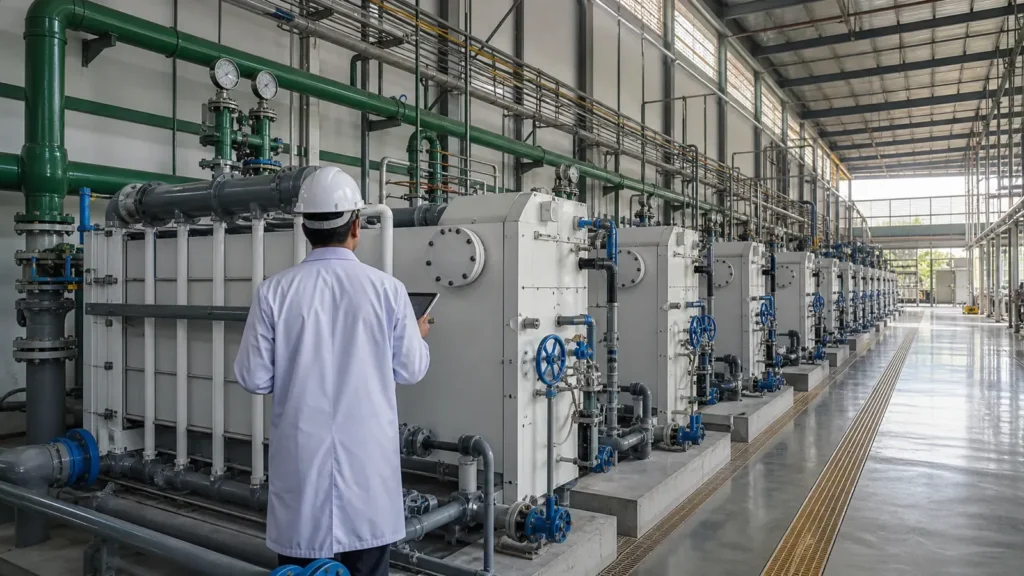
In the open techno-economic assessment of 2022, methanol from a 4,000 tonne a year plant costs 960 euros a tonne against a fossil reference of 450 euros, with present value minus 21 million euros at current prices. The electrolyser, the device that splits water into hydrogen and oxygen, is more than half, 52 percent, of a 15 million euro investment, electricity is about 75 percent of operating cost. That is the job. My answer on green hydrogen for methanol is a minimum volume, an indexed price and credit support, a payment backstop from the seller, written before the model. I frame all of it inside the green methanol industries page, where feedstock, power and buyers sit together.
Before I model anything I write three lines on one page: the volume I commit to take, the price mechanism that follows the power contract, and the credit standing of the hydrogen seller. Nothing else in the model matters until those three are agreed, dated and signed.
In short
- Volume: A minimum annual take with a mirror duty on the seller, and a floor I can fund.
- Price: An indexed price tied to power, which the 2022 assessment puts at about 75 percent of operating cost.
- Credit: Credit support, a bank guarantee or cash collateral, unless the seller is investment grade at BBB minus or better.
- Origin: Renewable origin is the product: renewable methanol sold in 2024 was 400,000 to 500,000 tonnes against 94 million tonnes of supply.
- Refusal: Memoranda are not orders: in November 2023, 80 percent of planned low-carbon hydrogen volume to 2030 was memoranda or unspecified.
In this article
Three things I write before I model
I fix the vocabulary first, because these three words are what I am actually negotiating. An offtake agreement is a contract in which a buyer commits to take a stated volume of output for a stated period. The minimum volume is the floor inside that agreement, the tonnage I pay for whether I take it or not. The price mechanism is the rule that moves my hydrogen price when the power price moves. Credit support is a bank guarantee or cash collateral that stands behind the seller if it fails to deliver.
None of the three is a forecast. The 960 euros a tonne in the 2022 assessment is a modelled levelized cost of methanol, meaning the average cost per tonne across the 20-year life the modeller assumed, not a price anyone has quoted me. The 450 euros a tonne fossil figure beside it is a reference, not an offer.
What this means for you: I put the volume, the price rule and the credit name on the first page of the term sheet, dated, before anyone sends me an equipment list.
Why hydrogen is the project
The Journal of CO2 Utilization assessment of 2022 sizes a plant at 500 kg of renewable methanol an hour, 4,000 tonnes a year over a 20-year life, fed by electrolytic hydrogen and carbon dioxide captured from flue gas by amine absorption. Its levelized cost of methanol is 960 euros a tonne, about 175 euros the megawattheure, against 450 euros a tonne for fossil methanol, and the present value is minus 21 million euros if I sell at the current market price. In the bare erected cost the electrolyser carries more than 50 percent while the methanol synthesis section carries 12 percent.
The 2021 outlook from IRENA and the Methanol Institute maps the other route: bio-methanol from waste streams and e-methanol from renewable carbon dioxide and hydrogen made with renewable electricity, chemically identical to fossil methanol, and less than 0.2 million tonnes of renewable methanol produced a year.
What this means for you: when the methanol synthesis section is a minor share of the bare erected cost and the electrolyser takes the rest, the hydrogen question outranks the methanol question, so I read the page I keep on green hydrogen before I open any methanol datasheet.
What the input costs
The 2022 assessment records an investment of about 15 million euros that is 52 percent electrolyser, and it cites the International Energy Agency putting near-term e-methanol at 120 to 210 dollars the megawattheure and long-term at 55 to 70, with electricity alone at 40 to 70 percent of production cost. The same assessment reports a life-cycle study in which hydrogenating carbon dioxide cuts greenhouse gas emissions by 59 percent against conventional routes.
The 2021 outlook gives the other numbers: e-methanol at 800 to 1,600 dollars a tonne with carbon dioxide from bioenergy with capture at 10 to 50 dollars a tonne, 1,200 to 2,400 with direct air capture carbon dioxide at 300 to 600, falling to 250 to 630 by 2050 as renewable power gets cheaper. Fossil methanol itself was put at 100 to 250 dollars a tonne in that same 2021 outlook, and the stoichiometric ratio, the hydrogen to carbon oxide balance the synthesis needs, sits close to 2.
What this means for you: I buy the power number before anything else, then check what green hydrogen costs in Southeast Asia, because that is the line that sets the floor under my methanol.
The clauses I want in the hydrogen contract
The May 2024 contract guide from GH2 sets out take-or-pay: I agree a minimum volume for a stated period and pay for it whether I lift it or not, as buyers do in natural gas and LNG sales. It carries a mirror duty on the producer, a soft version where the producer uses best endeavours without damages, and a right on each side over excess volume. The guide records that financiers generally require a high take-or-pay and model on contractual revenue, so a low threshold means only the committed part counts when debt is sized and the rest is merchant volume, the tonnage sold without commitment. Buyers count as investment grade, meaning BBB minus or better by Standard and Poor’s or Moody’s or equivalent; anyone else must offer credit support, cash collateral or change-of-control restrictions.
What this means for you: I write those three clauses into the hydrogen contract itself before the model runs, and I check the structure against the green hydrogen project finance page before I sign.
The origin rules that travel with the molecule
The May 2024 contract guide treats green methanol explicitly as a derivative of hydrogen made from renewable electricity, so origin travels with the molecule into every paper I sign. It repeats data dated November 2023: of planned low-carbon hydrogen capacity to 2030 only 10 percent of announced projects have identified a buyer, and of the contracted volume 13 percent is firm, 7 percent is documented pre-contractually, while 80 percent is a memorandum or unspecified. A book-and-claim style credit, a certificate transferred separately from the physical molecule, is not a commitment to buy that molecule.
The 2024 report from BloombergNEF and Climate Technology Coalition adds the price consequence: low-carbon methanol production can run 1.2 to 12 times the cost of fossil methanol depending on the feedstock, and above 500 dollars a tonne shipping companies may find it cheaper to pay the carbon price on their own emissions until 2030.
What this means for you: the buyer pays for origin as much as for tonnage, so I check the renewable fuels of non-biological origin rules before I promise a certificate I cannot trace to a plant.
What I do not accept in a hydrogen model
Four refusals sit at the top of every file I build. First, a power price nobody has contracted, applied to a capacity factor, the share of a year the electrolyser actually runs, that nobody has evidenced either. Second, an electrolyser delivery date with no penalty attached to missing it, which turns a schedule into a hope. Third, a buyer whose memoranda are counted as orders. Each refusal is a question a lender will ask me anyway, and I would rather ask it first.
In the November 2023 data repeated by the May 2024 contract guide, 80 percent of the planned low-carbon hydrogen volume to 2030 was memoranda or unspecified, so I will not carry it into a revenue line. Fourth, I refuse a methanol price assumed from a fossil benchmark, because a benchmark is a reference and not a sale.
What this means for you: I delete any line I cannot date to a signed document, re-run the model without it, and only then decide whether the gap I am asking a buyer to close is real or merely assumed.
What it changes for a Southeast Asian project
The 2025 milestones report from the Methanol Institute records 94 million tonnes of methanol supply in 2024 with only 400,000 to 500,000 tonnes of renewable product sold, more than 200 announced renewable and low-carbon projects for 45.8 million tonnes by 2030 of which only 20 to 40 percent may proceed, giving 7 to 14 million tonnes, China holding half the pipeline, and about 4 million tonnes of low-carbon, blue, bio and e-methanol capacity operational or under construction in February 2025.
The 2024 hydrogen and methanol report adds the sequence around that pipeline: once producers have signed long-term offtakes or won investment from shipping buyers, they approach port operators for storage or co-investment in its extension, and shipowners order vessels and sign agreements under pressure from their own customers. None of those announced volumes is a supply I can book.
What this means for you: my hydrogen contract is what makes the rest of that chain possible, so I read the power-to-liquid explainer as a contract map rather than a process diagram.
The three lines I would keep
Line one: the contracted hydrogen volume per year with its price mechanism attached, dated to the day I signed the agreement. Line two: the power price and the renewable certificate behind it, with its own date, since electricity is about 75 percent of operating cost in the 2022 assessment. Line three: the methanol volume sold under offtake and the buyer’s rating, dated as well, investment grade meaning BBB minus or better by Standard and Poor’s or Moody’s or equivalent, as the May 2024 contract guide puts it.
I date each line because a figure without a date is an opinion, and my lenders will read it as one. The three lines also travel: when a buyer asks what I can deliver, they are the answer I hand over first.
What this means for you: keep those three lines on the front page, signed and dated, build every sensitivity case underneath them rather than around them, and revisit them whenever the power contract or the buyer’s rating changes.
Sources
- Renewable methanol production from green hydrogen and captured CO2: A techno-economic assessment, Journal of CO2 Utilization, 2022.
- IRENA and Methanol Institute, Innovation Outlook: Renewable Methanol, 2021.
- BloombergNEF and Climate Technology Coalition, Scaling Up Hydrogen: The Case for Low-Carbon Methanol, 18 June 2024.
- GH2, Key considerations for green hydrogen offtake agreements, May 2024.
- Methanol Institute, 2025 Milestones, 2025.
Frequently asked questions
How much of a methanol project is the hydrogen?
In the 2022 assessment the electrolyser is more than half, 52 percent, of an investment of about 15 million euros, and electricity is about 75 percent of operating cost, which is why the input is the project rather than a line inside it.
What does green hydrogen do to the methanol price?
It sets the floor: e-methanol was estimated at 800 to 1,600 dollars a tonne in 2021 with carbon dioxide from bioenergy with capture, against fossil methanol at 100 to 250 dollars a tonne. Low-carbon methanol can also cost 1.2 to 12 times fossil methanol depending on the feedstock, and both figures are modelled ranges rather than prices anyone has quoted me.
What contract protects a methanol producer buying hydrogen?
Take-or-pay with a minimum volume, an indexed price, credit support unless the seller is investment grade at BBB minus or better, and a mirror supply obligation on the producer. I also want excess volume handled explicitly, with my right to buy above the threshold and the seller’s right to sell the surplus. A soft version, where the producer uses best endeavours without damages, is not enough at financing stage.
Is there a market for this methanol already?
A thin one: 400,000 to 500,000 tonnes of renewable methanol were sold in 2024 against 94 million tonnes of total supply, while 80 percent of planned low-carbon hydrogen volume to 2030 sat in memoranda or was unspecified in November 2023. Announced capacity is not supply: about 4 million tonnes of low-carbon, blue, bio and e-methanol capacity was operational or under construction in February 2025.
Not sure your project would survive a credit conversation?
A short call is usually enough to see where your project stands.
If you are at structuring stage and need the hydrogen clause drafted against your power contract, I work through offtake agreement structuring with the volume, the index and the credit test in that order. Bring the model only after those three are settled.
I do not provide investment advice or arrange investments. I act as a strategic advisor and facilitator.

Alex, Founder of WeConnect Asia
I help low-carbon fuel and carbon removal project developers in Southeast Asia secure the commercial and financial partners needed to reach FID.
Related articles

Pitching a Climate Tech Company to Strategic Investors: What the Corporate Has to Believe Before It Writes a Cheque
How to pitch a climate tech company to strategic investors: the metric cluster, the readiness evidence and the ask that corporates fund.

Biomethane: What It Is, How It Is Made and Who Buys It
Biomethane is biogas cleaned to pipeline quality. I explain how it is made, how it differs from biogas and who buys it in Southeast Asia.

CO2 Sourcing for e-SAF Projects: What the Rules Allow and What the Contract Must Say
Biogenic CO2, direct air capture or industrial flue gas: which sources an e-SAF plant may use, what they cost and which contract terms make the fuel certifiable.

Operating Performance Guarantees for SAF Plants: What Lenders Ask For
Minimum guarantees, performance damages, retesting and who stands behind them: the operating guarantees a SAF plant needs to keep debt and offtake intact.

EPC and Construction Risk in SAF Plants: What a Lender Actually Tests
FEED scope, convertible EPC, performance guarantees and damages caps: the construction risk questions a SAF project must answer before financial close.

Matching Feedstock and Offtake Risk Back-to-Back in a SAF Project: How Lenders Read the Chain
Lenders do not buy a feedstock plan and an offtake plan separately. They buy the link between the two, and the link is where most SAF files break.