
Home » Community and Political Risk in Waste-to-Energy: What a Lender Actually Tests
Community and Political Risk in Waste-to-Energy: What a Lender Actually Tests
10 min read · Feb 23, 2026 · By Alex
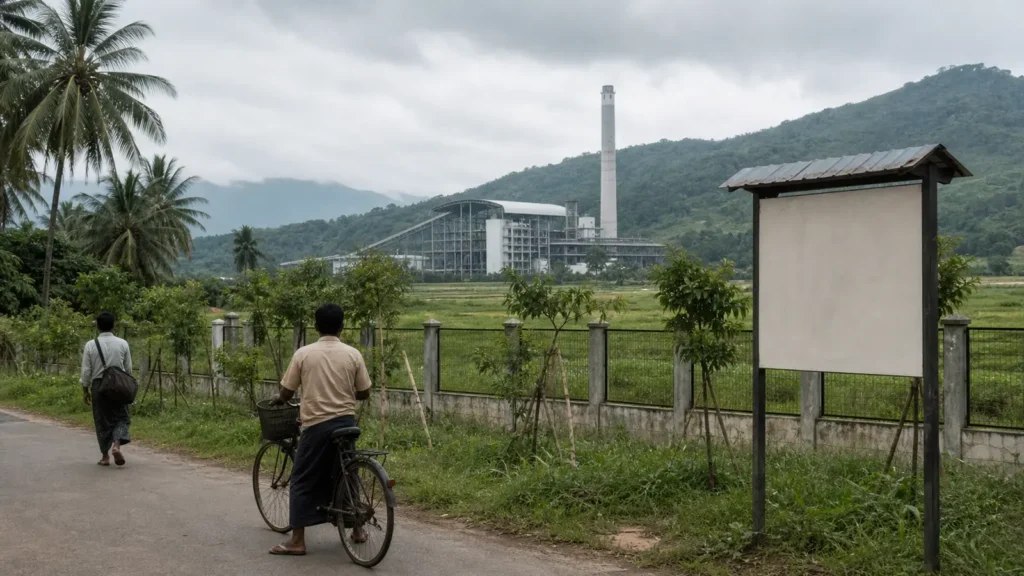
Community and political risk is the chance that the permit, the siting choice and local consent do not survive to commercial operation, and the test a lender runs is what has actually been disclosed, approved and shared before financial close: in the waste-to-energy industry, one rural Chinese county turned its plant into the only successful siting among four attempts in its municipality by publishing 28 statutory approvals, running more than 1400 consecutive days within European emission limits and sharing benefits with nine surrounding villages. That is the answer I am looking for when a credit file reaches my desk. Community opposition in waste to energy forms long before construction, when the evidence either exists or does not. Everything I check below follows from that single test.
How I take community and political risk apart
I take the risk apart in its parts, then look at what must exist before anyone announces a site. Next come what the regional data already shows. Then I follow how the social file drives the financing plan. Last, I show how I read a file myself. Each step answers the same question with published evidence rather than with intention.
In short
- The risk: the permit, the siting choice and local consent failing to survive to commercial operation.
- The proof: in November 2026, 28 published statutory approvals, more than 1400 consecutive days within European emission limits, nine villages sharing benefits.
- Before announcement: waste characterisation across at least one full year and an independent pre-siting risk assessment.
- The regional base: 35.8 million tonnes of municipal waste in Indonesia in 2022, about 80 percent treated in Singapore plants.
- The financing effect: published approvals, a monitoring record and a grievance route are what let funding steps line up.
In this article
What community and political risk is made of
I treat community and political risk as one question: does the permit, siting choice and local consent survive? The project does not reach commercial operation if any of them fails. Siting risk is the risk that a site choice does not hold. Social licence to operate is the accepted standing of a plant with the people around it. The margin is narrow in the November 2026 Sustainability study of a rural Chinese county. Four siting attempts in that municipality produced one success.
The project published 28 statutory approvals and ran more than 1400 consecutive days within European emission limits. It also shared benefits with nine surrounding villages after fieldwork from 2022 to 2025. NIMBY, opposition expressed as not in my backyard, is only the first of four stages. Those stages run on political, administrative, emotional and technical logics. The three lessons are an independent risk assessment, village-development benefits instead of cash, and a grievance channel. The assessment runs before anyone chooses the site. Neighbours raise and track a complaint in that channel, because disclosure alone did not build trust.
What this means for you: I check what the developer approved, measured and shared before the site announcement. The number of people told does not answer that.
What has to be signed before the site is announced
I start from the published record. The March 2017 GAIA technology risk analysis shows projects that took more than 2 billion dollars. Every one of them closed or did not start operations. Other projects died at the proposal stage after raising significant sums, when residents objected. Also, governments checked claims that turned out false or exaggerated. Plants it examined missed their energy, revenue and emission targets and leaned on public subsidies to stay viable.
In March 2017, waste gasification was recorded as classed as incineration by the European Union under 2010/75/EU and by the United States environmental agency under 40 CFR 60.51a, which puts the permit fight inside the energy debate and inside offtake agreements for waste and power. The same record notes that pyrolysis needs a more homogeneous waste stream than mixed municipal waste gives.
What this means for you: I check the permit route before anyone accepts a site. I also want a signed waste and power offtake position on the table. Both hold the answer to whether anyone ever tests consent.
What the developer has to prove before anyone asks for consent
For me, the January 2025 Ramboll interview on developing waste-to-energy projects in Southeast Asia sets bankability at early pre-feasibility. It means a proven technical solution, an optimal risk allocation and a clear payment mechanism. The mechanism covers the tipping fee, the payment per tonne of waste delivered. It is literally garbage in, energy out. Also, the guarantee on waste composition runs the whole project, because governments often assume that composition wrongly.
The order I use starts with a waste characterisation study covering every season for at least one full year, wet and dry, with top-down and bottom-up sampling: that is what a waste-to-energy plant guide should put first. In January 2025, a study showed that project structures favour build, build-own-operate-and-transfer schemes. Those schemes keep one counterparty in front of the government, because split packages are harder to finance. Electricity demand in Southeast Asia grows 4 percent a year to 2035, against 3 percent for energy demand overall.
What this means for you: when someone assumes waste composition instead of measuring it, the payment mechanism turns unsound. Community promises that rest on it do not hold.
What the Southeast Asian data already shows
The baseline comes from the July 2025 ISWA regional brief on waste management in Southeast Asia. It reports Indonesia generating 35.8 million tonnes of municipal waste in 2022, at 0.67 kg per person. Of that 2022 total, 47.64 percent went to sanitary or controlled landfill. Another 37.38 percent escaped into the environment, reaching 78 percent in some regions. Compliant sites covered only 54 percent of districts and cities. Presidential decree 97/2017 set 30 percent source reduction and 70 percent handling by 2025. Decree 35/2018 accelerated energy recovery in twelve cities.
Singapore treats about 80 percent of its municipal waste in waste-to-energy plants and produced 1502487 MWh from incineration in 2023. Malaysia has worked under Act 672 since September 2011 and runs 165 landfills. Meanwhile, thailand counted about 210 MW of installed waste-to-energy capacity in 2018. Those dated figures are the starting point for infrastructure project finance case.
What this means for you: I date every capacity and every treatment share I carry. Southeast Asia is not one market.
How the social dossier feeds the financing plan
The financing sequence comes from the June 2025 Asian Development Bank brochure on advancing the circular economy. It shows the opportunity to extend circular economy investment in Asia and the Pacific. There, investment designs waste and pollution out of systems, keeps materials in use and lets natural resources regenerate. Its chain runs in three parts: policy measures upstream, then public and private financing downstream. The third part is knowledge work and capacity building, done with partners rather than alone.
Also in June 2025, a plastic pollution project numbered 53068-001 sits in the same family of operations. It carries a sub-project on marine plastic pollution. The practical reading for me is that published approvals, a monitoring record. Also, a grievance route are what let those financing steps line up behind the development finance institutions that fund them.
What this means for you: I write the social record early enough for the funding request. Then the policy, investment and capacity building steps can each point to evidence, not to an intention.
What published Southeast Asian practice settles
In January 2025, a study projected electricity demand in Southeast Asia to grow 4 percent a year to 2035. Energy demand overall grows at 3 percent over the same span. The same study showed project structures favouring one counterparty in front of the government over split packages. A July 2025 count listed 12 waste-to-energy installations in Indonesia and municipal waste at 35.8 million tonnes in 2022. Singapore treated about 80 percent of its municipal waste in plants.
The March 2017 record shows projects holding more than 2 billion dollars closed or cancelled before operations. In November 2026, a rural county showed the other side. The record shows 28 published approvals and more than 1400 consecutive days within European emission limits. Nine villages shared the benefits. The standing question for bankability is which of those two records a proposed site can reproduce.
What this means for you: I date every figure I carry into a credit file. A capacity announced in one year and a plant operating in another are two different claims.
The five checks I run on the social and political dossier
I run five checks on the social and political dossier, in this order.
- The written record of consultation and consent, and who holds it. In November 2026 a rural county published 28 statutory approvals before claiming acceptance.
- The emissions disclosure, published and monitored by an outside body. In November 2026 the record passed 1400 consecutive days within European emission limits.
- The benefit package keeps village development at the centre, not cash. In November 2026 nine surrounding villages shared in it, and that is not a transfer payment.
- The independent pre-siting risk assessment, run before anyone chooses the site, because that decision is the hardest to reverse.
- The grievance channel with a public answer trail, so anyone can follow a complaint to its answer. Disclosure alone does not close a complaint.
What this means for you: a dossier that shows all five, each with a date and a holder. Such a dossier goes into a structuring discussion without guessing at consent.
How I would sequence the siting work before FID
I set out the siting work in four dated steps. Each step holds only on a written record from the step before. In 2017, community opposition killed proposal-stage projects worth more than 2 billion dollars. In 2025, lenders set bankability at pre-feasibility. The file needs waste characterisation over at least one full year. It also needs an investment chain running from policy to financing.
The order is deliberate. A technical and financial case that cannot explain itself to a village is not yet a case at all.
What this means for you: the file must show these four steps in order. Without them, the siting work is not ready for a financial close decision. The gap would reappear later as consent risk.
Sources
- Chen and Liu, From NIMBY to PIMBY: Multi-Logic Governance for Sustainable Waste-to-Energy Facility Siting in Rural China, 2026.
- GAIA, Waste Gasification and Pyrolysis: High Risk, Low Yield Processes for Waste Management, 2017.
- Ramboll, Garbage in, energy out: what you need to know when developing waste-to-energy projects in Southeast Asia, 2025.
- International Solid Waste Association, Regional Brief: Waste Management Challenges and Opportunities in South East Asia, 2025.
- Asian Development Bank, Advancing the Circular Economy: Creating a Sustainable Future in Asia and the Pacific, 2025.
Frequently asked questions
What is community and political risk in a waste-to-energy project?
It is the risk that the siting decision, the permit and the local standing of the plant do not survive to commercial operation. The test is what was disclosed, approved and shared before financial close. In November 2026, one project became the only success among four siting attempts in its municipality.
When should a developer start working on local acceptance?
Before the site is chosen. An independent pre-siting risk assessment comes first, and fieldwork covering 2022 to 2025 placed it ahead of the benefit package and ahead of disclosure. The process studied moved through four stages from resistance to acceptance, so work starting after the announcement is already at stage one.
What evidence do lenders actually ask for?
In November 2026, one file showed the shape of it: published statutory approvals, 28 of them; an emissions record of more than 1400 consecutive days within European emission limits; a benefit arrangement with the nine surrounding villages; and a grievance channel that answers in public. I also ask for waste characterisation across at least one full year, wet and dry.
Can a strong compensation package settle the opposition?
No. Benefits tied to village development rather than cash transfers, plus disclosure paired with a complaint route, achieved what disclosure alone did not: trust. In November 2026, one county held 28 published approvals and more than 1400 consecutive days within European emission limits while nine villages shared benefits, and those facts carried acceptance rather than money.
Not sure your project would survive a credit conversation?
A short call is usually enough to see where your project stands.
If you are at pre-FID structuration and want the social and political dossier read against the standard a lender applies, I work through the file with you: contracting and risk management support, from consultation record to grievance route, before the site is announced and while the permit route can still be changed.
I do not provide investment advice or arrange investments. I act as a strategic advisor and facilitator.

Alex, Founder of WeConnect Asia
I help low-carbon fuel and carbon removal project developers in Southeast Asia secure the commercial and financial partners needed to reach FID.
Related articles

Pitching a Climate Tech Company to Strategic Investors: What the Corporate Has to Believe Before It Writes a Cheque
How to pitch a climate tech company to strategic investors: the metric cluster, the readiness evidence and the ask that corporates fund.

Biomethane: What It Is, How It Is Made and Who Buys It
Biomethane is biogas cleaned to pipeline quality. I explain how it is made, how it differs from biogas and who buys it in Southeast Asia.

CO2 Sourcing for e-SAF Projects: What the Rules Allow and What the Contract Must Say
Biogenic CO2, direct air capture or industrial flue gas: which sources an e-SAF plant may use, what they cost and which contract terms make the fuel certifiable.

Operating Performance Guarantees for SAF Plants: What Lenders Ask For
Minimum guarantees, performance damages, retesting and who stands behind them: the operating guarantees a SAF plant needs to keep debt and offtake intact.

EPC and Construction Risk in SAF Plants: What a Lender Actually Tests
FEED scope, convertible EPC, performance guarantees and damages caps: the construction risk questions a SAF project must answer before financial close.

Matching Feedstock and Offtake Risk Back-to-Back in a SAF Project: How Lenders Read the Chain
Lenders do not buy a feedstock plan and an offtake plan separately. They buy the link between the two, and the link is where most SAF files break.