
Home » Gasification and Pyrolysis of Waste: What Is Bankable Today
Gasification and Pyrolysis of Waste: What Is Bankable Today
10 min read · Nov 16, 2025 · By Alex
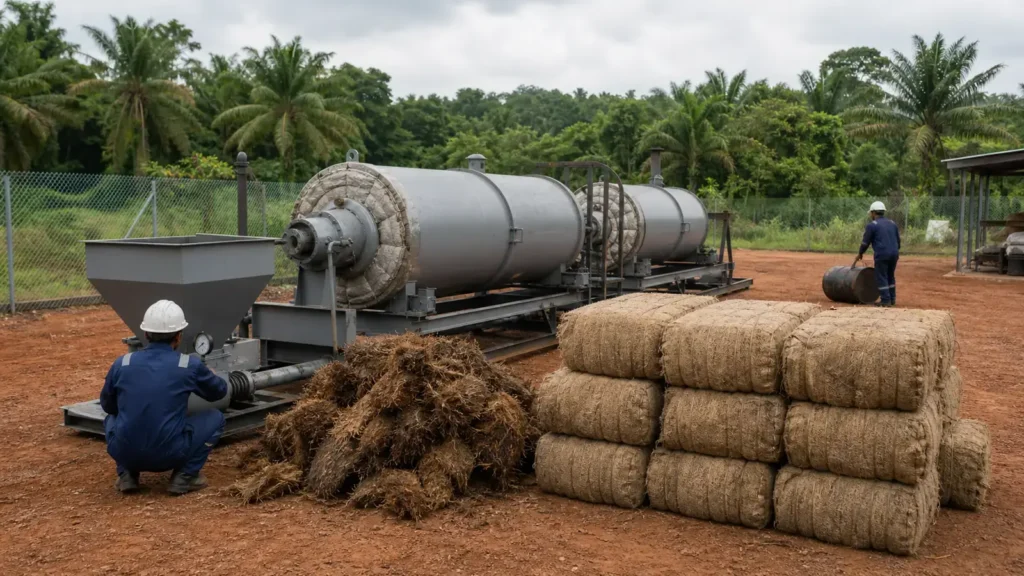
I read offers for plants that turn residual rubbish into gas and oil. Thermal gasification, pyrolysis and hydrothermal routes are promising for converting waste into liquid and gaseous fuels, but their deployment remains limited by technology maturity, feedstock availability and costs. A published review from 2026 finds a persistent gap between laboratory-scale performance and commercial-scale operation, meaning between a bench result and a plant run as a business, and the commercial waste gasification plant highlighted in a 2022 technical report is described as one of the first of its kind and as having had some challenges, technical and cost. This is my working note for anyone weighing waste-to-energy capacity.
I take this in a fixed order. First the two routes and what they do, then where the plants actually are, then why the numbers disagree, then what a lender asks first, then who buys the output, then how the feedstock contract decides, then the checks I run, and finally the risk section I would write.
In short
- Routes: Gasification and pyrolysis aim at fuels and chemicals rather than at power, and both are held back by maturity, feedstock and cost.
- Evidence: Published figures come from laboratory work and short pilots, and in 2026 identical systems differed by more than 50 percent on method alone.
- Lender test: I read maturity, feedstock and cost together, and I check that no long waste contract weakens prevention and recycling.
- Output: Refuse-derived fuel pellets can go to cement kilns, and syngas can become methanol and ethanol once impurities are removed.
- Feedstock: The material fed into the plant decides the case: collection rates of 31 percent in Sub-Saharan Africa and 67 percent in South Asia in March 2026.
In this article
What the two thermal routes do
The short answer: these three thermal routes are promising for making liquid and gaseous fuels from waste, and all three are held back by the same three limits, technology maturity, feedstock availability and cost. Gasification heats waste with a limited supply of oxygen so it leaves the vessel mainly as a gas; pyrolysis heats it with no oxygen at all, leaving oil, gas and char; hydrothermal routes use hot pressurised water. The material fed in is the feedstock.
The report the IEA prepared for the COP31 Presidency, published in November 2026, records that thermal gasification, pyrolysis and hydrothermal liquefaction and gasification are promising pathways for converting waste into liquid and gaseous fuels, particularly for transport applications, yet their deployment remains limited by technology maturity, feedstock availability and costs. It also records that several waste-to-energy pathways require sorting and pre-treatment of the waste intake, potentially adding to costs and limiting their economic viability.
What this means for you: I treat these routes as a materials and fuels play rather than a power play, and I ask for the pre-treatment scope in writing before any efficiency claim is tested.
Where the plants actually are
Conventional incineration has been widely deployed at commercial scale, and advanced conversion technologies are the recent focus.
The Task 36 report of April 2022 describes a commercial facility in Edmonton that uses gasification and syngas processing, syngas being the hydrogen and carbon monoxide mixture that leaves a gasifier, to convert non-compostable and non-recyclable household waste, processed into refuse-derived fuel, the sorted and shredded dry combustible fraction, into products such as methanol and ethanol. Its proprietary bubbling fluidised bed, where gas bubbles through hot solid particles, uses steam and oxygen as gasification agents at 1-5 bar with a reported gasification temperature of about 750 degrees C. As one of the first of its kind it has had some challenges, technical and cost.
That April 2022 report also notes that conventional catalysts for methanol synthesis are very sensitive to deactivation by even traces of pollutants derived from municipal solid waste, so impurity removal before the reactor is essential. It adds that community acceptance is an ongoing challenge for almost any waste-to-energy project, further complicated when the technology suite is less mature.
What this means for you: I work from the guide to waste-to-energy plants and I want the impurity specification, the pre-treatment scope and the consent record in writing.
Why the published numbers disagree
The 2026 review in Applied Sciences identifies a persistent gap between laboratory-scale performance and commercial-scale operation across conversion pathways, with principal drivers of feedstock heterogeneity, heat transfer limitations and operational complexity.
Life cycle assessment, the accounting method that totals emissions across the life of a product, returns results for identical waste-to-energy systems that vary by more than 50 percent depending solely on the energy substitution model applied, as reported in 2026. Kinetic modelling in gasification studies has declined significantly over the past decade, so published performance data are increasingly unreliable.
Data gaps sit in operations: much of the literature focuses on laboratory-scale experiments or short-duration pilot studies, with catalyst durability, system fouling, maintenance requirements and operational downtime rarely reported in detail. That is the evidence base an infrastructure project finance committee actually receives.
What this means for you: I discount any performance table that does not state its operating hours, its feedstock and its substitution model, because in 2026 those three are where the published numbers diverge.
What a lender asks first
I read three things together. Technology readiness, meaning how far a route has moved from laboratory work to sustained operation, sits beside feedstock availability and cost, and those are the three limits I saw recorded on advanced routes in November 2026.
The contract structure matters as much as the machine. The published position of November 2026 was that long-term waste supply contracts and waste-to-energy use should be avoided as a substitute for prevention and recycling, and a 2026 review adds that large-scale waste-to-energy infrastructure carries an inherent lock-in risk because long-term waste supply contracts may reduce incentives for waste prevention, reuse and recycling.
In April 2022 the direction was already clear: increasingly stringent regulations are driving the need for new technology pathways that use waste as a feedstock for recycling and manufacturing rather than established combustion processes.
What this means for you: In waste-to-energy project finance in Southeast Asia I will not call an advanced route bankable, meaning ready for a lender to underwrite, until those three questions have written answers.
Who buys what comes out
An offtake is the contract that buys what the plant produces, and for an advanced route the buyer is usually a materials buyer rather than a grid. Refuse-derived fuel pellets can be used directly, for example in cement kilns, or serve as intermediate feedstock for other waste-to-energy processes.
The cement sector could triple the use of renewable wastes, from about 6 percent of thermal energy requirements today, in November 2026, to about 18 percent in 2035.
A cement kiln is therefore a heat buyer with a materials specification, so the pellet has to satisfy it consistently, not only when it is sampled.
Energy recovered from waste contributed around 5 EJ in 2025, equivalent to around 1 percent of global energy demand, while around 30 percent of municipal solid waste is still landfilled. Syngas intermediates are what let the waste management sector keep those molecules in use longer.
What this means for you: I read the offtake agreements before I price the plant, and I ask whether the buyer is buying a molecule, a pellet or a kilowatt hour.
The feedstock contract decides
According to the IEA analysis of energy from waste in Asia, drawn from Renewables 2018, sufficient collection and source-segregation infrastructure is needed so that refuse-derived fuel with suitable energy and moisture content can be provided to facilities, and China had 7.3 GW across 339 plants at the end of 2017 able to manage just over 100 Mt of solid waste a year.
That record is the template I ask a sponsor to match: a collection system that produces a fuel specification, not a hope that the delivered waste will behave.
The gap is visible in the collection data. The World Bank’s What a Waste 3.0 report of March 2026 records collection rates as low as 31 percent in Sub-Saharan Africa and 67 percent in South Asia, where the vast majority of waste is openly dumped, alongside 2.56 billion tonnes of waste produced in 2022 and growth to 3.86 billion tonnes by 2050 under business as usual.
What this means for you: I map the collection rate before I map the plant, because development finance institutions will ask for the source-segregation record and the moisture specification long before they ask for an efficiency figure.
What I would test before I recommend an advanced route
Before I recommend an advanced waste gasification or pyrolysis route I write five checks on one page, and I expect each to have a written answer with a date on it. None of them needs a new number.
- What the long-term operational record of this technology is over years of operation, not the pilot result reported in 2026.
- What impurity load the syngas contract assumes, and whether removal happens before the reactor.
- Whether pre-treatment of the waste intake is inside the price I am quoted, since sorting and shredding add cost.
- Whether the life cycle claim names its energy substitution model, because in 2026 identical systems varied by more than 50 percent on that choice alone.
- Who signs for the output, since the offtake carries the technology risk after construction.
What this means for you: A route passes only when all five have a dated answer, and a document that cannot supply them is telling me the technology risk has not yet been measured.
How I would write the technology risk section for an advanced route
I write the technology risk section as four dated rows, because a risk note without a date cannot be tested later. Each row states what was published, in which month, and what it means for the offer in front of me.
- Maturity, November 2026: deployment of thermal gasification, pyrolysis and hydrothermal routes remains limited by technology maturity, feedstock availability and costs.
- Evidence, 2026: a persistent gap separates laboratory-scale performance from commercial-scale operation across conversion pathways.
- Operations, April 2022: a first-of-its-kind commercial gasifier runs at 1-5 bar and about 750 degrees C, with technical and cost challenges reported.
- Feedstock, March 2026: collection rates of 31 percent in Sub-Saharan Africa and 67 percent in South Asia.
I keep the rows separate so that a weak feedstock row does not get hidden behind a strong evidence row.
What this means for you: Four dated rows are enough for my technology risk section, and any offer that cannot populate all four in its own documents is not yet ready for a credit discussion.
Sources
- IEA, Will energy from waste become the key form of bioenergy in Asia?, 2018.
- World Bank, What a Waste 3.0, 2026.
- IEA, Synergies Between Waste Reduction, Resource Efficiency and Energy Systems Decarbonisation, 2026.
- IEA Bioenergy Task 36, Material and Energy Valorisation of Waste in a Circular Economy, 2022.
- MDPI Applied Sciences, Advanced Waste-to-Energy Technologies: Evidence, Scalability, and Implications for a Net-Zero Transition, 2026.
Frequently asked questions
Are waste gasification and pyrolysis plants commercially proven?
Partially. One commercial facility converts household waste processed into refuse-derived fuel into methanol and ethanol using a bubbling fluidised bed gasifier, but that plant is described as one of the first of its kind and as having had some challenges, technical and cost. Beyond it, deployment of these routes remains limited by technology maturity, feedstock availability and costs, so I read any claim of commercial proof against the operating hours sitting behind it.
Why do published efficiencies differ from operating results?
Because the reported figures come from laboratory-scale experiments or short-duration pilot studies run under optimised conditions, while a persistent gap separates laboratory-scale performance from commercial-scale operation across conversion pathways. Feedstock heterogeneity, heat transfer limitations and operational complexity drive that gap, and kinetic modelling in gasification studies has declined significantly over the past decade, which makes published performance data harder to rely on.
What feedstock do waste gasification plants need?
Pre-treated, dry combustible material. Waste must be sorted and shredded into refuse-derived fuel with suitable energy and moisture content, which requires collection and source-segregation infrastructure that is not equally present everywhere. Where that infrastructure is thin, the plant buys mixed wet waste and the gasifier inherits the variability, so I ask for the incoming specification and the rejection rules before I accept any output figure.
Can waste gasification produce fuels that can be sold?
Yes, at the molecular level. Syngas is a building block for chemicals and fuels, and products such as methanol and ethanol have been produced from non-recyclable household waste. The condition is that impurities are removed before the synthesis step, because catalysts are sensitive to traces of pollutants derived from municipal solid waste, so the cleaning train is part of the product case rather than an appendix to it.
Not sure your project would survive a credit conversation?
A short call is usually enough to see where your project stands.
If you are at feasibility stage and want the maturity question settled before the term sheet, I run a technology maturity and scale-up review that produces the four dated rows above and the five checks, against your own offer documents, so the lender sees the same evidence I do.
I do not provide investment advice or arrange investments. I act as a strategic advisor and facilitator.

Alex, Founder of WeConnect Asia
I help low-carbon fuel and carbon removal project developers in Southeast Asia secure the commercial and financial partners needed to reach FID.
Related articles

Pitching a Climate Tech Company to Strategic Investors: What the Corporate Has to Believe Before It Writes a Cheque
How to pitch a climate tech company to strategic investors: the metric cluster, the readiness evidence and the ask that corporates fund.

Biomethane: What It Is, How It Is Made and Who Buys It
Biomethane is biogas cleaned to pipeline quality. I explain how it is made, how it differs from biogas and who buys it in Southeast Asia.

CO2 Sourcing for e-SAF Projects: What the Rules Allow and What the Contract Must Say
Biogenic CO2, direct air capture or industrial flue gas: which sources an e-SAF plant may use, what they cost and which contract terms make the fuel certifiable.

Operating Performance Guarantees for SAF Plants: What Lenders Ask For
Minimum guarantees, performance damages, retesting and who stands behind them: the operating guarantees a SAF plant needs to keep debt and offtake intact.

EPC and Construction Risk in SAF Plants: What a Lender Actually Tests
FEED scope, convertible EPC, performance guarantees and damages caps: the construction risk questions a SAF project must answer before financial close.

Matching Feedstock and Offtake Risk Back-to-Back in a SAF Project: How Lenders Read the Chain
Lenders do not buy a feedstock plan and an offtake plan separately. They buy the link between the two, and the link is where most SAF files break.